Tanker traffic drops after a piracy attack; Bahrain and Kuwait suffer the greatest losses
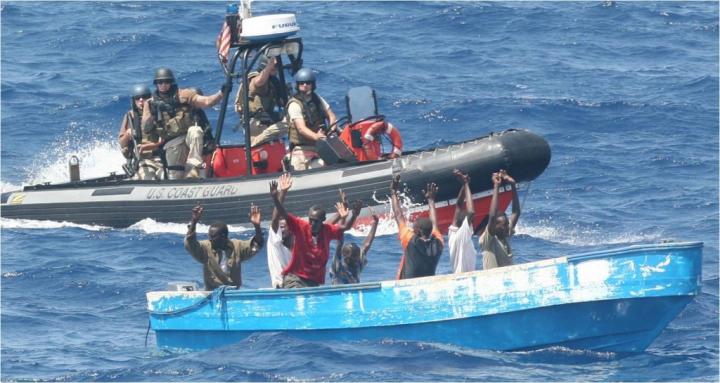
Credit: U.S. Coast Guard/LCDR Tyson Weinert
DURHAM, N.C. – Tanker traffic through the Strait of Hormuz can decline for up to two years after a piracy attack, a new Duke University study finds, but the adverse effects of the slowdown are far greater on some Persian Gulf countries than others.
“Large exporters of crude oil, such as Saudi Arabia, see little significant long-term impact. But for smaller countries such as Bahrain or Kuwait that rely on exports of refined petroleum products in addition to crude oil, it’s a different story,” said Lincoln F. Pratson, Gendell Family Professor of Energy and Environment at Duke’s Nicholas School of the Environment.
These countries export much less energy than their larger neighbors, so their exports – though smaller in magnitude – make up a proportionally larger share of their gross domestic product, Pratson explained. “Even a marginal slowdown in energy shipping will therefore be more significant to them,” he said.
If outgoing tanker traffic from Bahrain drops by just one vessel a year following a piracy attack, that country may experience a 1.6% reduction in its gross domestic product (GDP), the new study suggests. Kuwait may see a .67% drop in its GDP if its annual export traffic drops by one vessel.
Their reliance on exports of gasoline, diesel fuel and other refined petroleum products adds to the countries’ vulnerability.
“Crude oil is a more resilient export commodity because only a few regions produce it. If prices rise because of security concerns, demand remains strong. But there are nearly 700 refineries worldwide, so when costs for refined petroleum products from the Persian Gulf rise due to piracy, importers can turn to other sources or opt to increase their own domestic production,” said Jun U. Shepard, a PhD student in Earth and Ocean Sciences at the Nicholas School and an Energy Data Analytics Fellow at the Duke University Energy Initiative.
“In either case, Bahrain and Kuwait risk losing market share that may not be recovered for years,” Shepard said.
Reducing the impacts of piracy on Bahrain and Kuwait’s energy exports is important, she added, “not only because we still very much rely on these products, but because the Persian Gulf countries are petrostates that rely on their energy exports as a source of revenue to buy food and other goods that they can’t produce on their own.”
“If Bahrain and Kuwait can’t continue doing this, it could trigger geopolitical instability and civil unrest in the region, which we want to avoid,” Shepard said. “It could also increase the volatility of the global transition from fossil fuels to alternative energy sources.”
She and Pratson published their peer-reviewed paper March 3 in the journal Energy Policy. They based their findings on a statistical analysis of seven years of data, from 2010 to 2017, on energy exports transported from Persian Gulf countries through the Strait of Hormuz.
Roughly a third of the world’s annual supply of energy exports flows through the Strait of Hormuz, which provides the only passage from the Persian Gulf to the open ocean. Bordered by Iran to the north and the United Arab Emirates to the south, the 22-mile-wide strait is a flashpoint for geopolitical conflict and a hotbed of maritime piracy.
More than 750 hijacking attempts occurred in and around the strait from 2010 to 2017, the new study shows. Shipping traffic through the strait declined by 7.5 vessels a year, on average, for up to two years following each incident.
“Maritime piracy in the strait is a kind of low-grade chronic impact on the flow of energy sources to the rest of the world. Past studies have looked at its effect on trade, but this is the first study to examine its impacts on the Persian Gulf countries themselves,” Pratson said. “And what we find is that its impact is selective.”
###
The paper was supported by grants from the U.S. Department of Defense Minerva Program and the Office of Naval Research.
CITATION: “Maritime Piracy in the Strait of Hormuz and Implications of Energy Export Security,” Jun U. Shepard and Lincoln F. Pratson; March 3, 2020, Energy Policy; DOI: https:/
Media Contact
Tim Lucas
[email protected]
919-613-8084
Related Journal Article
http://dx.