• HOME
  • NEWS
  • EXPLORE
    • CAREER
      • Companies
      • Jobs
    • EVENTS
    • iGEM
      • News
      • Team
    • PHOTOS
    • VIDEO
    • WIKI
  • BLOG
  • COMMUNITY
    • FACEBOOK
    • INSTAGRAM
    • TWITTER
Saturday, February 7, 2026
BIOENGINEER.ORG
No Result
View All Result
  • Login
  • HOME
  • NEWS
  • EXPLORE
    • CAREER
      • Companies
      • Jobs
        • Lecturer
        • PhD Studentship
        • Postdoc
        • Research Assistant
    • EVENTS
    • iGEM
      • News
      • Team
    • PHOTOS
    • VIDEO
    • WIKI
  • BLOG
  • COMMUNITY
    • FACEBOOK
    • INSTAGRAM
    • TWITTER
  • HOME
  • NEWS
  • EXPLORE
    • CAREER
      • Companies
      • Jobs
        • Lecturer
        • PhD Studentship
        • Postdoc
        • Research Assistant
    • EVENTS
    • iGEM
      • News
      • Team
    • PHOTOS
    • VIDEO
    • WIKI
  • BLOG
  • COMMUNITY
    • FACEBOOK
    • INSTAGRAM
    • TWITTER
No Result
View All Result
Bioengineer.org
No Result
View All Result
Home NEWS Science News Health

Metals could be the link to new antibiotics

Bioengineer by Bioengineer
February 27, 2020
in Health
Reading Time: 2 mins read
0
IMAGE
Share on FacebookShare on TwitterShare on LinkedinShare on RedditShare on Telegram

IMAGE

Credit: Angelo Frei, Institute for Molecular Bioscience, UQ


Compounds containing metals could hold the key to the next generation of antibiotics to combat the growing threat of global antibiotic resistance.

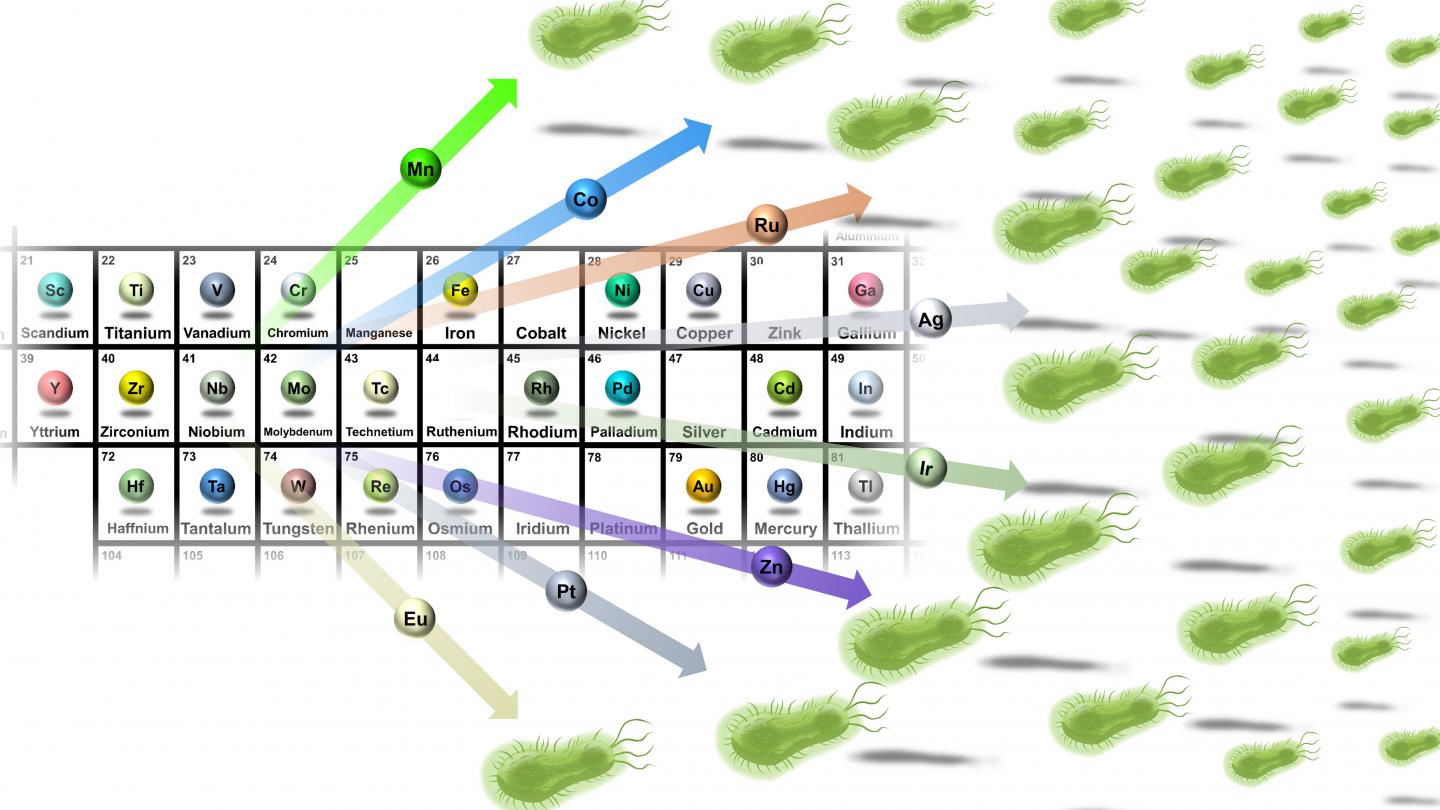
University of Queensland researchers, working with a network of international collaborators, have discovered 23 previously unexplored compounds containing metals such as silver, manganese, zinc, ruthenium and iridium that have antibacterial and antifungal activity.

The study was led by Dr Mark Blaskovich, Dr Angelo Frei and Dr Johannes Zuegg of UQ’s Centre for Superbug Solutions at the Institute for Molecular Bioscience.

“This is promising research because the scientific community is struggling to keep up with the pace of bacterial resistance,” Dr Blaskovich said.

They found many of the metal compounds selectively kill cells of bacteria, including the potentially deadly methicillin resistant Staphylococcus aureus (MRSA), but not human cells.

“There are around 40 new antibiotics in clinical trials, which sounds encouraging until you compare this to the more than 1000 medicines and vaccines in clinical trials for cancer treatments,” he said.

Dr Frei said almost 75 per cent of the antimicrobial medicines under development were derivatives of known and used antibiotics, making them potentially susceptible to existing bacterial resistance.

“Finding completely new types of antibiotics in these metal-containing compounds offers promise to outwit bacterial resistance, because they likely use different mechanisms which the bacteria have not encountered previously,” Dr Frei said.

“In addition to activity against MRSA, some compounds were active against dangerous Gram-negative pathogens such as Escherichia coli and Acinetobacter baumannii, which have even fewer novel antibiotic treatments.”

The research was conducted through the Community for Open Antimicrobial Drug Discovery (CO-ADD)–which was established in the labs of Professor Matt Cooper to offer a simple and free screening service to scientists worldwide with funding from the Wellcome Trust and UQ.

“We embarked on a quest to tap into the millions of compounds sitting unused on laboratory shelves, discarded because they don’t fit the mould for common drug design,” Dr Blaskovich said.

“We test these compounds to see if they have an effect on bacterial and fungal pathogens.

“So far we have received and screened 300,000 compounds, including nearly 1000 metal-containing compounds, from over 300 academic groups across 47 countries.”

The research team hopes the findings will bring prompt new investment in antimicrobial research.

“Many pharmaceutical companies are bowing out of antibiotic research as there is little return on investment,” Dr Frei said.

“So it is vital to raise awareness that metal complexes are a prospective source of truly novel antibiotics with potential for combatting antimicrobial resistance.”

This research has been published in Chemical Science and is free to read.

###

Media Contact
Jane Ilsley
[email protected]
61-405-661-856

Related Journal Article

http://dx.doi.org/10.1039/C9SC06460E

Tags: Medicine/Health
Share12Tweet8Share2ShareShareShare2

Related Posts

Phage-Antibiotic Combo Beats Resistant Peritoneal Infection

February 7, 2026

Boosting Remote Healthcare: Stepped-Wedge Trial Insights

February 7, 2026

Barriers and Boosters of Seniors’ Physical Activity in Karachi

February 7, 2026

Evaluating Pediatric Emergency Care Quality in Ethiopia

February 7, 2026
Please login to join discussion

POPULAR NEWS

  • Robotic Ureteral Reconstruction: A Novel Approach

    Robotic Ureteral Reconstruction: A Novel Approach

    82 shares
    Share 33 Tweet 21
  • Digital Privacy: Health Data Control in Incarceration

    63 shares
    Share 25 Tweet 16
  • Study Reveals Lipid Accumulation in ME/CFS Cells

    57 shares
    Share 23 Tweet 14
  • Breakthrough in RNA Research Accelerates Medical Innovations Timeline

    53 shares
    Share 21 Tweet 13

About

We bring you the latest biotechnology news from best research centers and universities around the world. Check our website.

Follow us

Recent News

Phage-Antibiotic Combo Beats Resistant Peritoneal Infection

Boosting Remote Healthcare: Stepped-Wedge Trial Insights

Barriers and Boosters of Seniors’ Physical Activity in Karachi

Subscribe to Blog via Email

Enter your email address to subscribe to this blog and receive notifications of new posts by email.

Join 73 other subscribers
  • Contact Us

Bioengineer.org © Copyright 2023 All Rights Reserved.

Welcome Back!

Login to your account below

Forgotten Password?

Retrieve your password

Please enter your username or email address to reset your password.

Log In
No Result
View All Result
  • Homepages
    • Home Page 1
    • Home Page 2
  • News
  • National
  • Business
  • Health
  • Lifestyle
  • Science

Bioengineer.org © Copyright 2023 All Rights Reserved.