• HOME
  • NEWS
  • EXPLORE
    • CAREER
      • Companies
      • Jobs
    • EVENTS
    • iGEM
      • News
      • Team
    • PHOTOS
    • VIDEO
    • WIKI
  • BLOG
  • COMMUNITY
    • FACEBOOK
    • INSTAGRAM
    • TWITTER
Saturday, February 7, 2026
BIOENGINEER.ORG
No Result
View All Result
  • Login
  • HOME
  • NEWS
  • EXPLORE
    • CAREER
      • Companies
      • Jobs
        • Lecturer
        • PhD Studentship
        • Postdoc
        • Research Assistant
    • EVENTS
    • iGEM
      • News
      • Team
    • PHOTOS
    • VIDEO
    • WIKI
  • BLOG
  • COMMUNITY
    • FACEBOOK
    • INSTAGRAM
    • TWITTER
  • HOME
  • NEWS
  • EXPLORE
    • CAREER
      • Companies
      • Jobs
        • Lecturer
        • PhD Studentship
        • Postdoc
        • Research Assistant
    • EVENTS
    • iGEM
      • News
      • Team
    • PHOTOS
    • VIDEO
    • WIKI
  • BLOG
  • COMMUNITY
    • FACEBOOK
    • INSTAGRAM
    • TWITTER
No Result
View All Result
Bioengineer.org
No Result
View All Result
Home NEWS Science News Biology

AI has helped to better understand how human brain performs face recognition

Bioengineer by Bioengineer
February 25, 2020
in Biology
Reading Time: 2 mins read
0
IMAGE
Share on FacebookShare on TwitterShare on LinkedinShare on RedditShare on Telegram

IMAGE

Credit: Neural Computation


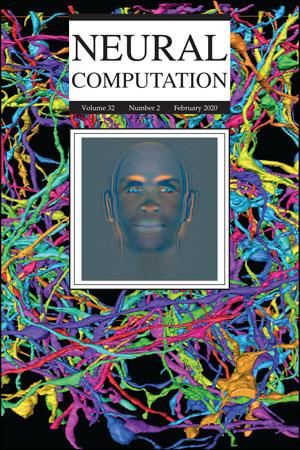
Scientists from Salk Institute (USA), Skoltech (Russia), and Riken Center for Brain Science (Japan) investigated a theoretical model of how populations of neurons in the visual cortex of the brain may recognize and process faces and their different expressions and how they are organized. The research was recently published in Neural Computation and highlighted on its cover.

Humans have amazing abilities to recognize a huge number of individual faces and interpret facial expressions extremely well. These abilities play a key role in human social interactions. However, how the human brain processes and stores such complex visual information is still poorly understood.

Skoltech scientists Anh-Huy Phan and Andrzej Cichocki, with their colleagues from the US and Japan, Sidney Lehky and Keiji Tanaka, decided to better understand how the visual cortex processes and stores information related to face recognition. Their approach was based on the idea that a human face can be conceptually represented as a collection of parts or components, including eyes, eyebrow, nose, mouth, etc. Using a machine learning approach, they applied a novel tensor algorithm to decompose faces into a set of components or images called tensorfaces as well as their associated weights, and represented faces by linear combinations of those components. In this way, they build a mathematical model describing the work of the neurons involved in face recognition.

“We used novel tensor decompositions to represent faces as a set of components with specified complexity, which can be interpreted as model face cells and indicate that human face representations consist of a mixture of low- and medium-complexity face cells,” said Skoltech Professor Andrzej Cichocki.

###

Media Contact
Alina Chernova
[email protected]
7-905-565-3633

Related Journal Article

http://dx.doi.org/10.1162/neco_a_01258

Tags: BiologyPhysiologyRobotry/Artificial IntelligenceTechnology/Engineering/Computer Science
Share12Tweet8Share2ShareShareShare2

Related Posts

Florida Cane Toad: Complex Spread and Selective Evolution

Florida Cane Toad: Complex Spread and Selective Evolution

February 7, 2026
New Study Uncovers Mechanism Behind Burn Pit Particulate Matter–Induced Lung Inflammation

New Study Uncovers Mechanism Behind Burn Pit Particulate Matter–Induced Lung Inflammation

February 6, 2026

DeepBlastoid: Advancing Automated and Efficient Evaluation of Human Blastoids with Deep Learning

February 6, 2026

Navigating the Gut: The Role of Formic Acid in the Microbiome

February 6, 2026
Please login to join discussion

POPULAR NEWS

  • Robotic Ureteral Reconstruction: A Novel Approach

    Robotic Ureteral Reconstruction: A Novel Approach

    82 shares
    Share 33 Tweet 21
  • Digital Privacy: Health Data Control in Incarceration

    63 shares
    Share 25 Tweet 16
  • Study Reveals Lipid Accumulation in ME/CFS Cells

    57 shares
    Share 23 Tweet 14
  • Breakthrough in RNA Research Accelerates Medical Innovations Timeline

    53 shares
    Share 21 Tweet 13

About

We bring you the latest biotechnology news from best research centers and universities around the world. Check our website.

Follow us

Recent News

Evaluating Pediatric Emergency Care Quality in Ethiopia

TPMT Expression Predictions Linked to Azathioprine Side Effects

Improving Dementia Care with Enhanced Activity Kits

Subscribe to Blog via Email

Enter your email address to subscribe to this blog and receive notifications of new posts by email.

Join 73 other subscribers
  • Contact Us

Bioengineer.org © Copyright 2023 All Rights Reserved.

Welcome Back!

Login to your account below

Forgotten Password?

Retrieve your password

Please enter your username or email address to reset your password.

Log In
No Result
View All Result
  • Homepages
    • Home Page 1
    • Home Page 2
  • News
  • National
  • Business
  • Health
  • Lifestyle
  • Science

Bioengineer.org © Copyright 2023 All Rights Reserved.