• HOME
  • NEWS
  • EXPLORE
    • CAREER
      • Companies
      • Jobs
    • EVENTS
    • iGEM
      • News
      • Team
    • PHOTOS
    • VIDEO
    • WIKI
  • BLOG
  • COMMUNITY
    • FACEBOOK
    • INSTAGRAM
    • TWITTER
Thursday, July 2, 2026
BIOENGINEER.ORG
No Result
View All Result
  • Login
  • HOME
  • NEWS
  • EXPLORE
    • CAREER
      • Companies
      • Jobs
        • Lecturer
        • PhD Studentship
        • Postdoc
        • Research Assistant
    • EVENTS
    • iGEM
      • News
      • Team
    • PHOTOS
    • VIDEO
    • WIKI
  • BLOG
  • COMMUNITY
    • FACEBOOK
    • INSTAGRAM
    • TWITTER
  • HOME
  • NEWS
  • EXPLORE
    • CAREER
      • Companies
      • Jobs
        • Lecturer
        • PhD Studentship
        • Postdoc
        • Research Assistant
    • EVENTS
    • iGEM
      • News
      • Team
    • PHOTOS
    • VIDEO
    • WIKI
  • BLOG
  • COMMUNITY
    • FACEBOOK
    • INSTAGRAM
    • TWITTER
No Result
View All Result
Bioengineer.org
No Result
View All Result
Home NEWS Science News

Shaping the rings of molecules

Bioengineer by Bioengineer
February 21, 2020
in Science News
Reading Time: 2 mins read
0
IMAGE
Share on FacebookShare on TwitterShare on LinkedinShare on RedditShare on Telegram

IMAGE

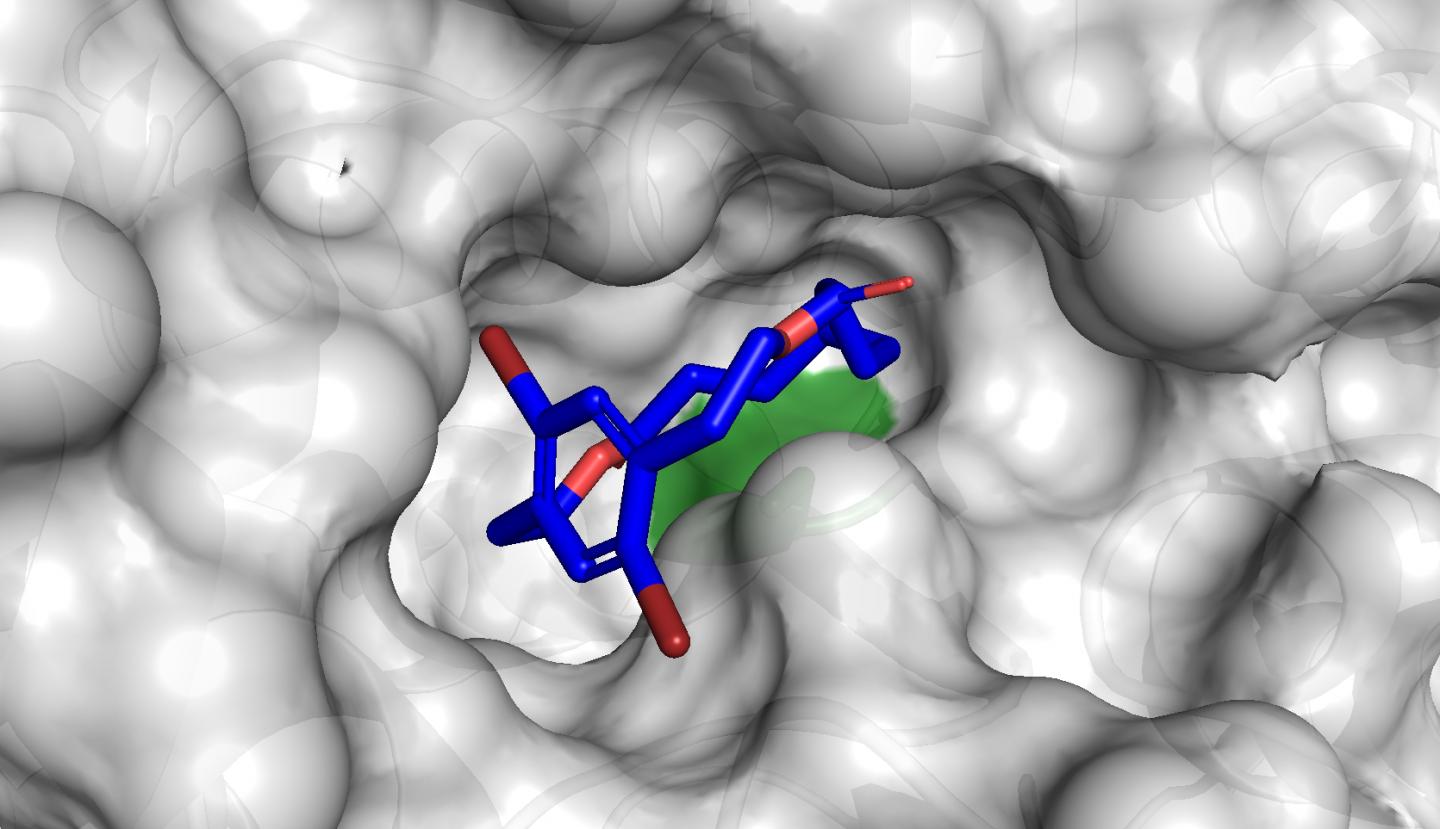
Credit: Université de Montréal

Macrocycles are molecules made of large rings of atoms. Despite being relatively big and flexible, the molecules don’t always stay “floppy” — they can actually lock themselves into specific shapes and geometries.

In manufacturing, controlling the three-dimensional shapes of macrocycles is critical. It helps decide, for example, whether the aroma in a perfume is unique or whether a prescription drug will work on a particular disease.

But for synthetic chemists, those who study the construction of molecules, controlling the topology of the large rings has not been a straightforward process – until now, that is, thanks to research done at Université de Montréal.

In a study published today in Science, a team led by chemistry professor Shawn Collins reports they have succeeded in using a natural process called biocatalysis to control the shapes of macrocycles.

And that could be a boon for the making of pharmaceuticals and electronics, they say.

“The shapes of the macrocycles we have made is what makes them special — they are what we call planar chiral,” said Collins. “And the planar chiral topology controls how the molecules interact with nature. In general, macrocycles with planar chirality are underexplored, because chemists usually have a lot of trouble making them.”

Until now, they had two choices: perform multi-step syntheses that are tedious and wasteful, or they could exploit methods that employ catalysts based on elements that are toxic, expensive and non-abundant in the Earth’s crust, such as ruthenium and rhodium.

Both approaches have long frustrated chemists, and Collins’ team looked for an alternative. They found it in biocatalysis, a process that uses enzymes, biological and typically non-toxic catalysts, as a solution to preparing planar chiral macrocycles.

Remarkably, even though chemists had never before explored biocatalysis for the synthesis of planar chiral macrocycles, it turned out there was a commercially available product that could prepare the macrocycle: a lipase enzyme called CALB.

Using it, the biocatalysts were able to shape the macrocycles in often near-perfect selectivity, even though the enzyme had not evolved for that purpose.

Importantly, Collins and his team came up with a synthetic plan that involved using simple molecular building blocks to “decorate” macrocycles with functionality. “Functionality are handles, or simple groups of atoms that be easily transformed into arrangements that are more complex,” Collins explained.

“Our hope is that the macrocycles can now be tailored to impact industry. Planar chiral macrocycles have already been known to act as antibiotics and anticancer agents. Applications in electronic materials — in lasers and display devices, for example — could be possible using the approach.”

###

About this study

Biocatalytic synthesis of planar chiral macrocycles,” by Shawn Collins et al, was published Feb. 21, 2020, in Science.

Media Contact
Jeff Heinrich
[email protected]
514-343-7593

Related Journal Article

http://dx.doi.org/10.1126/science.aaz7381

Tags: Atomic/Molecular/Particle PhysicsChemistry/Physics/Materials SciencesIndustrial Engineering/Chemistry
Share12Tweet8Share2ShareShareShare2

Related Posts

Chromatin Loops Shield Forks from Replication Stress — Medicine

Chromatin Loops Shield Forks from Replication Stress

July 2, 2026

Linking Single-Cell Transcriptomes to Mouse Visual Circuits

July 2, 2026

Graz University of Technology Deciphers the Structural Secrets of MOF Thin Films

July 2, 2026

Apelin-APLNR Pathway: Endothelial Roles in Health

July 2, 2026
Please login to join discussion

POPULAR NEWS

  • Detection of EDCs in Breast Milk and Infant Urine Up to Six Months Highlights Early Exposure Risks

    77 shares
    Share 31 Tweet 19
  • Saying Goodbye to PGY-6: Pediatric Fellowship Realities

    103 shares
    Share 41 Tweet 26
  • New Drug Candidate Developed at McMaster Shows Potential for Treating Brain Cancer

    58 shares
    Share 23 Tweet 15
  • KTU Researchers Explore Ultrasound’s Role in Enhancing Blood Flow Beyond Diagnostics

    53 shares
    Share 21 Tweet 13

About

We bring you the latest biotechnology news from best research centers and universities around the world. Check our website.

Follow us

Recent News

Chromatin Loops Shield Forks from Replication Stress

Linking Single-Cell Transcriptomes to Mouse Visual Circuits

Graz University of Technology Deciphers the Structural Secrets of MOF Thin Films

Subscribe to Blog via Email

Enter your email address to subscribe to this blog and receive notifications of new posts by email.

Join 82 other subscribers
  • Contact Us

Bioengineer.org © Copyright 2023 All Rights Reserved.

Welcome Back!

Login to your account below

Forgotten Password?

Retrieve your password

Please enter your username or email address to reset your password.

Log In
No Result
View All Result
  • Homepages
    • Home Page 1
    • Home Page 2
  • News
  • National
  • Business
  • Health
  • Lifestyle
  • Science

Bioengineer.org © Copyright 2023 All Rights Reserved.