Research aims to help identify African American donors at risk of developing kidney disease
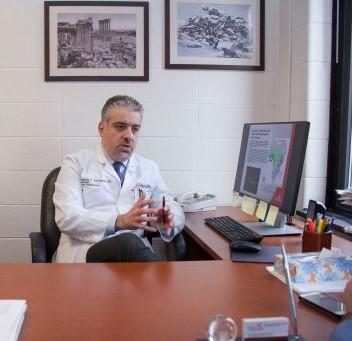
Credit: Ravenna Rutledge, University of Cincinnati Creative Services
Kidney transplantation is the gold standard treatment for end-stage kidney disease and is associated with an advantage over dialysis in both survival and quality of life.
Researchers at the University of Cincinnati are among the first to adopt genotyping that helps identify and predict the risk accompanying individuals wishing to donate a kidney. Those who are high-risk of developing disease can be removed from the pool of potential donors which will reduce their chances of developing kidney disease.
One of the key methods for improving the rate of kidney transplantation is improving the viability of organ donation. While encouraging the expansion of living kidney transplant programs, it is important that health care providers follow procedures that mitigate the negative health consequences for the donors themselves.
The focus of UC’s research is a gene called apolipoprotein L1 (APOL1), which has been recently implicated in the development of kidney disease in African Americans. Thirteen percent of African Americans carry the high-risk APOL1 genotype and, as a result, are more predisposed to kidney failure.
“Discovering this gene allows us to determine whether individuals who step forward to donate are at risk for having kidney disease,” says Bassam Abu Jawdeh, associate professor of clinical medicine in the Division of Nephrology, Kidney C.A.R.E. Program, and senior author of the study that examined the role of APOL1 in living kidney donation. “We can factor in this information when making our decision as to whether we’re going to accept them as living donors or not.”
This research is emblematic of the urban impact agenda highlighted in UC’s Next Lives Here strategic direction.
In their paper, published in the American Journal of Nephrology, Abu Jawdeh and his colleagues report their experience applying APOL1 genotyping and using it to identify high-risk donor candidates, therefore bypassing them for donation. As a result of their research, they propose a protocol for systematic APOL1 genotyping in all potential African American donors.
According to Abu Jawdeh, donating a kidney puts the donor at an extremely small yet relatively increased risk of kidney disease.
“In the overall population of healthy individuals, the risk of having advanced kidney disease over the years is somewhere in the range of 3 to 5 in 10,000,” says Abu Jawdeh. “For those who donate kidneys, their absolute risk — although still very, very small — will increase.”
He says the reason for this small increase in kidney disease incidence is a combination of genetic and environmental factors. Abu Jawdeh also emphasizes that organ donors are volunteering precious organs so steps need to be taken to ensure their generous act doesn’t negatively impact their own lives.
“As transplant specialists, it is our responsibility to find ways to optimize the health of donors, which includes protecting them from occurrence of kidney disease. By identifying high-risk genotype carriers, we are able to better counsel those who wish to donate,” says Abu Jawdeh, who is also a UC Health physician. “We have even shown that universal APOL1 genotyping is likely cost-effective, however future larger studies are warranted to ascertain the favorable cost-benefit ratio of this approach.”
The study also included contributions from Manish Anand, assistant professor, and Prakash Gudsoorkar, nephrology fellow, both in the Division of Nephrology, Kidney C.A.R.E. program in the UC College of Medicine. Abu Jawdeh is the principal investigator for the APOL1 Long-term Kidney Transplantation Outcomes Network for all three Cincinnati transplant programs (UC, Cincinnati Children’s and Christ Hospitals). For that, he receives federal funding from the National Institute of Diabetes and Digestive and Kidney Diseases (U01).
###
Media Contact
Bill Bangert
[email protected]
Original Source
https:/
Related Journal Article
http://dx.