• HOME
  • NEWS
  • EXPLORE
    • CAREER
      • Companies
      • Jobs
    • EVENTS
    • iGEM
      • News
      • Team
    • PHOTOS
    • VIDEO
    • WIKI
  • BLOG
  • COMMUNITY
    • FACEBOOK
    • INSTAGRAM
    • TWITTER
Saturday, February 7, 2026
BIOENGINEER.ORG
No Result
View All Result
  • Login
  • HOME
  • NEWS
  • EXPLORE
    • CAREER
      • Companies
      • Jobs
        • Lecturer
        • PhD Studentship
        • Postdoc
        • Research Assistant
    • EVENTS
    • iGEM
      • News
      • Team
    • PHOTOS
    • VIDEO
    • WIKI
  • BLOG
  • COMMUNITY
    • FACEBOOK
    • INSTAGRAM
    • TWITTER
  • HOME
  • NEWS
  • EXPLORE
    • CAREER
      • Companies
      • Jobs
        • Lecturer
        • PhD Studentship
        • Postdoc
        • Research Assistant
    • EVENTS
    • iGEM
      • News
      • Team
    • PHOTOS
    • VIDEO
    • WIKI
  • BLOG
  • COMMUNITY
    • FACEBOOK
    • INSTAGRAM
    • TWITTER
No Result
View All Result
Bioengineer.org
No Result
View All Result
Home NEWS Science News Health

$2.8 million grant to fund bioprinting for reconstruction of face, mouth, skull tissues

Bioengineer by Bioengineer
February 10, 2020
in Health
Reading Time: 2 mins read
0
IMAGE
Share on FacebookShare on TwitterShare on LinkedinShare on RedditShare on Telegram

IMAGE

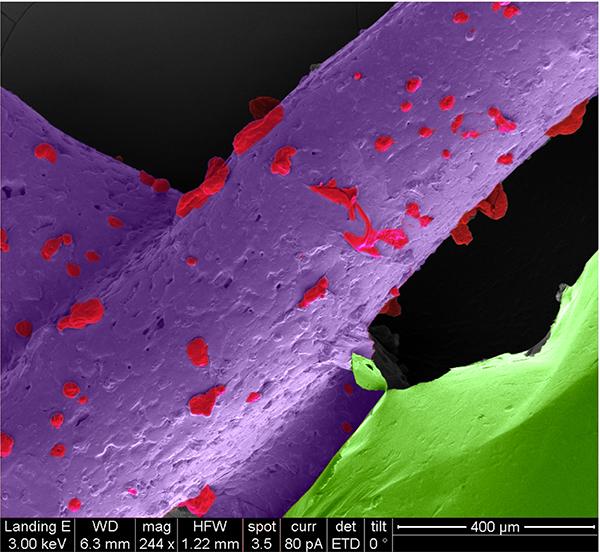
Credit: Kerim Moncal, Ozbolat Lab, Penn State


Seamlessly correcting defects in the face, mouth and skull is highly challenging because it requires precise stacking of a variety of tissues including bone, muscle, fat and skin. Now, Penn State researchers are investigating methods to 3D bioprint and grow the appropriate tissues for craniomaxillofacial reconstruction.

A five-year grant from the National Institutes of Health’s National Institute of Dental and Craniofacial Research, will allow a team of researchers to explore the use of stem cells, biomaterials and differentiation factors to match the complex tissues of the face and head directly bioprinted during surgery.

“With the advance in 3D bioprinting, in-place reconstruction of composite tissues for craniomaxillofacial repair has recently become feasible as 3D bioprinting enables complex tissue heterogeneity in an anatomically accurate and cosmetically appealing manner,” said Ibrahim T. Ozbolat, Hartz Family Career Development Associate Professor of Engineering Science and Mechanics, and principal investigator on the project.

The researchers are looking at ways to bioprint appropriate tissues directly into a subject to correct damage or defects. They will first investigate, in an immunodeficient rat model, bone tissue bioprinting. Next, they will investigate multilayered skin tissue which include adipose — fat — and dermis/epidermis — skin — tissue. They will look at the impact of differentiation factors and how fat influences the growth of skin tissue.

Finally, they will look at three-layer composite tissues that include bone, fat and skin layers to determine how vascularization occurs in both soft and hard tissue regeneration.

“We have formed a complementary collaboration that merges essential domain knowledge in bioprinting, regenerative medicine, craniomaxillofacial surgery, plastic surgery, gene therapy, gene delivery, bone mechanics and bone and skin biology with the depth necessary to propel this work,” said Ozbolat.

To meet these needs, the team consists of co-investigators, Elias Rizk, associate professor of neurosurgery; Dino Ravnic, assistant professor of surgery, and Thomas Samson, associate professor of surgery, both in the Division of Plastic Surgery and Greg Lewis, assistant professor of orthopedics and rehabilitation, all in the College of Medicine; and Daniel Hayes, associate professor of biomedical engineering.

The goal of the project is to produce an advanced bioprinting technology that shows the complex interactions between layers of engineered tissues and provide an understanding of how localized delivery of differentiation factors will impact craniomaxillofacial reconstruction.

###

Media Contact
A’ndrea Elyse Messer
[email protected]
814-865-5689

Tags: Biomedical/Environmental/Chemical EngineeringMedicine/HealthRehabilitation/Prosthetics/Plastic Surgery
Share12Tweet8Share2ShareShareShare2

Related Posts

Evaluating Pediatric Emergency Care Quality in Ethiopia

February 7, 2026

TPMT Expression Predictions Linked to Azathioprine Side Effects

February 7, 2026

Improving Dementia Care with Enhanced Activity Kits

February 7, 2026

Decoding Prostate Cancer Origins via snFLARE-seq, mxFRIZNGRND

February 7, 2026
Please login to join discussion

POPULAR NEWS

  • Robotic Ureteral Reconstruction: A Novel Approach

    Robotic Ureteral Reconstruction: A Novel Approach

    82 shares
    Share 33 Tweet 21
  • Digital Privacy: Health Data Control in Incarceration

    63 shares
    Share 25 Tweet 16
  • Study Reveals Lipid Accumulation in ME/CFS Cells

    57 shares
    Share 23 Tweet 14
  • Breakthrough in RNA Research Accelerates Medical Innovations Timeline

    53 shares
    Share 21 Tweet 13

About

We bring you the latest biotechnology news from best research centers and universities around the world. Check our website.

Follow us

Recent News

Evaluating Pediatric Emergency Care Quality in Ethiopia

TPMT Expression Predictions Linked to Azathioprine Side Effects

Improving Dementia Care with Enhanced Activity Kits

Subscribe to Blog via Email

Success! An email was just sent to confirm your subscription. Please find the email now and click 'Confirm' to start subscribing.

Join 73 other subscribers
  • Contact Us

Bioengineer.org © Copyright 2023 All Rights Reserved.

Welcome Back!

Login to your account below

Forgotten Password?

Retrieve your password

Please enter your username or email address to reset your password.

Log In
No Result
View All Result
  • Homepages
    • Home Page 1
    • Home Page 2
  • News
  • National
  • Business
  • Health
  • Lifestyle
  • Science

Bioengineer.org © Copyright 2023 All Rights Reserved.