• HOME
  • NEWS
  • EXPLORE
    • CAREER
      • Companies
      • Jobs
    • EVENTS
    • iGEM
      • News
      • Team
    • PHOTOS
    • VIDEO
    • WIKI
  • BLOG
  • COMMUNITY
    • FACEBOOK
    • INSTAGRAM
    • TWITTER
Saturday, February 7, 2026
BIOENGINEER.ORG
No Result
View All Result
  • Login
  • HOME
  • NEWS
  • EXPLORE
    • CAREER
      • Companies
      • Jobs
        • Lecturer
        • PhD Studentship
        • Postdoc
        • Research Assistant
    • EVENTS
    • iGEM
      • News
      • Team
    • PHOTOS
    • VIDEO
    • WIKI
  • BLOG
  • COMMUNITY
    • FACEBOOK
    • INSTAGRAM
    • TWITTER
  • HOME
  • NEWS
  • EXPLORE
    • CAREER
      • Companies
      • Jobs
        • Lecturer
        • PhD Studentship
        • Postdoc
        • Research Assistant
    • EVENTS
    • iGEM
      • News
      • Team
    • PHOTOS
    • VIDEO
    • WIKI
  • BLOG
  • COMMUNITY
    • FACEBOOK
    • INSTAGRAM
    • TWITTER
No Result
View All Result
Bioengineer.org
No Result
View All Result
Home NEWS Science News Chemistry

Direct synthesis of azulene continues to reveal alluring properties

Bioengineer by Bioengineer
February 6, 2020
in Chemistry
Reading Time: 2 mins read
0
IMAGE
Share on FacebookShare on TwitterShare on LinkedinShare on RedditShare on Telegram

IMAGE

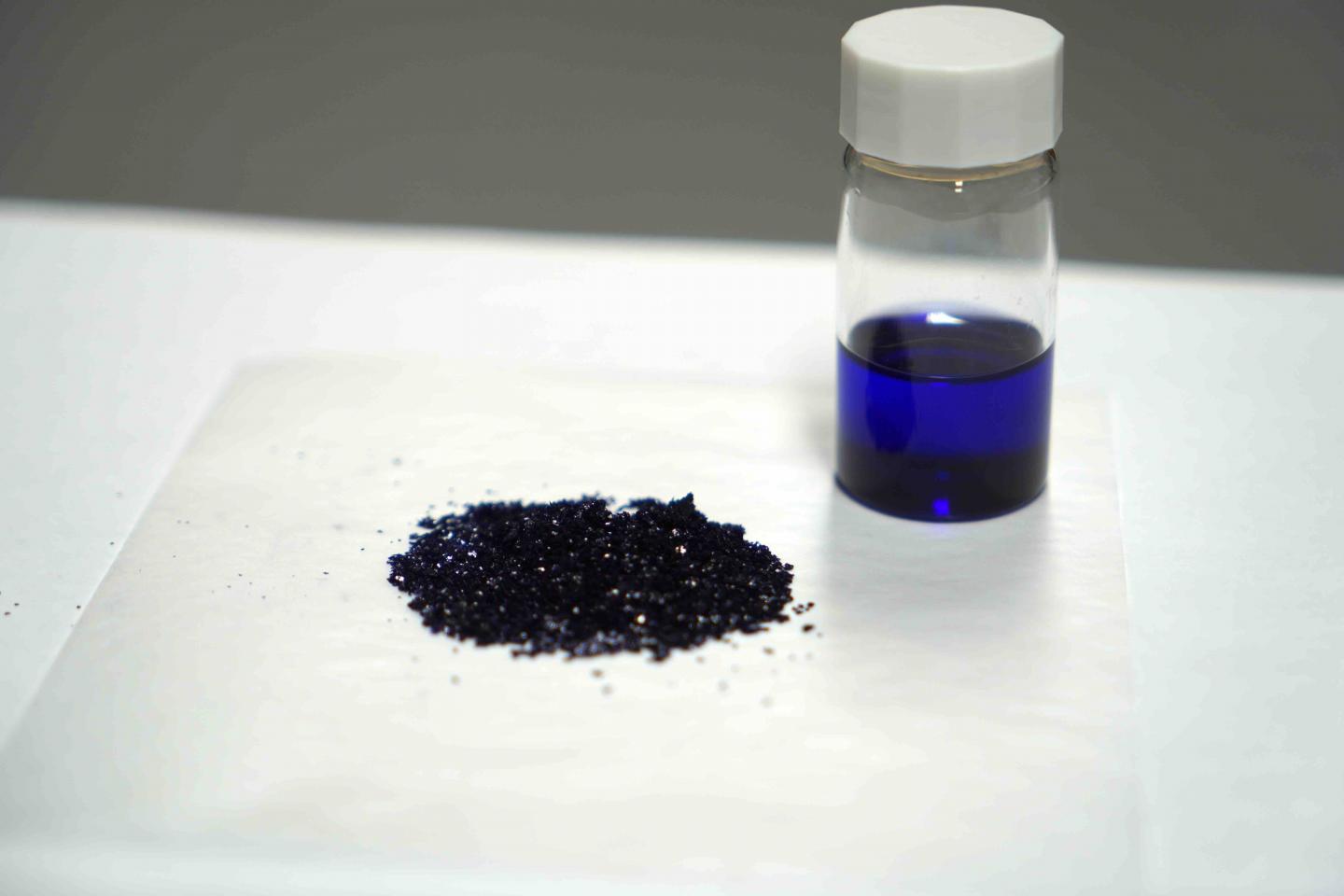
Credit: Shinshu University


Azulene is a pretty neat substance. As the name suggests, it displays a peculiar blue color. First synthesized in the 1930s, azulene has been used in medicine for its bioactive properties. Now azulene derivatives are being studied for use in organic electronics such as n-type semiconductors, solar cells and non-linear optics. This is made possible by the functionalization of the azulene ring. Odd-positions of the ring had been researched extensively for their high reactivity, though it was hard to select their functionality due to their electronic properties. Highly functionalized azulenes were enabled by cross-coupling reactions of even-numbered positions of azulenes. However, it has been difficult to synthesize these precursors.

Associate Professor Taku Shoji at Shinshu University et al. was successful in direct synthesis of 2-arylazulene. One of the few researchers who specialize in azulene synthesis, Professor Shoji states that the breakthrough in this study allows for the synthesis of azulene on a gram-scale instead of milligrams. The previous possible production volume made it difficult for possible use in organic electronics. Being able to synthesize azulenes from readily available 2H-cyclohepta[b]furan-2-one derivatives and silyl enol ether is a great step forward in practical applications.

The fluorescence of the azulene derivatives in acidic conditions (which can be seen in the photo) was observed unexpectedly during this study. Though this property of azulene derivatives had been previously reported, the research group found that 2-phenylazulenes exhibit the emission in acidic media and the fluorescence wavelength depends on the electronic properties of the substituents on the substituted benzene ring. The group is collaborating with photochemical experts to elucidate the mechanism of this unexpected fluorescence.

Professor Shoji and his team continue to attempt to synthesize 2-arylazulene at a lower temperature using an appropriate catalyst. Professor Shoji states that “although azulene have been studied for a hundred years, new synthetic methods, reactivity and physical properties continue to be discovered.” He remains fascinated by what this mysterious blue substance can reveal and ultimately be applied for.

###

###

About Shinshu University:

Shinshu University is a national university in Japan and working on providing solutions for building a sustainable society through interdisciplinary research fields: material science (carbon, fiber, composites), biomedical science (for intractable diseases, preventive medicine), and mountain science. We aim to boost research and innovation capability through collaborative projects with distinguished researchers from the world. For more information please see: http://www.shinshu-u.ac.jp/english/

Media Contact
Hitomi Thompson
[email protected]
81-263-373-529

Related Journal Article

http://dx.doi.org/10.1039/C9CC09376A

Tags: Chemistry/Physics/Materials SciencesMaterials
Share12Tweet8Share2ShareShareShare2

Related Posts

blank

Breakthrough in Environmental Cleanup: Scientists Develop Solar-Activated Biochar for Faster Remediation

February 7, 2026
blank

Cutting Costs: Making Hydrogen Fuel Cells More Affordable

February 6, 2026

Scientists Develop Hand-Held “Levitating” Time Crystals

February 6, 2026

Observing a Key Green-Energy Catalyst Dissolve Atom by Atom

February 6, 2026
Please login to join discussion

POPULAR NEWS

  • Robotic Ureteral Reconstruction: A Novel Approach

    Robotic Ureteral Reconstruction: A Novel Approach

    82 shares
    Share 33 Tweet 21
  • Digital Privacy: Health Data Control in Incarceration

    63 shares
    Share 25 Tweet 16
  • Study Reveals Lipid Accumulation in ME/CFS Cells

    57 shares
    Share 23 Tweet 14
  • Breakthrough in RNA Research Accelerates Medical Innovations Timeline

    53 shares
    Share 21 Tweet 13

About

We bring you the latest biotechnology news from best research centers and universities around the world. Check our website.

Follow us

Recent News

Menopause Care: Insights from Workforce Review and Consultation

LRRK2R1627P Mutation Boosts Gut Inflammation, α-Synuclein

3D Gut-Brain-Vascular Model Reveals Disease Links

Subscribe to Blog via Email

Enter your email address to subscribe to this blog and receive notifications of new posts by email.

Join 73 other subscribers
  • Contact Us

Bioengineer.org © Copyright 2023 All Rights Reserved.

Welcome Back!

Login to your account below

Forgotten Password?

Retrieve your password

Please enter your username or email address to reset your password.

Log In
No Result
View All Result
  • Homepages
    • Home Page 1
    • Home Page 2
  • News
  • National
  • Business
  • Health
  • Lifestyle
  • Science

Bioengineer.org © Copyright 2023 All Rights Reserved.