

• HOME
  • NEWS
  • EXPLORE
    • CAREER
      • Companies
      • Jobs
    • EVENTS
    • iGEM
      • News
      • Team
    • PHOTOS
    • VIDEO
    • WIKI
  • BLOG
  • COMMUNITY
    • FACEBOOK
    • INSTAGRAM
    • TWITTER
Tuesday, March 31, 2026
BIOENGINEER.ORG
No Result
View All Result
  • Login
  • HOME
  • NEWS
  • EXPLORE
    • CAREER
      • Companies
      • Jobs
        • Lecturer
        • PhD Studentship
        • Postdoc
        • Research Assistant
    • EVENTS
    • iGEM
      • News
      • Team
    • PHOTOS
    • VIDEO
    • WIKI
  • BLOG
  • COMMUNITY
    • FACEBOOK
    • INSTAGRAM
    • TWITTER
  • HOME
  • NEWS
  • EXPLORE
    • CAREER
      • Companies
      • Jobs
        • Lecturer
        • PhD Studentship
        • Postdoc
        • Research Assistant
    • EVENTS
    • iGEM
      • News
      • Team
    • PHOTOS
    • VIDEO
    • WIKI
  • BLOG
  • COMMUNITY
    • FACEBOOK
    • INSTAGRAM
    • TWITTER
No Result
View All Result
Bioengineer.org
No Result
View All Result
Home NEWS Science News Science

JNeurosci: Highlights From the Nov. 23 issue

Bioengineer by Bioengineer
November 23, 2016
in Science
Reading Time: 2 mins read
0
Share on FacebookShare on TwitterShare on LinkedinShare on RedditShare on Telegram

Check out these newsworthy studies from the November 23, 2016, issue of JNeurosci. Media interested in obtaining the full text of the studies should contact [email protected].

Mental Time and Space Travel Activate Different Brain Networks

As humans, we can envision the future, relive the past, or imagine ourselves in a different place. In a new study, researchers uncover the neural correlates of this mental time and space travel. Using functional magnetic resonance imaging (fMRI), they measured participants' brain activity while they mentally transported themselves to different times and places, and evaluated how close these scenarios were to specific historical events. The researchers find mental time and space travel activate different areas of the brain, except for overlapping activity in a small region of the inferior parietal lobe. They speculate this region may be involved in readjusting our frame of reference during mental time and space travel.

Corresponding author: Baptiste Gauthier, [email protected]

Glucose Transport Pathway Impaired in Insulin Resistance Is Important for Memory in Rats

In healthy individuals, insulin triggers a specific transport protein called GluT4 to move from the interior of muscle or fat cells to the membrane, where it shuttles in glucose for energy. This process is faulty in people with insulin resistance. The same pathway is found in the brain, but its role there is less clear, although the brain is critically dependent on glucose supply. In a new study in rats, researchers find that memory acquisition triggers GluT4 movement to cell membranes in the hippocampus, a region of the brain critical for learning and memory. Blocking GluT4's ability to transport glucose into cells also impairs rats' ability to acquire new memories. The results identify how insulin resistance impacts the brain and may help explain why type 2 diabetes is a risk factor for Alzheimer's disease.

Corresponding author: Jiah Pearson-Leary, [email protected]

Allergic Disorders May Activate Immune Cells to Cause Neuropathic Pain

Allergic disorders like asthma and eczema are becoming more prevalent around the world. They've been linked to neuropsychiatric disorders such as autism as well as neuropathic pain, but the mechanism of this relationship is still a mystery. In a new study, researchers find mice with asthma or eczema have more activated immune cells, or microglia, in the spinal cord and show increased sensitivity to touch, indicative of pain. Blocking a specific receptor on microglia prevented their activation to an inflammatory phenotype and eliminated pain.

Corresponding author: Jun-ichi Kira, [email protected]

###

The Journal of Neuroscience is published by the Society for Neuroscience, an organization of nearly 38,000 basic scientists and clinicians who study the brain and nervous system.

Media Contact

Emily Ortman
[email protected]
202-962-4000
@sfntweets

http://www.sfn.org

############

Story Source: Materials provided by Scienmag
Share12Tweet8Share2ShareShareShare2

Related Posts

Five or more hours of smartphone usage per day may increase obesity

July 25, 2019
IMAGE

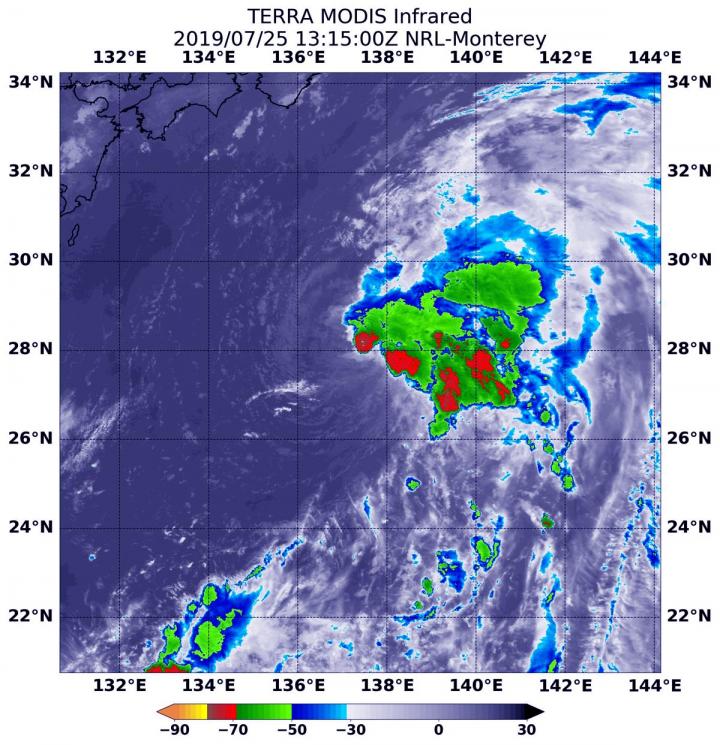
NASA’s terra satellite finds tropical storm 07W’s strength on the side

July 25, 2019

NASA finds one burst of energy in weakening Depression Dalila

July 25, 2019

Researcher’s innovative flood mapping helps water and emergency management officials

July 25, 2019
Please login to join discussion

POPULAR NEWS

  • blank

    Revolutionary AI Model Enhances Precision in Detecting Food Contamination

    96 shares
    Share 38 Tweet 24
  • Imagine a Social Media Feed That Challenges Your Views Instead of Reinforcing Them

    1006 shares
    Share 398 Tweet 249
  • Promising Outcomes from First Clinical Trials of Gene Regulation in Epilepsy

    51 shares
    Share 20 Tweet 13
  • Advancements in EV Battery Technology to Surpass Climate Change-Induced Degradation

    45 shares
    Share 18 Tweet 11

About

We bring you the latest biotechnology news from best research centers and universities around the world. Check our website.

Follow us

Recent News

CXCR3 Linked to T-Cell Heart Damage in Rheumatic Fever

Scientists Uncover Key Strategies to Prevent Hospitalizations Amid Nursing Home Flu Outbreaks

Impact of Food Deserts on Post-Breast Reconstruction Complications

Subscribe to Blog via Email

Enter your email address to subscribe to this blog and receive notifications of new posts by email.

Join 78 other subscribers
  • Contact Us

Bioengineer.org © Copyright 2023 All Rights Reserved.

Welcome Back!

Login to your account below

Forgotten Password?

Retrieve your password

Please enter your username or email address to reset your password.

Log In
No Result
View All Result
  • Homepages
    • Home Page 1
    • Home Page 2
  • News
  • National
  • Business
  • Health
  • Lifestyle
  • Science

Bioengineer.org © Copyright 2023 All Rights Reserved.
