

• HOME
  • NEWS
  • EXPLORE
    • CAREER
      • Companies
      • Jobs
    • EVENTS
    • iGEM
      • News
      • Team
    • PHOTOS
    • VIDEO
    • WIKI
  • BLOG
  • COMMUNITY
    • FACEBOOK
    • INSTAGRAM
    • TWITTER
Thursday, January 1, 2026
BIOENGINEER.ORG
No Result
View All Result
  • Login
  • HOME
  • NEWS
  • EXPLORE
    • CAREER
      • Companies
      • Jobs
        • Lecturer
        • PhD Studentship
        • Postdoc
        • Research Assistant
    • EVENTS
    • iGEM
      • News
      • Team
    • PHOTOS
    • VIDEO
    • WIKI
  • BLOG
  • COMMUNITY
    • FACEBOOK
    • INSTAGRAM
    • TWITTER
  • HOME
  • NEWS
  • EXPLORE
    • CAREER
      • Companies
      • Jobs
        • Lecturer
        • PhD Studentship
        • Postdoc
        • Research Assistant
    • EVENTS
    • iGEM
      • News
      • Team
    • PHOTOS
    • VIDEO
    • WIKI
  • BLOG
  • COMMUNITY
    • FACEBOOK
    • INSTAGRAM
    • TWITTER
No Result
View All Result
Bioengineer.org
No Result
View All Result
Home NEWS Science News Health

Squid brains approach that of dogs

Bioengineer by Bioengineer
January 28, 2020
in Health
Reading Time: 2 mins read
0
IMAGE
Share on FacebookShare on TwitterShare on LinkedinShare on RedditShare on Telegram

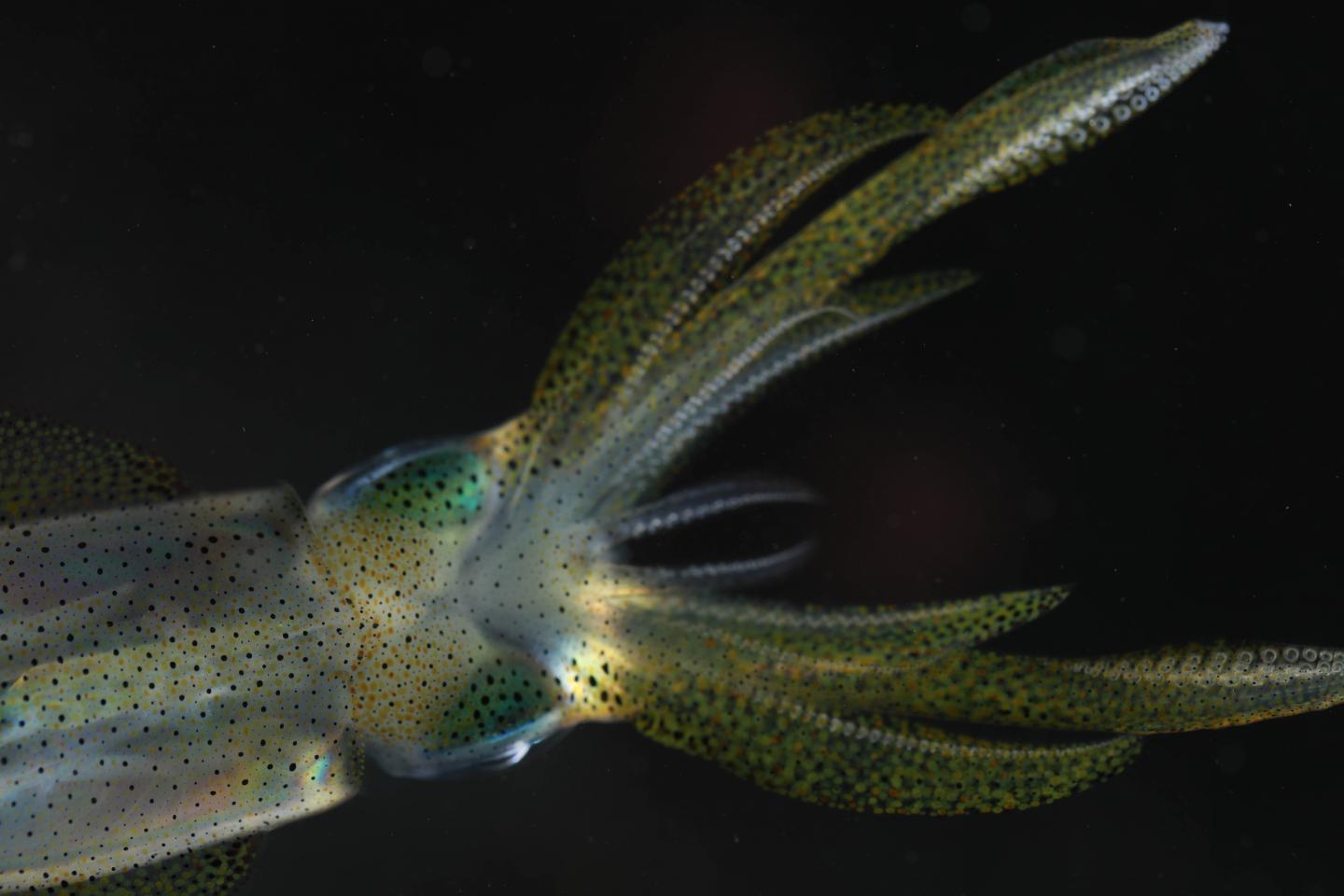
UQ researchers completed the first MRI-based mapping of the squid brain in 50 years to develop an atlas of neural connections
IMAGE

Credit: Queensland Brain Institute, The University of Queensland


We are closer to understanding the incredible ability of squid to instantly camouflage themselves thanks to research from The University of Queensland.

Dr Wen-Sung Chung and Professor Justin Marshall, from UQ’s Queensland Brain Institute, completed the first MRI-based mapping of the squid brain in 50 years to develop an atlas of neural connections.

“This the first time modern technology has been used to explore the brain of this amazing animal, and we proposed 145 new connections and pathways, more than 60 per cent of which are linked to the vision and motor systems,” Dr Chung said.

“The modern cephalopods, a group including octopus, cuttlefish and squid, have famously complex brains, approaching that of a dog and surpassing mice and rats, at least in neuronal number.

“For example, some cephalopods have more than 500 million neurons, compared to 200 million for a rat and 20,000 for a normal mollusc.

Some examples of complex cephalopod behaviour include the ability to camouflage themselves despite being colourblind, count, recognise patterns, problem solve and communicate using a variety of signals.

“We can see that a lot of neural circuits are dedicated to camouflage and visual communication. Giving the squid a unique ability to evade predators, hunt and conspecific communicate with dynamic colour changes”.

Dr Chung said the study also supported emerging hypotheses on convergent evolution – when organisms independently evolve similar traits – of cephalopod nervous systems with parts of the vertebrate central nervous system.

“The similarity with the better-studied vertebrate nervous system allows us to make new predictions about the cephalopod nervous system at the behavioural level,” he said.

“For example, this study proposes several new networks of neurons in charge of visually-guided behaviours such as locomotion and countershading camouflage – when squid display different colours on the top and bottom of their bodies to blend into the background whether they are being viewed from above or below.”

The team’s ongoing project involves understanding why different cephalopod species have evolved different subdivisions of the brain.

“Our findings will hopefully provide evidence to help us understand why these fascinating creatures display such diverse behaviour and very different interactions.”

###

The study involved using techniques such as MRI on the brain of the reef squid Sepioteuthis lessoniana, and was published in the journal iScience.

Media Contact
Jane Ilsley
[email protected]
61-405-661-856

Related Journal Article

http://dx.doi.org/10.1016/j.isci.2019.100816

Tags: Medicine/Healthneurobiology
Share12Tweet8Share2ShareShareShare2

Related Posts

Enhanced Nerve Conduits Boost Sciatic Regeneration

January 1, 2026

Assessing HPV Self-Collection Readiness in Tamil Nadu

January 1, 2026

Gestational Diabetes Alters Weight Gain’s Impact on Outcomes

January 1, 2026

Coping Strategies in Rural Seniors with Chronic Illness

January 1, 2026
Please login to join discussion

POPULAR NEWS

  • blank

    PTSD, Depression, Anxiety in Childhood Cancer Survivors, Parents

    109 shares
    Share 44 Tweet 27
  • NSF funds machine-learning research at UNO and UNL to study energy requirements of walking in older adults

    71 shares
    Share 28 Tweet 18
  • Exploring Audiology Accessibility in Johannesburg, South Africa

    52 shares
    Share 21 Tweet 13
  • SARS-CoV-2 Subvariants Affect Outcomes in Elderly Hip Fractures

    44 shares
    Share 18 Tweet 11

About

We bring you the latest biotechnology news from best research centers and universities around the world. Check our website.

Follow us

Recent News

Enhanced Nerve Conduits Boost Sciatic Regeneration

Assessing HPV Self-Collection Readiness in Tamil Nadu

ImmunoStruct: Advancing Deep Learning in Immunogenicity Prediction

Subscribe to Blog via Email

Enter your email address to subscribe to this blog and receive notifications of new posts by email.

Join 71 other subscribers
  • Contact Us

Bioengineer.org © Copyright 2023 All Rights Reserved.

Welcome Back!

Login to your account below

Forgotten Password?

Retrieve your password

Please enter your username or email address to reset your password.

Log In
No Result
View All Result
  • Homepages
    • Home Page 1
    • Home Page 2
  • News
  • National
  • Business
  • Health
  • Lifestyle
  • Science

Bioengineer.org © Copyright 2023 All Rights Reserved.

