

• HOME
  • NEWS
  • EXPLORE
    • CAREER
      • Companies
      • Jobs
    • EVENTS
    • iGEM
      • News
      • Team
    • PHOTOS
    • VIDEO
    • WIKI
  • BLOG
  • COMMUNITY
    • FACEBOOK
    • INSTAGRAM
    • TWITTER
Friday, January 16, 2026
BIOENGINEER.ORG
No Result
View All Result
  • Login
  • HOME
  • NEWS
  • EXPLORE
    • CAREER
      • Companies
      • Jobs
        • Lecturer
        • PhD Studentship
        • Postdoc
        • Research Assistant
    • EVENTS
    • iGEM
      • News
      • Team
    • PHOTOS
    • VIDEO
    • WIKI
  • BLOG
  • COMMUNITY
    • FACEBOOK
    • INSTAGRAM
    • TWITTER
  • HOME
  • NEWS
  • EXPLORE
    • CAREER
      • Companies
      • Jobs
        • Lecturer
        • PhD Studentship
        • Postdoc
        • Research Assistant
    • EVENTS
    • iGEM
      • News
      • Team
    • PHOTOS
    • VIDEO
    • WIKI
  • BLOG
  • COMMUNITY
    • FACEBOOK
    • INSTAGRAM
    • TWITTER
No Result
View All Result
Bioengineer.org
No Result
View All Result
Home NEWS Science News Health

Discovery could lead to new treatment for rare blood disease

Bioengineer by Bioengineer
January 27, 2020
in Health
Reading Time: 2 mins read
0
IMAGE
Share on FacebookShare on TwitterShare on LinkedinShare on RedditShare on Telegram

University of Alberta cancer researcher proposes treating cutaneous T-cell lymphoma before it reaches the skin
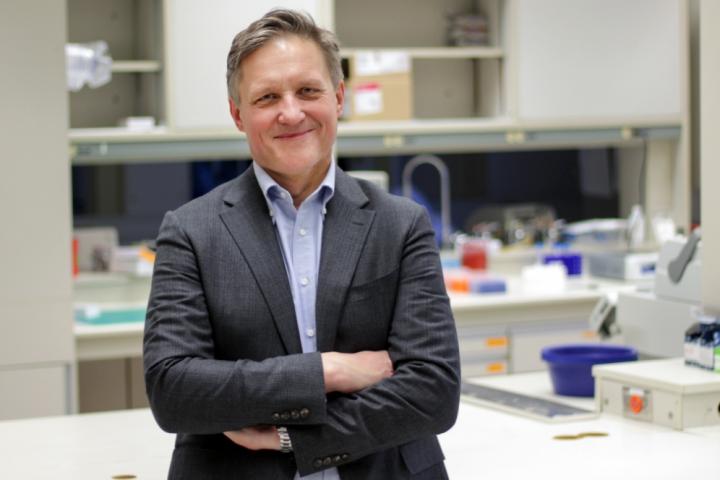
IMAGE

Credit: Jordan Carson


A cancer researcher at the University of Alberta has made a discovery that could unlock new ways to treat a rare blood disease.

By taking biopsies of skin lesions from patients suffering from cutaneous T-cell lymphoma, U of A dermatology researcher Robert Gniadecki discovered that the cancer cells found in the lesions on the skin originate from the blood, not the skin as was believed.

The protocol to treat the disease was to eliminate the cancer cells from the skin.

Based on his findings, Gniadecki believes it would be more effective to treat the malignant clones in the blood rather than waiting until the cells reach the skin and present as lesions.

He also noted that even when a patient has a barely noticeable lesion, there is already an abundance of cancer cells in the blood.

“They [the malignant clone cells in the blood] are less variable than the cells that grow in the skin, they are more immature, so it’s easier to kill them,” explained Gniadecki, who is the director of the Division of Dermatology and a member of the Cancer Research Institute of Northern Alberta.

Cutaneous T-cell lymphoma is a rare type of cancer that begins in T cells, which are part of the immune system. They develop mutations that cause them to attack skin cells causing lesions.

Gniadecki is also working with the Alberta Machine Intelligence Institute (Amii) to run the genetic information from his samples through a machine learning program to see whether there are any identifiable biomarkers in the blood that could suggest how the disease progresses.

“Those who have a horrible prognosis, we should treat them aggressively from day one,” Gniadecki said.

Because cutaneous T-cell lymphoma is so rare–roughly 150 in the Edmonton area live with it–knowledge in the medical community about it is quite low and it’s often not recognized early, said Gniadecki.

“The diagnostic delay can be up to five years until somebody actually makes the diagnosis; it’s not psoriasis, it’s not a bad infection of the skin, it’s actually cancer growing in your skin,” said Gniadecki. “It’s progressive, and we have no cure for this. It’s a huge medical need.”

###

Gniadecki’s study, “Skin Colonization by Circulating Neoplastic Clones in Cutaneous T-cell Lymphoma,” was published in Blood.

Media Contact
Ross Neitz
[email protected]
780-492-5986

Original Source

https://www.folio.ca/discovery-could-lead-to-new-treatment-for-rare-blood-disease/

Related Journal Article

http://dx.doi.org/10.1182/blood.2019002516

Tags: cancerGeneticsMedicine/Health
Share12Tweet8Share2ShareShareShare2

Related Posts

Urban-Rural Gaps in Perceived Quality of Aging Services

January 15, 2026

Tirzepatide Resolves MASH Without Worsening Fibrosis

January 15, 2026

PPM1A Dysfunction Intensifies DPN via NF-κB/NLRP3 Pathway

January 15, 2026

Nature-Inspired Medical Devices: Scaffolding Inquiry-Based Learning

January 15, 2026
Please login to join discussion

POPULAR NEWS

  • Enhancing Spiritual Care Education in Nursing Programs

    155 shares
    Share 62 Tweet 39
  • PTSD, Depression, Anxiety in Childhood Cancer Survivors, Parents

    147 shares
    Share 59 Tweet 37
  • Robotic Ureteral Reconstruction: A Novel Approach

    76 shares
    Share 30 Tweet 19
  • Study Reveals Lipid Accumulation in ME/CFS Cells

    53 shares
    Share 21 Tweet 13

About

We bring you the latest biotechnology news from best research centers and universities around the world. Check our website.

Follow us

Recent News

Influenza Outcomes in Youth: Pre- vs. Post-COVID

Neonatal Neuroplasticity: Linking Brain Science to Care

Urban-Rural Gaps in Perceived Quality of Aging Services

Subscribe to Blog via Email

Success! An email was just sent to confirm your subscription. Please find the email now and click 'Confirm' to start subscribing.

Join 71 other subscribers
  • Contact Us

Bioengineer.org © Copyright 2023 All Rights Reserved.

Welcome Back!

Login to your account below

Forgotten Password?

Retrieve your password

Please enter your username or email address to reset your password.

Log In
No Result
View All Result
  • Homepages
    • Home Page 1
    • Home Page 2
  • News
  • National
  • Business
  • Health
  • Lifestyle
  • Science

Bioengineer.org © Copyright 2023 All Rights Reserved.

