• HOME
  • NEWS
  • EXPLORE
    • CAREER
      • Companies
      • Jobs
    • EVENTS
    • iGEM
      • News
      • Team
    • PHOTOS
    • VIDEO
    • WIKI
  • BLOG
  • COMMUNITY
    • FACEBOOK
    • INSTAGRAM
    • TWITTER
Thursday, January 1, 2026
BIOENGINEER.ORG
No Result
View All Result
  • Login
  • HOME
  • NEWS
  • EXPLORE
    • CAREER
      • Companies
      • Jobs
        • Lecturer
        • PhD Studentship
        • Postdoc
        • Research Assistant
    • EVENTS
    • iGEM
      • News
      • Team
    • PHOTOS
    • VIDEO
    • WIKI
  • BLOG
  • COMMUNITY
    • FACEBOOK
    • INSTAGRAM
    • TWITTER
  • HOME
  • NEWS
  • EXPLORE
    • CAREER
      • Companies
      • Jobs
        • Lecturer
        • PhD Studentship
        • Postdoc
        • Research Assistant
    • EVENTS
    • iGEM
      • News
      • Team
    • PHOTOS
    • VIDEO
    • WIKI
  • BLOG
  • COMMUNITY
    • FACEBOOK
    • INSTAGRAM
    • TWITTER
No Result
View All Result
Bioengineer.org
No Result
View All Result
Home NEWS Science News Health

New aspects of globular glial tauopathy could help in the design of more effective drugs

Bioengineer by Bioengineer
January 27, 2020
in Health
Reading Time: 2 mins read
0
IMAGE
Share on FacebookShare on TwitterShare on LinkedinShare on RedditShare on Telegram

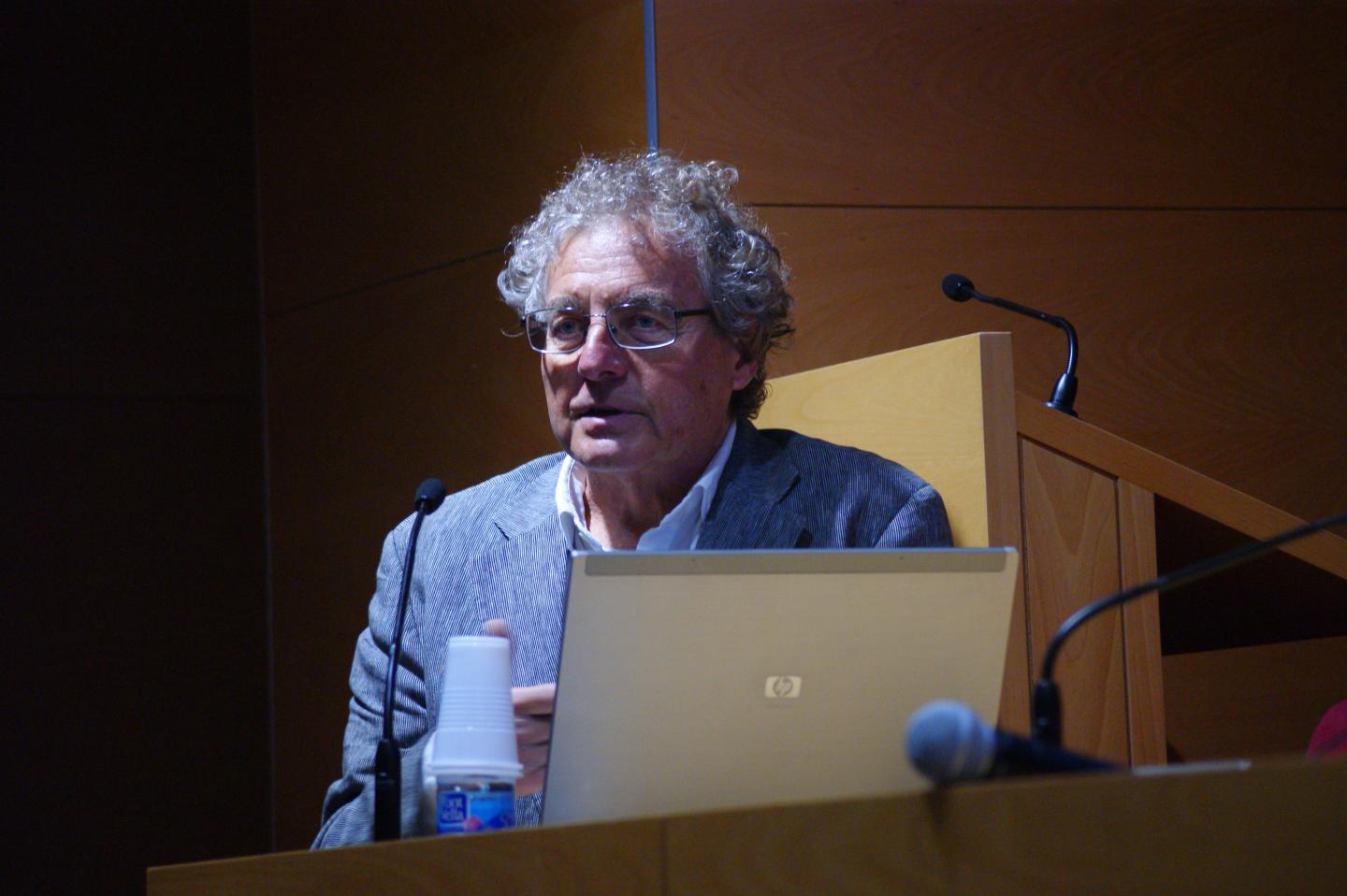
Tau is not the only protein implicated in protein inclusion formation responsible for this neurodegenerative disease
IMAGE

Credit: Isidre Ferrer

Tauopathies are a group of neurodegenerative diseases characterized by the accumulation of phospho-tau, in other words tau associated to phosphate groups. Globular Glial Tauopathy, as well as Alzheimer’s, are members of this large group. It is characterized by the accumulation of phospho-tau in neurons and by the formation of protein inclusions in glial cells astrocytes or oligodendrocytes. The majority of this kind of tauopathy is spontaneous, but some of them are caused by specific mutations.

This study published at Acta Neuropathologica journal, was led by Dr. Isidre Ferrer, from Bellvitge Biomedical Research Institute (IDIBELL), Medicine and Health Science Faculty from Barcelona University (UB) and Bellvitge Hospital (HUB), with the collaboration of Dr. José Antonio del Río from Institute for Bioengineering of Catalonia (IBEC) and Biology Faculty from UB, both of them are members of Neuroscience Institute (UBNeuro) from UB. They studied several cases of patients with kind of tauopathy, genetic or spontaneous. The study shows that the addition of phosphate groups, is not specific to tau many other proteins are abnormally phosphorylated. This hyperphosphorylation induces protein disfunction and accumulation, which generates cell damage. Navarra Hospital also participates in these observations performing the proteomic and phosphorylation analysis.

Another relevant aspect of the study is that protein accumulation not only affects neurons, glial cells associated to them are also impaired, specifically astrocytes and oligodendrocytes. Glial cell affectation could promote the loss of some neural connections. Moreover, these inclusions can travel neuron to neuron or glial cell to glial cell, which facilitates the damage spreading to other cerebral regions.

These findings provide new information for the design of new drugs that stop disease progression. Firstly, new drugs must act in other proteins apart from tau since tau is not the only protein with increased phosphorylation. On the other hand, a new player has emerged in the scene, glial cells that not only are interfering in the cerebral damage, but they also participate in the spreading of protein inclusions. Finally, new drugs that stop cellular transmission of protein inclusions could be an interesting target for this disease.

###

This study was supported by Ministry of Economy and Competiveness, “La Caixa Fundation” and European Regional Development Fund.

Media Contact
Carla Serra
[email protected]

Original Source

http://www.idibell.cat/en/whats-on/noticies/new-aspects-globular-glial-tauopathy-could-help-design-more-effective-drugs

Related Journal Article

http://dx.doi.org/10.1007/s00401-019-02122-9

Tags: BiologyMedicine/HealthMolecular Biologyneurobiology
Share12Tweet8Share2ShareShareShare2

Related Posts

Enhanced Nerve Conduits Boost Sciatic Regeneration

January 1, 2026

Assessing HPV Self-Collection Readiness in Tamil Nadu

January 1, 2026

Gestational Diabetes Alters Weight Gain’s Impact on Outcomes

January 1, 2026

Coping Strategies in Rural Seniors with Chronic Illness

January 1, 2026
Please login to join discussion

POPULAR NEWS

  • blank

    PTSD, Depression, Anxiety in Childhood Cancer Survivors, Parents

    109 shares
    Share 44 Tweet 27
  • NSF funds machine-learning research at UNO and UNL to study energy requirements of walking in older adults

    71 shares
    Share 28 Tweet 18
  • Exploring Audiology Accessibility in Johannesburg, South Africa

    52 shares
    Share 21 Tweet 13
  • SARS-CoV-2 Subvariants Affect Outcomes in Elderly Hip Fractures

    44 shares
    Share 18 Tweet 11

About

We bring you the latest biotechnology news from best research centers and universities around the world. Check our website.

Follow us

Recent News

Enhanced Nerve Conduits Boost Sciatic Regeneration

Assessing HPV Self-Collection Readiness in Tamil Nadu

ImmunoStruct: Advancing Deep Learning in Immunogenicity Prediction

Subscribe to Blog via Email

Enter your email address to subscribe to this blog and receive notifications of new posts by email.

Join 71 other subscribers
  • Contact Us

Bioengineer.org © Copyright 2023 All Rights Reserved.

Welcome Back!

Login to your account below

Forgotten Password?

Retrieve your password

Please enter your username or email address to reset your password.

Log In
No Result
View All Result
  • Homepages
    • Home Page 1
    • Home Page 2
  • News
  • National
  • Business
  • Health
  • Lifestyle
  • Science

Bioengineer.org © Copyright 2023 All Rights Reserved.