


Vision loss after damage to the retina, optic nerve or brain is in part reversible, reports a special issue of Restorative Neurology and Neuroscience
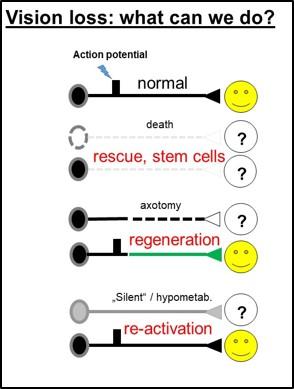
Credit: University of Magdeburg, Magdeburg, Germany
Amsterdam NL, January 22, 2020 – Progress in research and technology is giving rise to an optimistic future for compensation and restoration of low vision, according to research in a special issue of Restorative Neurology and Neuroscience, published by IOS Press. Seven studies explore different aspects of vision loss after damage to the retina, optic nerve or brain due to diseases such as glaucoma or optic neuropathy. Remarkable progress is being made to treat conditions of partial blindness that have previously been considered irreversible.
“The findings in this special issue of Restorative Neurology and Neuroscience showcase how basic science, clinical care and innovation including drugs and devices are being used to stop cell death and induce regeneration to restore vision,” explained Guest Editor Andrea Antal, PhD, Group Leader at the Institute of Medical Psychology, University of Magdeburg, Magdeburg, Germany.
In this issue behavioral training and electrical/sensory devices that strengthen residual visual capacities through brain plasticity and restore some vision are also presented and the application possibilities are discussed. “If the retina and/or the optic nerve are completely damaged, then the recovery is not possible. However, with partial damage where there is even a small amount of residual vision still present, almost all patients can achieve some degree of improvement,” Prof. Dr. Antal added.
Neurons in the visual system can become silent because they are either anatomically or physiologically damaged, inhibited by toxic substances or lack of oxygen and glucose supply. From the clinical point of view, damaged cells in the visual system are not always dead, but may be inactive, in a hibernation-like mode, or in a hypometabolic stage. It may be possible to reactivate them through medication, training and/or electrical stimulation.
Contributions to this issue demonstrate that uncovering the mechanisms of action of vision recovery and repair is paving the way for a better understanding of neuroplasticity in the visual sciences. Mechanisms currently under study include the replacement (augmentation) of the lost nervous tissue itself, in particular the retina or optic nerve, by means of axonal regeneration, stem cell transplantation and retinal chip implants (“bionic eye”). Another approach aims to make more efficient use of the remaining brain tissue by “reprogramming” or “reorganizing” nerve cell activities and their connections with the goal of activating residual vision using training and electrical stimulation. These advances impact different visual disorders including typical eye-related diseases such as glaucoma and optic neuropathy, and also more brain-related disorders, such as stroke or brain trauma.
“The topic of low vision is gaining scientific momentum. However, despite remarkable progress in the last few years, this subject deserves more attention. Publication of this dedicated issue is timely and will significantly advance the field, providing a source of inspiration as the basis of progress,” noted Prof. Dr. Antal and Bernhard Sabel, PhD, Professor of Medical Psychology, Otto-v.-Guericke University of Magdeburg, Germany.
The special issue grew out of a series of conferences on “Low Vision and the Brain” (http://www.
While many animal experiments have been successful, the results have not been directly transferrable to human studies. The investigators point to the need to further explore other factors related to vision loss. This research has the potential to greatly influence patient care in the future.
###
Media Contact
diana Murray
[email protected]
718-640-5678

