• HOME
  • NEWS
  • EXPLORE
    • CAREER
      • Companies
      • Jobs
    • EVENTS
    • iGEM
      • News
      • Team
    • PHOTOS
    • VIDEO
    • WIKI
  • BLOG
  • COMMUNITY
    • FACEBOOK
    • INSTAGRAM
    • TWITTER
Tuesday, November 17, 2026
BIOENGINEER.ORG
No Result
View All Result
  • Login
  • HOME
  • NEWS
  • EXPLORE
    • CAREER
      • Companies
      • Jobs
        • Lecturer
        • PhD Studentship
        • Postdoc
        • Research Assistant
    • EVENTS
    • iGEM
      • News
      • Team
    • PHOTOS
    • VIDEO
    • WIKI
  • BLOG
  • COMMUNITY
    • FACEBOOK
    • INSTAGRAM
    • TWITTER
No Result
View All Result
Bioengineer.org
No Result
View All Result
Home NEWS Science News Health

IKBFU scientists developed capsule composition for enzyme against intellectual disability

Bioengineer by Bioengineer
January 21, 2020
in Health
Reading Time: 3 mins read
0
IMAGE
Share on FacebookShare on TwitterShare on LinkedinShare on RedditShare on Telegram

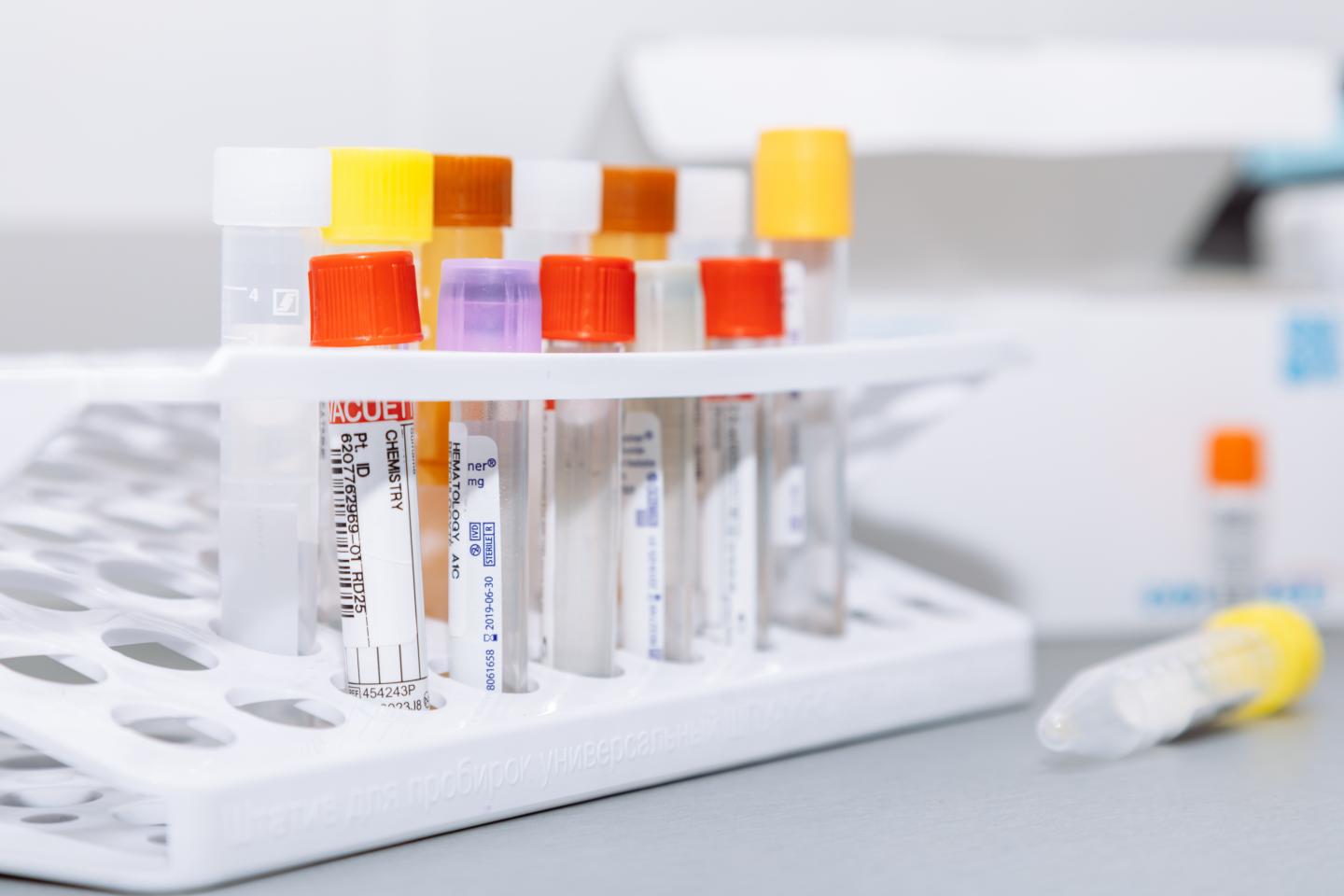
IKBFU scientists developed the composition of the capsule shell for the enzyme needed in the treatment of a hereditary disease called ‘phenylketonuria’
IMAGE

Credit: Immanuel Kant Baltic Federal University

IKBFU scientists developed the composition of the capsule shell for the enzyme needed in the treatment of a hereditary disease called “phenylketonuria”. Phenylpyrovirogradnaya oligophrenia is a disease that results in degradation of the amino acid called phenylalanine. This amino acid presents in protein-containing food. High levels of phenylalanine can cause problems of mental development throughout life. If diet therapy is not used among children under two, then such violations lead to irreversible deviations in the development of the brain. Increasing the level of phenylalanine in the blood of an adult can reduce the level of mental abilities and reaction speed.

Director of the IKBFU’s Institute of Living Systems, Olga Babich told us:

“Today scientists are looking for new ways of treatment of hereditary diseases. Phenylketonuria is one of such diseases, it causes accumulation of toxic products in blood due to the metabolism malfunction in a body which it caused by insufficient amount of phenylalanine amino acid. The frequency of distribution of phenylketonuria among children in the world on average is one out of ten thousand newborns and varies from 1: 200000 to 1: 4370. In Russia, the frequency of phenylketonuria averages 1: 7000. The most common is the classic form of phenylketonuria, in which present-day diet therapy (exclusion of phenylalanine from the diet) is the only effective treatment”.

According to the scientist, there are more ways of treating this disease emerging now. For example, one of the ways is enzymotherapy – enzyme treatment. But in Russia those methods are not used due to the lack of available technologies. While the most promising is the use in the treatment of an enzyme called “L-phenylalanine-ammonium lyase”, both in the form of injections and capsules/pills, which breaks down phenylalanine to safe products. The therapeutic use of this enzyme is limited by its instability, especially in the acidic environment of the stomach. Therefore, the main challenge for scientists is to develop a stable capsule for the enzyme L-phenylalanine-ammonium lyase.

Olga Babich emphasized:

“As part of this study, a team of scientists developed the capsule shell composition for the L-phenylalanine-ammonium lyase enzyme based on polysaccharides: agar-agar, carrageenan and hydroxypropyl methylcellulose. The effect of different storage temperatures of the enzyme in encapsulated form on its activity was also studied. We found that for all of the proposed capsule formulations, the most suitable storage temperature for the drug is 25 ° C. At capsule storage temperatures of 4 ° C and 30 ° C after 6 months, a significant decrease in enzyme activity was noted, up to 90%. The next stage of research will be devoted to studying the mechanisms of destruction of capsules with L-phenylalanine-ammonium lyase under model conditions close to the conditions of the human gastrointestinal tract, since in the future the developed capsules will be used for replacement therapy of phenylketonuria”.

###

The research results were published in “Heliyon” scientific journal. The research was conducted by the Director of the IKBFU Institute of Living Systems Olga Babich and the scientist at the Institute Svetlana Noskova. Also scientists from the Laboratory of Biocatalysts at Kemerovo State University participated in the research.

Media Contact
Sergey Bulanov
SBulanov@kantiana.ru
7-921-268-5362

Original Source

http://eng.kantiana.ru/news/261236/

Related Journal Article

http://dx.doi.org/10.1016/j.heliyon.2019.e03096

Tags: Medicine/Healthneurobiology
Share12Tweet8Share2ShareShareShare2

Related Posts

Learning Mental Health Systems Target Global Crisis Affecting 1.2 Billion People

Learning Mental Health Systems Target Global Crisis Affecting 1.2 Billion People

November 17, 2026
Chikamori Modified del Nido Cardioplegia Remains Stable for 28 Days Under Refrigeration

Chikamori Modified del Nido Cardioplegia Remains Stable for 28 Days Under Refrigeration

November 17, 2026

Sudan Dengue Outbreak Documents 13,371 Cases Across Ten States During Conflict

November 17, 2026

Hybrid Robotic Access Overcomes Trismus for Complex Salvage Oropharyngeal Cancer Resection

November 17, 2026
Please login to join discussion

POPULAR NEWS

  • Alloplastic Temporomandibular Joint Replacement Offers Uncertain Benefits After Mandibular Neoplasm Resection

    Alloplastic Temporomandibular Joint Replacement Offers Uncertain Benefits After Mandibular Neoplasm Resection

    29 shares
    Share 12 Tweet 7
  • Serum Mass Spectrometry Predicts Treatment Response in HER2-Positive Breast Cancer

    29 shares
    Share 12 Tweet 7
  • Polypharmacy Linked to Higher Odds of Sarcopenia in Older Adults

    29 shares
    Share 12 Tweet 7
  • Adapted Virtual Presence Tool Proves Feasible in Pilot Manikin Simulation Courses

    29 shares
    Share 12 Tweet 7

About

We bring you the latest biotechnology news from best research centers and universities around the world. Check our website.

Follow us

Recent News

Learning Mental Health Systems Target Global Crisis Affecting 1.2 Billion People

Review Finds African Ethnobiological Knowledge Has Measurable Conservation Value

Quantum Annealing Outperforms QAOA on Small Minimum Vertex Cover Benchmarks

Subscribe to Blog via Email

Enter your email address to subscribe to this blog and receive notifications of new posts by email.

Join 88 other subscribers
  • Contact Us

Bioengineer.org © Copyright 2023 All Rights Reserved.

Welcome Back!

Login to your account below

Forgotten Password?

Retrieve your password

Please enter your username or email address to reset your password.

Log In
No Result
View All Result
  • Homepages
    • Home Page 1
    • Home Page 2
  • News
  • National
  • Business
  • Health
  • Lifestyle
  • Science

Bioengineer.org © Copyright 2023 All Rights Reserved.