• HOME
  • NEWS
  • EXPLORE
    • CAREER
      • Companies
      • Jobs
    • EVENTS
    • iGEM
      • News
      • Team
    • PHOTOS
    • VIDEO
    • WIKI
  • BLOG
  • COMMUNITY
    • FACEBOOK
    • INSTAGRAM
    • TWITTER
Saturday, February 7, 2026
BIOENGINEER.ORG
No Result
View All Result
  • Login
  • HOME
  • NEWS
  • EXPLORE
    • CAREER
      • Companies
      • Jobs
        • Lecturer
        • PhD Studentship
        • Postdoc
        • Research Assistant
    • EVENTS
    • iGEM
      • News
      • Team
    • PHOTOS
    • VIDEO
    • WIKI
  • BLOG
  • COMMUNITY
    • FACEBOOK
    • INSTAGRAM
    • TWITTER
  • HOME
  • NEWS
  • EXPLORE
    • CAREER
      • Companies
      • Jobs
        • Lecturer
        • PhD Studentship
        • Postdoc
        • Research Assistant
    • EVENTS
    • iGEM
      • News
      • Team
    • PHOTOS
    • VIDEO
    • WIKI
  • BLOG
  • COMMUNITY
    • FACEBOOK
    • INSTAGRAM
    • TWITTER
No Result
View All Result
Bioengineer.org
No Result
View All Result
Home NEWS Science News Biology

Recycled plastics transformed into 3D printing material

Bioengineer by Bioengineer
January 13, 2020
in Biology
Reading Time: 2 mins read
0
IMAGE
Share on FacebookShare on TwitterShare on LinkedinShare on RedditShare on Telegram

A new research project at the Department of Engineering, Aarhus University aims to recycle plastic waste into a standardized filament product for the 3D printing industry
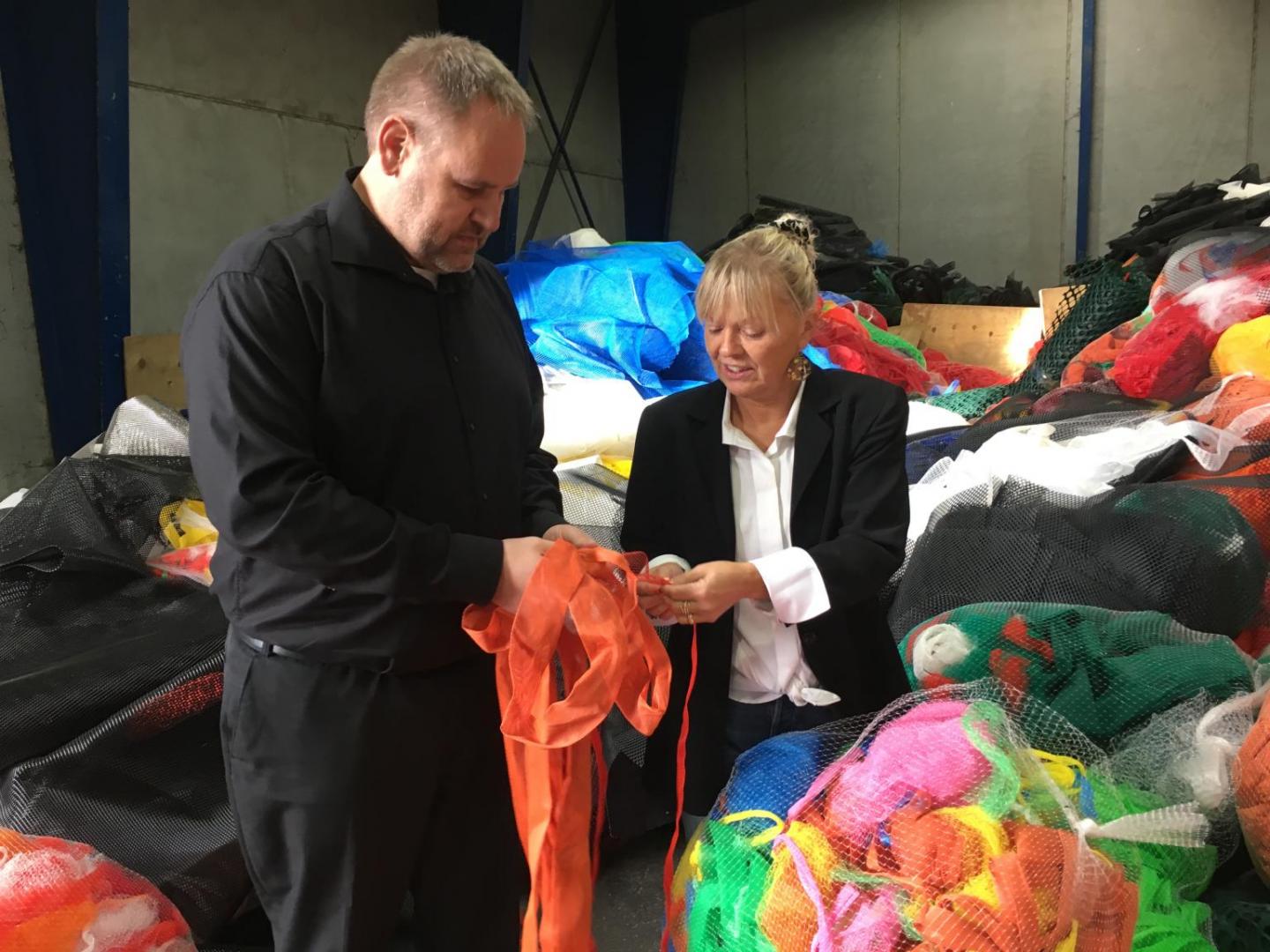
IMAGE

Credit: Aage Vestergaard Larsen A/S

A new research project at the Department of Engineering, Aarhus University aims to recycle plastic waste into a standardised filament product for the 3D printing industry.

3D printing is a fast-growing industry, and this has led to an increasing global need for print-quality filament. However, there are currently no standards for this filament, and therefore it is like the Wild West for users of 3D printers, according to associate professor and plastics expert Mogens Hinge from the Department of Engineering:

“When manufacturing plastics, a very common problem is that there are variations from one batch to the other. It’s like felling a forest to produce lumber with similar variations from one tree to another. The problem arises from carelessly using plastic for 3D printer filament, and not dimensioning the components in relation to the material, as is otherwise practice in the plastics industry,” he says.

At the university, Mogens Hinge has seen for himself that filament for 3D printing can vary in quality, even though the product comes from the same supplier and is manufactured from the same plastic type.

“Even if you buy a reputable-brand filament, there are still problems, because there are no standards for what you put into the machine that makes the filament. This is annoying for the individual consumer, but can be disastrous for the industry, which, to a large extent demands documentation for the product,” he adds.

Together with the largest plastic recycling company in Scandinavia, Aage Vestergaard Larsen A/S, Mogens Hinge has started a new research and development project to develop a standardised, documentable 3D printing filament of high and stable quality from recycled plastics.

There are three good reasons for this, explains Gitte Buk Larsen, business developer and marketing manager at Aage Vestergaard Larsen A/S. “Firstly, it hasn’t yet been possible to produce filament from 100% recycled plastic. Secondly, no one has cracked the code for producing filament based on a data sheet in order to ensure uniform quality. And thirdly, there are currently no filament producers in Denmark.

“If the project is successful, it’ll revolutionise the material consumption of 3D printers, which today is largely made up of new plastics. We’re talking about being able to use plastic waste to create new, high-quality filament. It’ll have a significant impact for the environment and the climate in the long term,” says Gitte Buk Larsen.

Associate Professor Mogens Hinge continues,

“The advantage of having Aage Vestergaard Larsen as the project owner and manager is that they have a wide range of different quality polymers, so we’re pretty sure that, together, we can mix our way to finding consistently high-quality product.”

The project is called “Development of filament for 3D printing based on recycled plastics”, it has received funding of DKK 640,000 (EUR 84,000) from Innovation Fund Denmark and it is headed by Aage Vestergaard Larsen A/S.

###

Media Contact
Mogens Hinge
[email protected]
45-22-77-05-55
Tags: Biomedical/Environmental/Chemical EngineeringChemistry/Physics/Materials SciencesCollaborationGrants/FundingIndustrial Engineering/ChemistryPolymer ChemistryResearch/DevelopmentTechnology TransferTechnology/Engineering/Computer Science
Share12Tweet8Share2ShareShareShare2

Related Posts

Florida Cane Toad: Complex Spread and Selective Evolution

Florida Cane Toad: Complex Spread and Selective Evolution

February 7, 2026
New Study Uncovers Mechanism Behind Burn Pit Particulate Matter–Induced Lung Inflammation

New Study Uncovers Mechanism Behind Burn Pit Particulate Matter–Induced Lung Inflammation

February 6, 2026

DeepBlastoid: Advancing Automated and Efficient Evaluation of Human Blastoids with Deep Learning

February 6, 2026

Navigating the Gut: The Role of Formic Acid in the Microbiome

February 6, 2026
Please login to join discussion

POPULAR NEWS

  • Robotic Ureteral Reconstruction: A Novel Approach

    Robotic Ureteral Reconstruction: A Novel Approach

    82 shares
    Share 33 Tweet 21
  • Digital Privacy: Health Data Control in Incarceration

    63 shares
    Share 25 Tweet 16
  • Study Reveals Lipid Accumulation in ME/CFS Cells

    57 shares
    Share 23 Tweet 14
  • Breakthrough in RNA Research Accelerates Medical Innovations Timeline

    53 shares
    Share 21 Tweet 13

About

We bring you the latest biotechnology news from best research centers and universities around the world. Check our website.

Follow us

Recent News

Phage-Antibiotic Combo Beats Resistant Peritoneal Infection

Boosting Remote Healthcare: Stepped-Wedge Trial Insights

Barriers and Boosters of Seniors’ Physical Activity in Karachi

Subscribe to Blog via Email

Enter your email address to subscribe to this blog and receive notifications of new posts by email.

Join 73 other subscribers
  • Contact Us

Bioengineer.org © Copyright 2023 All Rights Reserved.

Welcome Back!

Login to your account below

Forgotten Password?

Retrieve your password

Please enter your username or email address to reset your password.

Log In
No Result
View All Result
  • Homepages
    • Home Page 1
    • Home Page 2
  • News
  • National
  • Business
  • Health
  • Lifestyle
  • Science

Bioengineer.org © Copyright 2023 All Rights Reserved.