• HOME
  • NEWS
  • EXPLORE
    • CAREER
      • Companies
      • Jobs
    • EVENTS
    • iGEM
      • News
      • Team
    • PHOTOS
    • VIDEO
    • WIKI
  • BLOG
  • COMMUNITY
    • FACEBOOK
    • INSTAGRAM
    • TWITTER
Tuesday, August 18, 2026
BIOENGINEER.ORG
No Result
View All Result
  • Login
  • HOME
  • NEWS
  • EXPLORE
    • CAREER
      • Companies
      • Jobs
        • Lecturer
        • PhD Studentship
        • Postdoc
        • Research Assistant
    • EVENTS
    • iGEM
      • News
      • Team
    • PHOTOS
    • VIDEO
    • WIKI
  • BLOG
  • COMMUNITY
    • FACEBOOK
    • INSTAGRAM
    • TWITTER
  • HOME
  • NEWS
  • EXPLORE
    • CAREER
      • Companies
      • Jobs
        • Lecturer
        • PhD Studentship
        • Postdoc
        • Research Assistant
    • EVENTS
    • iGEM
      • News
      • Team
    • PHOTOS
    • VIDEO
    • WIKI
  • BLOG
  • COMMUNITY
    • FACEBOOK
    • INSTAGRAM
    • TWITTER
No Result
View All Result
Bioengineer.org
No Result
View All Result
Home NEWS Science News Biology

Ancient wasp-mimicking fly from South Korea named after PSY’s ‘Gangnam Style’

Bioengineer by Bioengineer
December 23, 2019
in Biology
Reading Time: 2 mins read
0
IMAGE
Share on FacebookShare on TwitterShare on LinkedinShare on RedditShare on Telegram

IMAGE

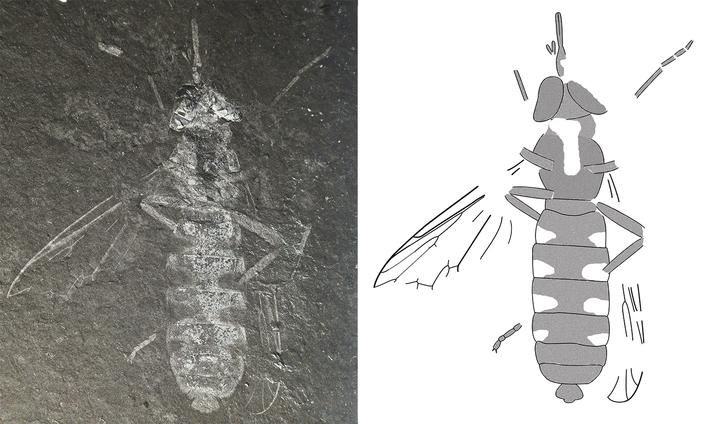
Credit: Alexander Khramov, Gi-Soo Nam.


New species was named Buccinatormyia gangnami, after a famous hit by a South Korean singer PSY. It was described based on six impression fossils found near Jinju city in South Korea. On average, members of this species were twice larger than the common house fly, with a proboscis length up to 5 mm. Their darkish abdomenon were embellished with four pairs of light spots, very similar to yellowjacket patterns which typically displayed by hoverflies and other extant flower-loving Diptera active during the day.

The chief model for modern yellowjacket mimics are social wasps united into the Vespidae family. In our time these wasps as really common as everyone knows who has ever seen them stuck in his or her jam. However, judging by the fossil record, vespid wasps were rare and represented by exclusively solitary taxa in the Early Cretaceous. So probably Buccinatormyia gangnami mimicked something else, or, alternatively, vespid wasps radiated early than currently thought.

Buccinatormyia gangnami belongs to Zhangsolvidae, a dipteran family which prospered during the Early Cretaceous, but then went extinct due to unknown causes. &laquoThere were several lineages of long-proboscid flies during the Mesozoic, and all they were initially associated with gymnosperms. Some were managed to survive into our time, while others disappeared, probably due to their inability to adapt themselves to angiosperm-dominated worlds. Why zhangsolvids were destined to lose, we cannot explain yet», said Alexander Khramov, study’s leading author and a senior researcher at the Borissiak Paleontological Institute (Moscow).

###

Media Contact
Alexandr Khramov
[email protected]

Related Journal Article

http://dx.doi.org/10.1080/03115518.2019.1664634

Tags: BiodiversityBiologyEntomologyEvolutionPaleontology
Share12Tweet8Share2ShareShareShare2

Related Posts

Scientists map plant-fungus symbiosis at single-cell resolution

Scientists map plant-fungus symbiosis at single-cell resolution

August 18, 2026
One in 20 Australian women now receive intravenous iron infusions

One in 20 Australian women now receive intravenous iron infusions

August 18, 2026

Scientists identify crucial steps that initiate DNA replication

August 18, 2026

Diverse Legume Defence Signals and Clustered Receptors Co-Evolved from Conserved Subtilase Scaffolds

August 18, 2026
Please login to join discussion

POPULAR NEWS

  • Scientists map plant-fungus symbiosis at single-cell resolution

    29 shares
    Share 12 Tweet 7
  • Machine Learning Predicts Microslit Panel Surface Impedance in Grazing Flow

    29 shares
    Share 12 Tweet 7
  • UC San Diego Wins $12.3 Million Grant to Study HIV-Methamphetamine Connection

    29 shares
    Share 12 Tweet 7
  • Engineered Gel Cells Carry Artificial DNA Receptors to Detect and Treat Aflatoxin

    29 shares
    Share 12 Tweet 7

About

We bring you the latest biotechnology news from best research centers and universities around the world. Check our website.

Follow us

Recent News

Scientists map plant-fungus symbiosis at single-cell resolution

Machine Learning Predicts Microslit Panel Surface Impedance in Grazing Flow

UC San Diego Wins $12.3 Million Grant to Study HIV-Methamphetamine Connection

Subscribe to Blog via Email

Enter your email address to subscribe to this blog and receive notifications of new posts by email.

Join 85 other subscribers
  • Contact Us

Bioengineer.org © Copyright 2023 All Rights Reserved.

Welcome Back!

Login to your account below

Forgotten Password?

Retrieve your password

Please enter your username or email address to reset your password.

Log In
No Result
View All Result
  • Homepages
    • Home Page 1
    • Home Page 2
  • News
  • National
  • Business
  • Health
  • Lifestyle
  • Science

Bioengineer.org © Copyright 2023 All Rights Reserved.