• HOME
  • NEWS
  • EXPLORE
    • CAREER
      • Companies
      • Jobs
    • EVENTS
    • iGEM
      • News
      • Team
    • PHOTOS
    • VIDEO
    • WIKI
  • BLOG
  • COMMUNITY
    • FACEBOOK
    • INSTAGRAM
    • TWITTER
Monday, January 19, 2026
BIOENGINEER.ORG
No Result
View All Result
  • Login
  • HOME
  • NEWS
  • EXPLORE
    • CAREER
      • Companies
      • Jobs
        • Lecturer
        • PhD Studentship
        • Postdoc
        • Research Assistant
    • EVENTS
    • iGEM
      • News
      • Team
    • PHOTOS
    • VIDEO
    • WIKI
  • BLOG
  • COMMUNITY
    • FACEBOOK
    • INSTAGRAM
    • TWITTER
  • HOME
  • NEWS
  • EXPLORE
    • CAREER
      • Companies
      • Jobs
        • Lecturer
        • PhD Studentship
        • Postdoc
        • Research Assistant
    • EVENTS
    • iGEM
      • News
      • Team
    • PHOTOS
    • VIDEO
    • WIKI
  • BLOG
  • COMMUNITY
    • FACEBOOK
    • INSTAGRAM
    • TWITTER
No Result
View All Result
Bioengineer.org
No Result
View All Result
Home NEWS Science News Biology

Structures in seaweed shed light on sustainability

Bioengineer by Bioengineer
December 20, 2019
in Biology
Reading Time: 3 mins read
0
IMAGE
Share on FacebookShare on TwitterShare on LinkedinShare on RedditShare on Telegram

IMAGE

Credit: JI Shiqi


Brown algae are not just seaweed that floats in the ocean and tangles swimmers’ feet – it also contains a secret. In its cell wall, brown algae hold polysaccharide alginate, one of the most abundant carbohydrates in the ocean. A major food source for several organisms, the alginate absorbs carbon dioxide and can be converted into ethanol.

Researchers from the Qingdao Institute of Bioenergy and Bioprocess Technology (QIBEBT) of the Chinese Academy of Sciences are now studying the organisms to understand this mechanism, and they’re making some discoveries along the way.

“The abundance of these seaweeds has made them an attractive and important source of renewable biomass for biofuel production,” said JI Shiqi, research assistant professor in the Shandong Provincial Key Laboratory of Energy Genetics.

JI is part of an international team from China and the United Kingdom who is working to better understand how the alginate is processed into ethanol by organisms. By examining the enzymes that break down the alginate, the researchers may be able to harness the natural process to produce biofuel. During this process, they identified previously unknown enzymatic families that contribute to the bioconversion.

Their findings about the full structure of one such enzyme were published in Journal of Biological Chemistry on October 17.

The enzyme, called an alginate lyase, breaks down the alginate so it can be converted into other products. There are currently 37 identified lyase families that break down polysaccharides, which are structures that contain multiple sugars. Of those 37 families, nine specifically degrade alginates and seven of those nine have had their structures fully described.

JI and the team identified a new alginate lyase in a heat-loving bacterium that can directly utilize brown algae and ferment its components to ethanol with high-yield.

“The bacterium contains at least four alginate lyases, including a number of novel lyases that represent totally new polysaccharide lyase families,” JI said.

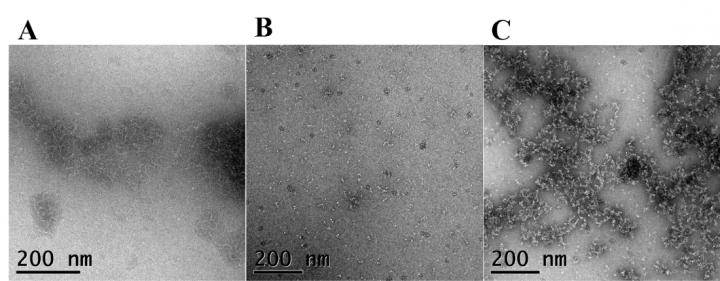
The researchers focused on imaging the structure of one alginate lyase, dubbed “Dp0100,” to better understand its molecular mechanisms in processing alginate into ethanol. The imaging study also led to a better understanding of the structure specificity, catalysis and evolution of alginate lyases with multiple domain sites, according to JI.

“While the mechanism of Dp0100’s thermostability is not well understood yet, this research has furthered our understanding of the structure-function and evolutionary relationships within this important class of lyases,” JI said.

The researchers will continue to study the alginate lyases, as well as pursue structural studies of other polysaccharide lyase families with the ultimate goal of determining the full function of alginate bioconversion.

###

This work was supported in part the National Natural Science Foundation of China, the Qingdao Municipal Science and Technology Bureau of China, the Royal Society, the International Exchanges 2017 Cost Share Programme and the China Scholarship Council.

Media Contact
CHENG Jing
[email protected]

Original Source

http://english.cas.cn/newsroom/research_news/life/201912/t20191219_227939.shtml

Related Journal Article

http://dx.doi.org/10.1074/jbc.RA119.010716

Tags: BiologyMarine/Freshwater Biology
Share12Tweet8Share2ShareShareShare2

Related Posts

Dogs Demonstrate Same-Different Odor Learning Abilities

Dogs Demonstrate Same-Different Odor Learning Abilities

January 18, 2026
Do Asian Elephants Strategize for Conflicting Outcomes?

Do Asian Elephants Strategize for Conflicting Outcomes?

January 18, 2026

Tracking Fungal Pathogen Evolution Through Comparative Genomics

January 18, 2026

How Traits and Management Shape Equine Intelligence

January 18, 2026
Please login to join discussion

POPULAR NEWS

  • Enhancing Spiritual Care Education in Nursing Programs

    155 shares
    Share 62 Tweet 39
  • PTSD, Depression, Anxiety in Childhood Cancer Survivors, Parents

    148 shares
    Share 59 Tweet 37
  • Robotic Ureteral Reconstruction: A Novel Approach

    78 shares
    Share 31 Tweet 20
  • Study Reveals Lipid Accumulation in ME/CFS Cells

    54 shares
    Share 22 Tweet 14

About

We bring you the latest biotechnology news from best research centers and universities around the world. Check our website.

Follow us

Recent News

Improving Patient Satisfaction in Eastern Nepal’s Healthcare

Impact of Lane Change Trajectories on Passenger Comfort

Advancements in Isolated Kalman Filtering Techniques

Subscribe to Blog via Email

Enter your email address to subscribe to this blog and receive notifications of new posts by email.

Join 71 other subscribers
  • Contact Us

Bioengineer.org © Copyright 2023 All Rights Reserved.

Welcome Back!

Login to your account below

Forgotten Password?

Retrieve your password

Please enter your username or email address to reset your password.

Log In
No Result
View All Result
  • Homepages
    • Home Page 1
    • Home Page 2
  • News
  • National
  • Business
  • Health
  • Lifestyle
  • Science

Bioengineer.org © Copyright 2023 All Rights Reserved.