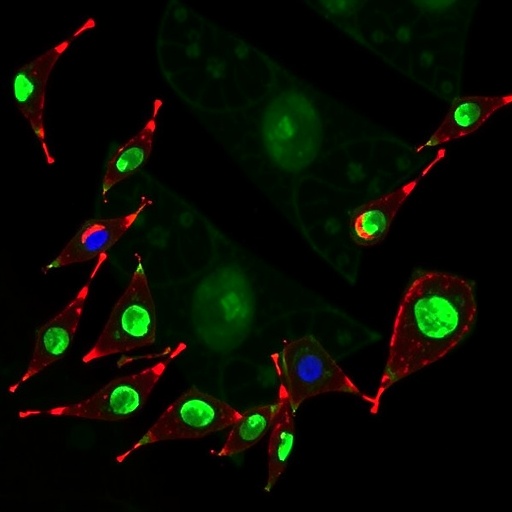
18 different cancer types studied, mostly rare and none colorectal, with DNA repair defects. The 36% response rate across a range of cancers compares well with a previous 31% response in colon cancer.

Credit: Johns Hopkins Kimmel Cancer Center
Philadelphia, December 19, 2019—Final results are published from an evaluation of 42 patients treated with the immune checkpoint inhibitor nivolumab in the large multi-arm precision medicine trial, NCI-Molecular Analysis for Therapy Choice (NCI-MATCH or EAY131). The Journal of Clinical Oncology reports results for Arm Z1D of NCI-MATCH,investigating the activity of nivolumab in tumors with DNA mismatch repair deficiencies. The ECOG-ACRIN Cancer Research Group is leading the trial with the National Cancer Institute (NCI), part of the National Institutes of Health.
Nivolumab showed promising activity in DNA mismatch repair (MMR)-deficient tumors that had complete loss of the tumor suppressor proteins MLH1 or MSH2. Responses were observed across a wide variety of histopathological types. Cells with MMR deficiency have defects in DNA damage repair, which can lead to cancer, so knowing if a tumor is MMR-deficient may help guide cancer treatment.
Nivolumab previously showed activity in MMR-deficient colon cancer; therefore, colon cancers were excluded from Arm Z1D.
The primary objective of each arm in NCI-MATCH is to determine the proportion of patients who have an objective response. Under predefined criteria, an overall response rate greater than 16% in a given arm signals that the therapy warrants further study. The 36% response rate across a range of cancers compares well with a previous 31% response in colon cancer (Overman MJ, Lancet Oncology, Sep 2017).
“Median overall survival was 17.3 months in a heavily pre-treated population,” said Dr. Azad. “The estimated six-month, 12-month and 18-month progression-free survival rates in Arm Z1D were 51.3%, 46.2%, and 31.4%, respectively.”
Nivolumab was provided by Bristol-Myers Squibb under a Cooperative Research and Development Agreement with NCI for Arm Z1D.
What We Are Learning From NCI-MATCH
Each NCI-MATCH treatment arm is contributing valuable information on responsive versus unresponsive tumor types, especially in rare cancers where there are little or no data available. In Arm Z1D, responses were observed across a broad range of tumor types, and every single patient in the trial provided new information. The results are an important signal that should prompt larger trials.
The NCI-MATCH trial also provides patients with access to innovative trials. More than 1100 trial sites are participating in the trial, making it possible to identify patients with a very wide range of common and uncommon tumor types.
For example, Arm Z1D evaluated nivolumab in 18 different cancer types with MMR deficiency:
- Endometrioid endometrial adenocarcinoma (n=13)
- Prostate adenocarcinoma (n=5)
- Uterine carcinosarcoma (n=4)
- Adenocarcinoma of esophagus/esophagogastric junction (n=3)
- Cholangiocarcinoma (n=3)
- Ductal carcinoma of breast (n=3)
- Pancreatic neuroendocrine carcinoma (n=1)
- Other (n=10)
Other cases were mucinous adenocarcinoma of the small intestine; adenocarcinoma of lung; carcinoma of parathyroid; chordoma of clivus of skull; leiomyosarcoma of uterus; epithelial/myoepithelial carcinoma of submandibular salivary gland; small cell lung carcinoma; follicular carcinoma of the thyroid with Hȕrthle cell features; squamous cell carcinoma of the esophagogastric junction; squamous cell carcinoma of cervix and vagina; and clear cell adenocarcinoma of the female genital tract/Mullerian origin.
A Second Key Finding in Arm Z1D
“The silencing of the proteins MLH1 or MSH2 is the most common cause of DNA repair defects due to mismatch repair deficiency, and, a little less commonly, MSH6 or PMS2. This can happen through DNA mutation, as well as promoter methylation,” said Dr. Azad.
Dr. Azad explained. “In Arm Z1D, we confirmed that testing for complete loss of either the MLH1 or MSH2 tumor suppressing proteins is a useful biomarker for selecting single-agent nivolumab immunotherapy beyond colon cancer.”
The NCI-MATCH assay made it possible to validate complete loss of MLH1 or MSH2 as a biomarker, as reported previously (Khoury JD, Clinical Cancer Research, Aug 2017).
The FDA granted accelerated approval for nivolumab alone or in combination with ipilimumab for the treatment of microsatellite instability-high or mismatch repair-deficient metastatic colorectal cancer that has progressed following treatment with fluoropyrimidine, oxaliplatin, and irinotecan. Continued approval for this indication may be contingent upon verification and description of clinical benefit in confirmatory trials. Another drug, pembrolizumab, is FDA-approved for pretreated mismatch repair-deficient cancer regardless of cancer type.
Arm Z1D Background
Arm Z1D opened May 31, 2016. Of 4902 patients tested by immunohistochemistry, 2.0% (99) had complete loss of nuclear expression of either MLH1 or MSH2, making them eligible for Arm Z1D. Within 11 months, 47 patients enrolled and began treatment. The results of Arm Z1D pertain to 42 evaluable patients. The most common reason for a patient with complete MLH1 or MSH2 loss not enrolling was ineligible histology (colorectal cancer or endometrial cancer, the latter during expansion of accrual, because MMR deficiency is common in these cancers).
“Nivolumab Is Effective in Mismatch Repair-Deficient Noncolorectal Cancers: Results From Arm Z1D–A Subprotocol of the NCI-MATCH (EAY131) Study” is available online at Journal of Clinical Oncology website, https:/
All of the NCI-MATCH treatment arms are posted at https:/
###
About the ECOG-ACRIN Cancer Research Group
The ECOG-ACRIN Cancer Research Group (ECOG-ACRIN) is a membership-based scientific organization that designs and conducts cancer research involving adults who have or are at risk of developing cancer. ECOG-ACRIN comprises nearly 1100 member institutions in the United States and around the world. Approximately 12,000 physicians, translational scientists, and associated research professionals from the member institutions are involved in Group research, which is organized into three scientific programs: Cancer Control and Outcomes, Therapeutic Studies, and Biomarker Sciences. ECOG-ACRIN is supported primarily through National Cancer Institute research grant funding, but also receives funding from private sector organizations through philanthropy and collaborations. Its headquarters are in Philadelphia, Pa.
Media Contact
Diane Dragaud
[email protected]
215-789-3631
Original Source
http://ecog-acrin.
Related Journal Article
http://dx.