• HOME
  • NEWS
  • EXPLORE
    • CAREER
      • Companies
      • Jobs
    • EVENTS
    • iGEM
      • News
      • Team
    • PHOTOS
    • VIDEO
    • WIKI
  • BLOG
  • COMMUNITY
    • FACEBOOK
    • INSTAGRAM
    • TWITTER
Thursday, January 1, 2026
BIOENGINEER.ORG
No Result
View All Result
  • Login
  • HOME
  • NEWS
  • EXPLORE
    • CAREER
      • Companies
      • Jobs
        • Lecturer
        • PhD Studentship
        • Postdoc
        • Research Assistant
    • EVENTS
    • iGEM
      • News
      • Team
    • PHOTOS
    • VIDEO
    • WIKI
  • BLOG
  • COMMUNITY
    • FACEBOOK
    • INSTAGRAM
    • TWITTER
  • HOME
  • NEWS
  • EXPLORE
    • CAREER
      • Companies
      • Jobs
        • Lecturer
        • PhD Studentship
        • Postdoc
        • Research Assistant
    • EVENTS
    • iGEM
      • News
      • Team
    • PHOTOS
    • VIDEO
    • WIKI
  • BLOG
  • COMMUNITY
    • FACEBOOK
    • INSTAGRAM
    • TWITTER
No Result
View All Result
Bioengineer.org
No Result
View All Result
Home NEWS Science News Health

New study enhances knowledge about widespread diseases

Bioengineer by Bioengineer
December 13, 2019
in Health
Reading Time: 3 mins read
0
IMAGE
Share on FacebookShare on TwitterShare on LinkedinShare on RedditShare on Telegram

IMAGE

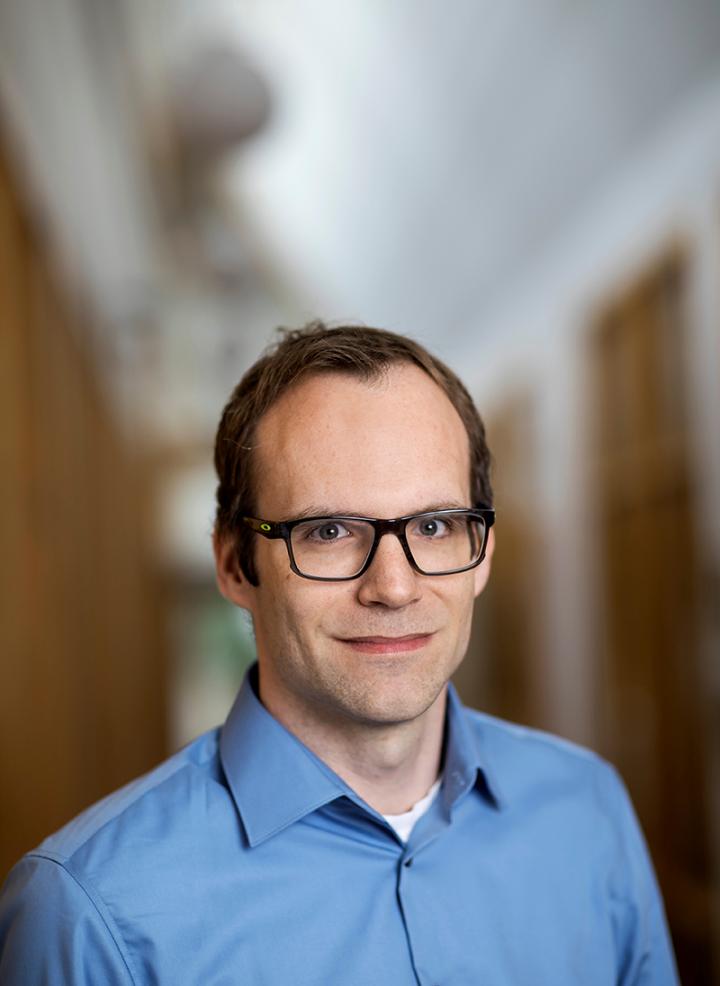
Credit: Johan Wingborg


When proteins in the brain form deposits consisting of insoluble aggregates, diseases such as Alzheimer’s or Parkinson’s can occur. Now a research team has come a step closer to understanding this process.

In Parkinson’s disease the alpha-synuclein (α-synuclein) protein forms aggregates leading to impaired brain function and the development of the disease.

Now researchers at the University of Gothenburg and universities in Basel and Zurich have published a new study in Nature that demonstrates how a certain class of proteins can regulate and prevent α-synuclein from forming protein deposits and insoluble aggregates within healthy cells.

“In each cell there are auxiliary proteins called molecular chaperones. They take care of newly made proteins to help them in the process of protein folding and prevent misfolding or unfolding,” says Björn Burmann, assistant professor at the Department of Chemistry and Molecular Biology at the University of Gothenburg.

A breakthrough in research

Protein folding describes the process by which a protein takes on its specific three-dimensional shape, enabling the protein to fulfil its function.

Countless proteins in mammalian cells do not have a stable protein fold, despite the important functions they serve in the cells. One of these proteins is α-synuclein. In the new study, the research team could now reveal the basic process that affects how the α-synuclein protein is folded and aggregated as well as how molecular chaperones in living mammalian cells can prevent the misfolding of α-synuclein.

“A large pool of various chaperones prevents α-synuclein from forming protein aggregates in healthy cells. By studying the protein directly in mammalian cells, we have found that inhibition of chaperones leads to aggregation of α-synuclein at the amino acid level.”

Disruption of the α-synuclein-chaperone interaction may be the long-sought first step that initiates the development of a-synuclein-related diseases, according to Björn Burmann and his research colleagues.

###

The research study was led by Dr. Björn Burmann, Professor Sebastian Hiller from the Biozentrum at the University of Basel, and Professor Roland Riek at the Swiss Federal Institute of Technology (ETH) in Zurich.

Contact: Björn Marcus Burmann, assistant professor at the Department of Chemistry and Molecular Biology and the Wallenberg Centre for Molecular and Translational Medicine at the University of Gothenburg. Mobile: +46 701 485 528, eE-mail: [email protected]

Title: Regulation of α-synuclein by chaperones in mammalian cells

Digital publication: https://www.nature.com/articles/s41586-019-1808-9

Media Contact
Björn Marcus Burmann
[email protected]
46-701-485-528

Original Source

https://www.gu.se/english/about_the_university/news-calendar/News_detail/?languageId=100001&contentId=1665885&disableRedirect=true&returnUrl=http%3A%2F%2Fwww.gu.se%2Fomuniversitetet%2Faktuellt%2Fnyheter%2Fdetalj%2F%2Fny-studie-okar-kunskap-om-folksju

Related Journal Article

http://dx.doi.org/10.1038/s41586-019-1808-9

Tags: AlzheimerBiologyMolecular Biologyneurobiology
Share12Tweet8Share2ShareShareShare2

Related Posts

Preterm Birth’s Impact on Childhood Psychomotor Skills

January 1, 2026

Bioavailable Testosterone Lowers Lung Squamous Cell Carcinoma Risk

January 1, 2026

Case Report: Thrombocytopenia After PD-1 Therapy in SCLC

January 1, 2026

Enhancing Manual Wheelchair Training for Chronic Conditions

January 1, 2026
Please login to join discussion

POPULAR NEWS

  • blank

    PTSD, Depression, Anxiety in Childhood Cancer Survivors, Parents

    107 shares
    Share 43 Tweet 27
  • NSF funds machine-learning research at UNO and UNL to study energy requirements of walking in older adults

    71 shares
    Share 28 Tweet 18
  • Exploring Audiology Accessibility in Johannesburg, South Africa

    52 shares
    Share 21 Tweet 13
  • SARS-CoV-2 Subvariants Affect Outcomes in Elderly Hip Fractures

    44 shares
    Share 18 Tweet 11

About

We bring you the latest biotechnology news from best research centers and universities around the world. Check our website.

Follow us

Recent News

Model-Free Optical Processors Learn via Proximal Policy Optimization

Preterm Birth’s Impact on Childhood Psychomotor Skills

Bioavailable Testosterone Lowers Lung Squamous Cell Carcinoma Risk

Subscribe to Blog via Email

Enter your email address to subscribe to this blog and receive notifications of new posts by email.

Join 71 other subscribers
  • Contact Us

Bioengineer.org © Copyright 2023 All Rights Reserved.

Welcome Back!

Login to your account below

Forgotten Password?

Retrieve your password

Please enter your username or email address to reset your password.

Log In
No Result
View All Result
  • Homepages
    • Home Page 1
    • Home Page 2
  • News
  • National
  • Business
  • Health
  • Lifestyle
  • Science

Bioengineer.org © Copyright 2023 All Rights Reserved.