Credit: Lancaster University
Lancaster University researchers have discovered, for the first time, how a genetic alteration that increases the risk of developing Autism and Tourette’s impacts on the brain.
Their research also suggests that ketamine, or related drugs, may be a useful treatment for both of these disorders.
Autism affects an estimated 2.8 million people in the UK while Tourette’s Syndrome – a condition that causes a person to make involuntary sounds and movements called tics -affects an estimated 300,000 people in the UK. The treatments available for both disorders are limited and new treatments are urgently required. Recent research has also shown that these disorders are genetically linked.
People with a genetic deletion known as chromosome 2p16.3 deletion often experience developmental delay and have learning difficulties. They are also around 15 times more likely to develop Autism and 20 times more likely to develop Tourette’s Syndrome, but the mechanisms involved are not completely understood.
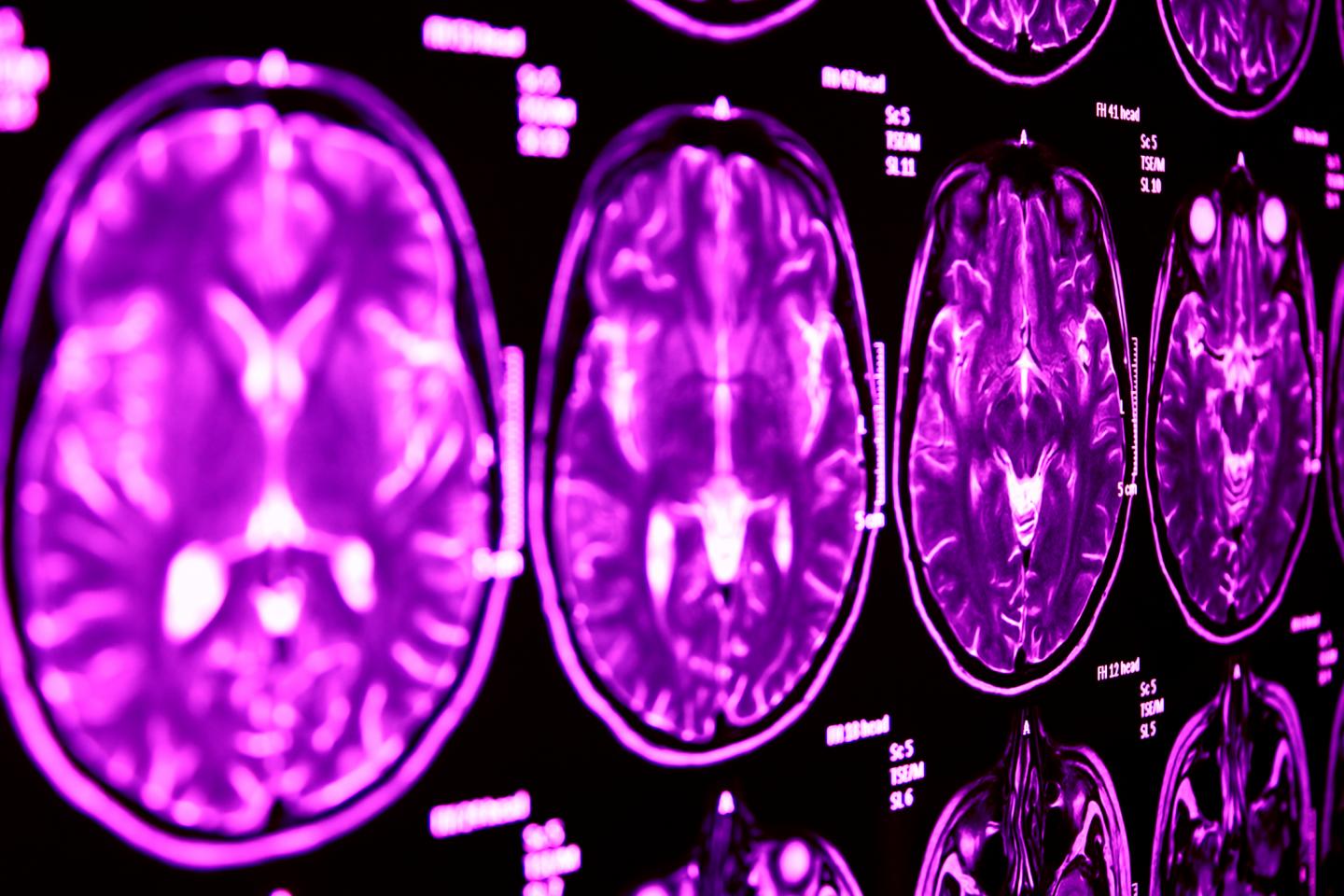
Using brain imaging studies, neuroscientists have shown that deletion of the gene impacted by 2p16.3 deletion (Neurexin1) impacts on the function of brain regions involved in both conditions. A key finding is that this genetic deletion disrupts a brain area known as the thalamus, compromising its ability to communicate with other brain areas.
Lead researcher Dr Neil Dawson of Lancaster University said: “We currently have a very poor understanding of how the 2p16.3 deletion dramatically increases the risk of developing these disorders.
However, we know that the 2p16.3 deletion involves deletion of the Neurexin1 gene, a gene that makes a protein responsible for allowing neurons to communicate effectively.”
Deletion of the Neurexin1 gene affects brain areas involved in Autism and Tourette’s including the thalamus, a collection of brain regions that play a key role in helping other brain areas communicate with each other. Changes were also found in brain regions involved in processing sensory information and in learning and memory.
Importantly, the researchers also found that the ability of the thalamic brain regions to communicate with other brain areas was impaired by the genetic deletion. They then tested the ability of a low dose of the drug ketamine, a drug used clinically at higher doses as an anesthetic, to normalize the alterations in brain function induced by the genetic deletion.
Dr Dawson said: “Intriguingly our data suggest that ketamine can restore some aspects of the brain dysfunction that results from 2p16.3 deletion and suggests that ketamine, or other related drugs, may be useful in treating some of the symptoms seen in Autism and Tourette’s. The brain circuits affected suggest that these drugs may be particularly useful for the cognitive and motor problems experienced by people with these disorders.”
Interestingly, ketamine was shown to normalise activity in the thalamic regions found to be hyperactive as a result of the genetic deletion and re-established the ability of these regions to communicate with other brain areas. This suggests that ketamine, or related drugs, may be a useful treatment for people with 2p16.3 deletion or with Autism and Tourette’s Syndrome, although more research is needed.
Dr Dawson urges caution to those who may be thinking of using ketamine therapeutically.
“While this data gives us important new information on the brain circuits affected by 2p16.3 deletion and of the potential usefulness of ketamine to help people with Autism and Tourette’s much more research needs to be conducted to prove its clinical potential. We know that ketamine impacts on the activity of several brain regions in addition to the thalamus, and the effects in these other regions are likely to cause unwanted side-effects. In addition, long-term ketamine treatment may have negative consequences that are not yet fully understood. We also think ketamine may not be the best therapeutic option due to its relatively short lifespan in the body.
“However, the findings of this study give us important clues regarding the types of drugs that may be useful in the treatment of these disorders, and we are using this information to actively pursue the validation of these drugs for the potential treatment of these disorders.”
###
Media Contact
Gillian Whitworth
[email protected]
44-152-459-2612
Related Journal Article
http://dx.