• HOME
  • NEWS
  • EXPLORE
    • CAREER
      • Companies
      • Jobs
    • EVENTS
    • iGEM
      • News
      • Team
    • PHOTOS
    • VIDEO
    • WIKI
  • BLOG
  • COMMUNITY
    • FACEBOOK
    • INSTAGRAM
    • TWITTER
Saturday, February 7, 2026
BIOENGINEER.ORG
No Result
View All Result
  • Login
  • HOME
  • NEWS
  • EXPLORE
    • CAREER
      • Companies
      • Jobs
        • Lecturer
        • PhD Studentship
        • Postdoc
        • Research Assistant
    • EVENTS
    • iGEM
      • News
      • Team
    • PHOTOS
    • VIDEO
    • WIKI
  • BLOG
  • COMMUNITY
    • FACEBOOK
    • INSTAGRAM
    • TWITTER
  • HOME
  • NEWS
  • EXPLORE
    • CAREER
      • Companies
      • Jobs
        • Lecturer
        • PhD Studentship
        • Postdoc
        • Research Assistant
    • EVENTS
    • iGEM
      • News
      • Team
    • PHOTOS
    • VIDEO
    • WIKI
  • BLOG
  • COMMUNITY
    • FACEBOOK
    • INSTAGRAM
    • TWITTER
No Result
View All Result
Bioengineer.org
No Result
View All Result
Home NEWS Science News Health

Multiple correlations between brain complexity and locomotion pattern in vertebrates

Bioengineer by Bioengineer
December 5, 2019
in Health
Reading Time: 2 mins read
0
IMAGE
Share on FacebookShare on TwitterShare on LinkedinShare on RedditShare on Telegram

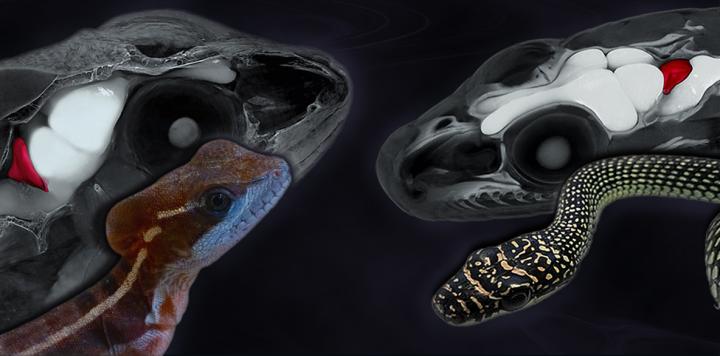
Researchers unveil multiple correlations between brain complexity and locomotion pattern in vertebrates
IMAGE

Credit: Simone Macrì and Nicolas Di-Poï, University of Helsinki.


Researchers at the Institute of Biotechnology, University of Helsinki, have uncovered multi-level relationships between locomotion – the ways animals move – and brain architecture, using high-definition 3D models of lizard and snake brains.

The new study unveils the existence of multiple correlations between brain complexity and locomotion pattern in vertebrates, indicating that locomotion mode is a strong predictor of cerebellar size, shape, neuron organization, and gene expression levels. This demonstrates the existence of specific type of brain shared by animals with lifestyle or behavior similarities.

“The cerebellum is a major component of the brain that contributes to coordination, precision, and accurate timing of movement, and the diversity of this brain region is remarkable across vertebrates”, describes Principal Investigator Nicolas Di-Poï, Associate Professor at the Institute of Biotechnology, University of Helsinki.

Research studies have previously shown that behavioral and ecological factors such as diet, habitat, locomotion, cognitive abilities and lifespan play an important role in driving animal brain evolution. However, comparative studies have so far largely focused on brain size measurements, and the ecological relevance of potential multi-level variations in brain morphology and architecture had remained unclear until now.

Researchers from the University of Helsinki hypothesized that in addition to expected morphological changes in limb and skeletal structures, the ways animals move from one place to another could be a strong predictor of brain complexity at various levels of biological organization, including size, shape, neuron organization and gene expression pattern.

Based on contrast-enhanced computed tomography technology and high-resolution manual segmentation, “we present here one of the first sets of high-definition 3D reconstructions of whole-brains in vertebrates”, says the first author of the study, PhD candidate Simone Macrì from the University of Helsinki.

To test this hypothesis, the research group used squamate reptiles – lizards and snakes – as the main animal model because of their high levels of morphological diversity and unique behavioral features. One major challenge the group faced was to collect a representative panel of more than 100 reptile specimens with different locomotor modes, ranging from small worm-like limbless species digging and living underground to four-limbed species with facultative bipedal or flying capabilities. Such effort has involved active collaborations with museums, personal breeders and collaborators.

###

Media Contact
Nicolas Di-Poï
[email protected]
358-504-160-551

Original Source

https://www.helsinki.fi/en/news/life-science-news/researchers-unveil-multiple-correlations-between-brain-complexity-and-locomotion-pattern-in-vertebrates

Related Journal Article

http://dx.doi.org/10.1038/s41467-019-13405-w

Tags: BiologyBiomechanics/BiophysicsEvolutionPhysiology
Share13Tweet8Share2ShareShareShare2

Related Posts

Personalized Guide to Understanding and Reducing Chemicals

February 7, 2026

Inflammasome Protein ASC Drives Pancreatic Cancer Metabolism

February 7, 2026

Phage-Antibiotic Combo Beats Resistant Peritoneal Infection

February 7, 2026

Boosting Remote Healthcare: Stepped-Wedge Trial Insights

February 7, 2026
Please login to join discussion

POPULAR NEWS

  • Robotic Ureteral Reconstruction: A Novel Approach

    Robotic Ureteral Reconstruction: A Novel Approach

    82 shares
    Share 33 Tweet 21
  • Digital Privacy: Health Data Control in Incarceration

    63 shares
    Share 25 Tweet 16
  • Study Reveals Lipid Accumulation in ME/CFS Cells

    57 shares
    Share 23 Tweet 14
  • Breakthrough in RNA Research Accelerates Medical Innovations Timeline

    53 shares
    Share 21 Tweet 13

About

We bring you the latest biotechnology news from best research centers and universities around the world. Check our website.

Follow us

Recent News

Personalized Guide to Understanding and Reducing Chemicals

Inflammasome Protein ASC Drives Pancreatic Cancer Metabolism

Phage-Antibiotic Combo Beats Resistant Peritoneal Infection

Subscribe to Blog via Email

Enter your email address to subscribe to this blog and receive notifications of new posts by email.

Join 73 other subscribers
  • Contact Us

Bioengineer.org © Copyright 2023 All Rights Reserved.

Welcome Back!

Login to your account below

Forgotten Password?

Retrieve your password

Please enter your username or email address to reset your password.

Log In
No Result
View All Result
  • Homepages
    • Home Page 1
    • Home Page 2
  • News
  • National
  • Business
  • Health
  • Lifestyle
  • Science

Bioengineer.org © Copyright 2023 All Rights Reserved.