• HOME
  • NEWS
  • EXPLORE
    • CAREER
      • Companies
      • Jobs
    • EVENTS
    • iGEM
      • News
      • Team
    • PHOTOS
    • VIDEO
    • WIKI
  • BLOG
  • COMMUNITY
    • FACEBOOK
    • INSTAGRAM
    • TWITTER
Saturday, February 7, 2026
BIOENGINEER.ORG
No Result
View All Result
  • Login
  • HOME
  • NEWS
  • EXPLORE
    • CAREER
      • Companies
      • Jobs
        • Lecturer
        • PhD Studentship
        • Postdoc
        • Research Assistant
    • EVENTS
    • iGEM
      • News
      • Team
    • PHOTOS
    • VIDEO
    • WIKI
  • BLOG
  • COMMUNITY
    • FACEBOOK
    • INSTAGRAM
    • TWITTER
  • HOME
  • NEWS
  • EXPLORE
    • CAREER
      • Companies
      • Jobs
        • Lecturer
        • PhD Studentship
        • Postdoc
        • Research Assistant
    • EVENTS
    • iGEM
      • News
      • Team
    • PHOTOS
    • VIDEO
    • WIKI
  • BLOG
  • COMMUNITY
    • FACEBOOK
    • INSTAGRAM
    • TWITTER
No Result
View All Result
Bioengineer.org
No Result
View All Result
Home NEWS Science News Health

A mouse model of prostate cancer bone metastasis in a syngeneic immunocompetent host

Bioengineer by Bioengineer
December 4, 2019
in Health
Reading Time: 3 mins read
0
IMAGE
Share on FacebookShare on TwitterShare on LinkedinShare on RedditShare on Telegram

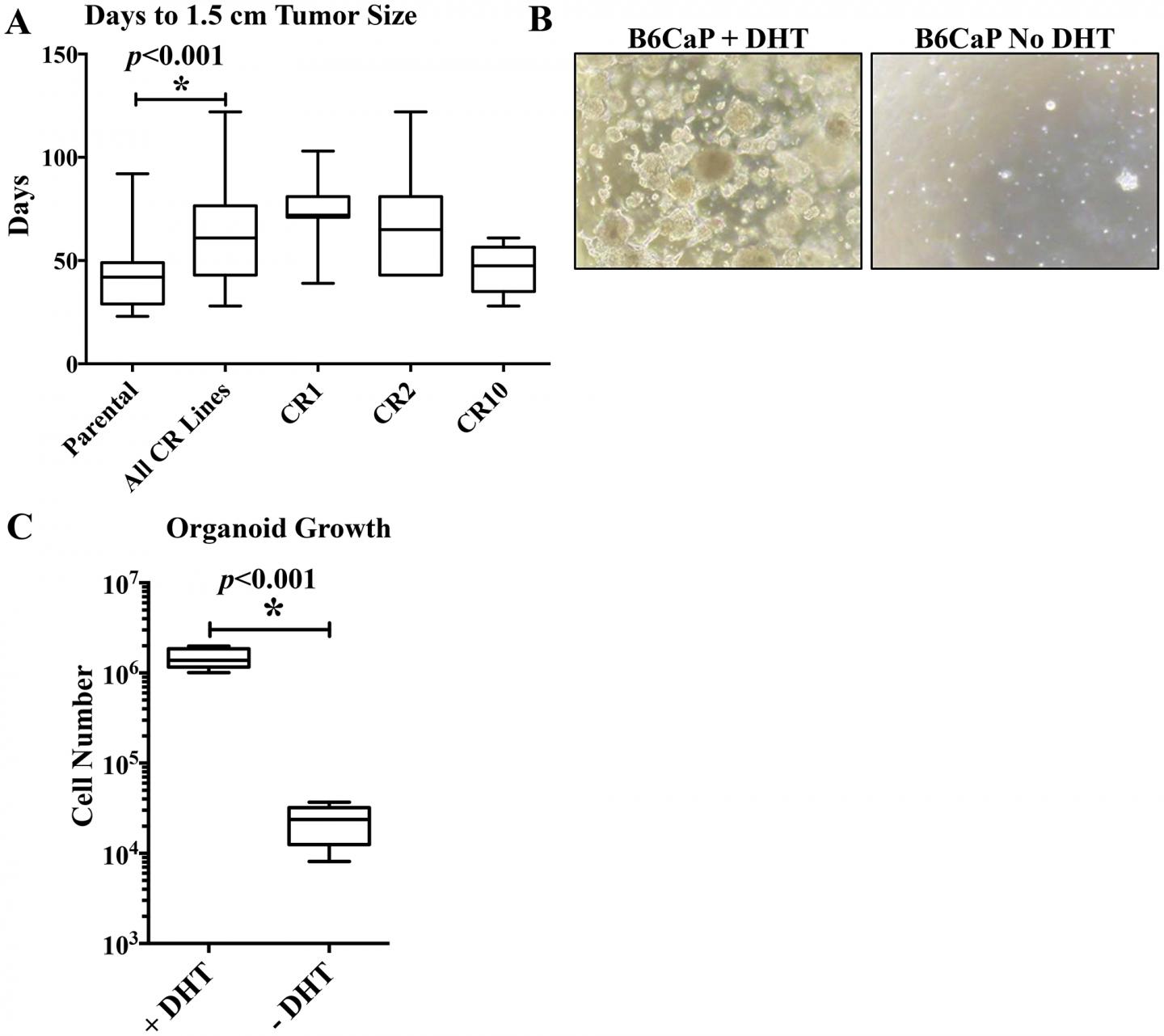
The cover for issue 64 of Oncotarget features Figure 5, ‘In vivo and ex-vivo growth kinetics of B6CaP,’ by Simons, et al.
IMAGE

Credit: Correspondence to – Edward M. Schaeffer – [email protected]


The cover for issue 64 of Oncotarget features Figure 5, “In vivo and ex-vivo growth kinetics of B6CaP,” by Simons, et al.

The Research Team reports the establishment of B6Ca P, an allograft tumor line from a Hi-Myc transgenic mouse that had been backcrossed onto C57BL/6J background.

This is the first example of a prostate-derived tumor line that shows frequent metastasis to bone and grows in an immunocompetent host, making this model useful for studying mechanisms of bone metastasis and tumor immune response.

Dr. Edward M. Schaeffer from the Department of Urology, Feinberg School of Medicine, Northwestern University, Chicago, IL, USA said, “Prostate cancer (PCa) is the most common non-cutaneous cancer in the United States, and is the third leading cause of cancer-related deaths in men.”

Animal models of cancer allow the study of molecular mechanisms of disease progression and test new treatments across the disease sites; but an uncommon occurrence of spontaneous prostate cancer in mice and a lack of animal model systems that closely recapitulate the human PCa hampers the mechanistic understanding of metastatic progression and development of effective treatments for advanced PCa. While xenografts of human cell lines in immunodeficient mice remain the most commonly used models, PCa cell lines rarely metastasize from subcutaneous grafts, with an exception of a few cell lines that metastasize when injected orthotopically.

To overcome these problems, numerous genetically engineered mouse models of PCa have been developed over the years including the TRAMP model that displays PCa metastases to distant organs such as lung, but rarely to bones, a feature consistent in other transgenic mouse models as well.

Intracardiac injection of B6Ca P results in frequent skeletal metastases, making it an excellent pre-clinical model to study the mechanisms of metastasis in PCa.

The Schaeffer Research Team concluded that, taken together, B6Ca P line overcomes two critical limitations to study the skeletal metastasis of prostate cancer.

###

Full text – https://doi.org/10.18632/oncotarget.27317

Correspondence to – Edward M. Schaeffer – [email protected]

Keywords – prostate cancer, bone metastasis, murine model

About Oncotarget

Oncotarget is a weekly, peer-reviewed, open access biomedical journal covering research on all aspects of oncology.

To learn more about Oncotarget, please visit http://www.oncotarget.com or connect with @OncotargetJrnl

Oncotarget is published by Impact Journals, LLC please visit http://www.ImpactJournals.com or connect with @ImpactJrnls

Media Contact

18009220957×105

[email protected]

Media Contact
Ryan James Jessup
[email protected]
202-638-9720

Original Source

http://www.oncotarget.com/news/pr/a-mouse-model-of-prostate-cancer-bone-metastasis-in-a-syngeneic-immunocompetent-host

Related Journal Article

http://dx.doi.org/10.18632/oncotarget.27317

Tags: cancerMedicine/Health
Share12Tweet8Share2ShareShareShare2

Related Posts

Personalized Guide to Understanding and Reducing Chemicals

February 7, 2026

Inflammasome Protein ASC Drives Pancreatic Cancer Metabolism

February 7, 2026

Phage-Antibiotic Combo Beats Resistant Peritoneal Infection

February 7, 2026

Boosting Remote Healthcare: Stepped-Wedge Trial Insights

February 7, 2026
Please login to join discussion

POPULAR NEWS

  • Robotic Ureteral Reconstruction: A Novel Approach

    Robotic Ureteral Reconstruction: A Novel Approach

    82 shares
    Share 33 Tweet 21
  • Digital Privacy: Health Data Control in Incarceration

    63 shares
    Share 25 Tweet 16
  • Study Reveals Lipid Accumulation in ME/CFS Cells

    57 shares
    Share 23 Tweet 14
  • Breakthrough in RNA Research Accelerates Medical Innovations Timeline

    53 shares
    Share 21 Tweet 13

About

We bring you the latest biotechnology news from best research centers and universities around the world. Check our website.

Follow us

Recent News

Personalized Guide to Understanding and Reducing Chemicals

Inflammasome Protein ASC Drives Pancreatic Cancer Metabolism

Phage-Antibiotic Combo Beats Resistant Peritoneal Infection

Subscribe to Blog via Email

Enter your email address to subscribe to this blog and receive notifications of new posts by email.

Join 73 other subscribers
  • Contact Us

Bioengineer.org © Copyright 2023 All Rights Reserved.

Welcome Back!

Login to your account below

Forgotten Password?

Retrieve your password

Please enter your username or email address to reset your password.

Log In
No Result
View All Result
  • Homepages
    • Home Page 1
    • Home Page 2
  • News
  • National
  • Business
  • Health
  • Lifestyle
  • Science

Bioengineer.org © Copyright 2023 All Rights Reserved.