• HOME
  • NEWS
  • EXPLORE
    • CAREER
      • Companies
      • Jobs
    • EVENTS
    • iGEM
      • News
      • Team
    • PHOTOS
    • VIDEO
    • WIKI
  • BLOG
  • COMMUNITY
    • FACEBOOK
    • INSTAGRAM
    • TWITTER
Saturday, July 4, 2026
BIOENGINEER.ORG
No Result
View All Result
  • Login
  • HOME
  • NEWS
  • EXPLORE
    • CAREER
      • Companies
      • Jobs
        • Lecturer
        • PhD Studentship
        • Postdoc
        • Research Assistant
    • EVENTS
    • iGEM
      • News
      • Team
    • PHOTOS
    • VIDEO
    • WIKI
  • BLOG
  • COMMUNITY
    • FACEBOOK
    • INSTAGRAM
    • TWITTER
  • HOME
  • NEWS
  • EXPLORE
    • CAREER
      • Companies
      • Jobs
        • Lecturer
        • PhD Studentship
        • Postdoc
        • Research Assistant
    • EVENTS
    • iGEM
      • News
      • Team
    • PHOTOS
    • VIDEO
    • WIKI
  • BLOG
  • COMMUNITY
    • FACEBOOK
    • INSTAGRAM
    • TWITTER
No Result
View All Result
Bioengineer.org
No Result
View All Result
Home NEWS Science News Health

Safety evaluation of conditionally immortalized cells for renal replacement therapy

Bioengineer by Bioengineer
November 25, 2019
in Health
Reading Time: 3 mins read
0
IMAGE
Share on FacebookShare on TwitterShare on LinkedinShare on RedditShare on Telegram

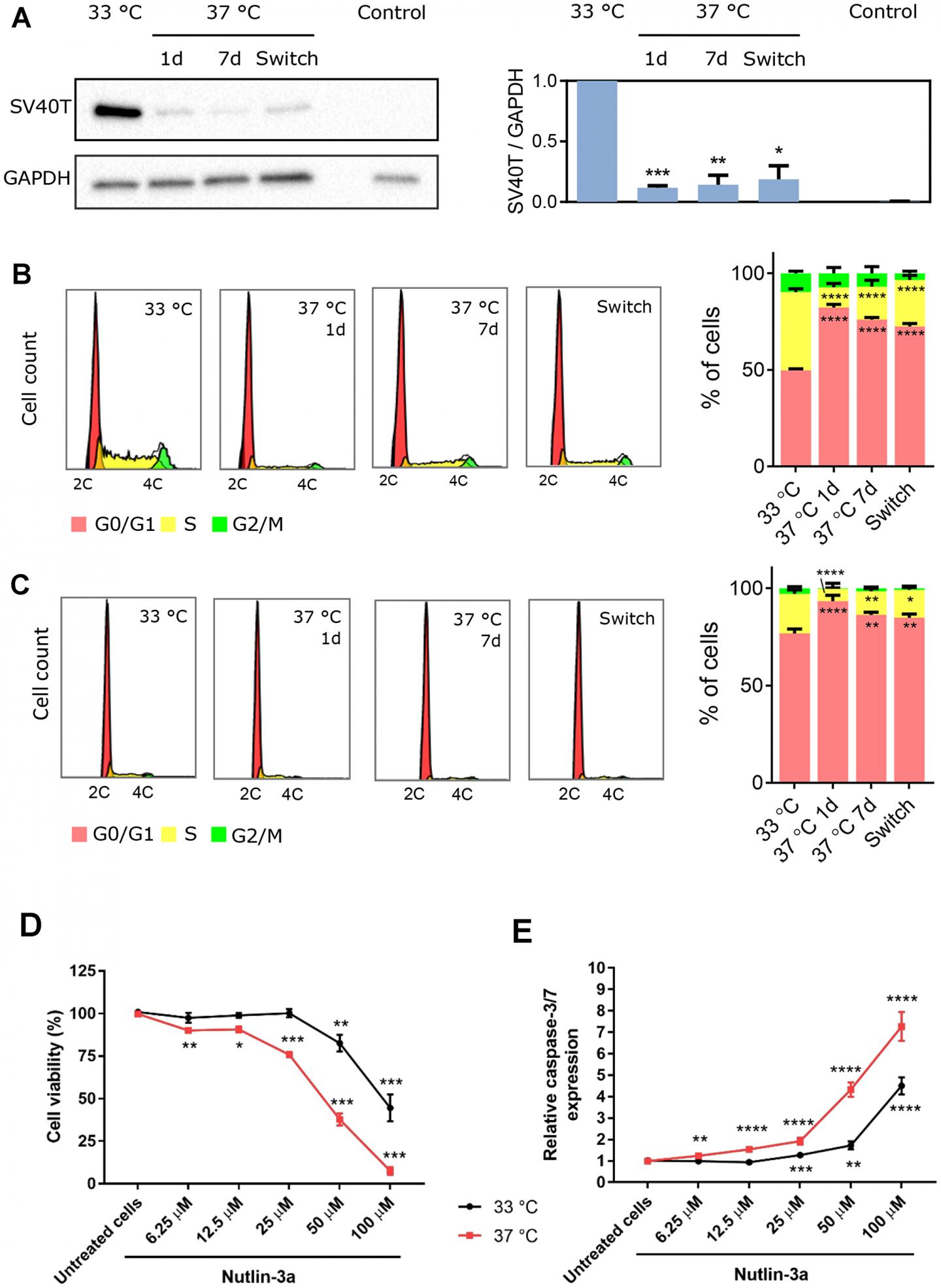
Here, the research team assessed the safety of conditionally immortalized proximal tubule epithelial cells for bioartificial kidney application, by using in vitro assays and athymic nude rats
IMAGE

Credit: Correspondence to: Rosalinde Masereeuw, email: [email protected]


Here, the research team assessed the safety of conditionally immortalized proximal tubule epithelial cells for bioartificial kidney application, by using in vitro assays and athymic nude rats.

They demonstrate that these cells do not possess key properties of oncogenically transformed cells, including anchorage-independent growth, lack of contact inhibition and apoptosis-resistance.

Taken together, this study lays an important foundation towards bioartificial kidney development by confirming the safety of the cell line intended for incorporation.

Dr. Rosalinde Masereeuw from the Division of Pharmacology, Utrecht Institute for Pharmaceutical Sciences, Utrecht University, Utrecht, The Netherlands said, “End-stage kidney disease represents irreversible kidney failure through a variety of causes.”

Human primary proximal tubule epithelial cells have a limited life span in vitro and presenting risks, such as functional changes occurring upon culturing as well as dedifferentiation and senescence of cells.

Issues related to the use of animal-derived cells in BAK are safety concerns compromising approval for clinical application and species differences in cell behaviour.

Due to the expression of temperature-sensitive SV40T, cells can be expanded at permissive temperature of 33 C and differentiated into mature cells at non-permissive temperature of 37 C.

With this cell line the authors demonstrated the capacity of an efficient removal of uremic toxins when cells are cultured on hollow fiber membranes , thereby creating fully functional kidney tubules.

Finally, they evaluated cell transforming properties and tumorigenic potential in vivo to gain more insight into safety and suitability of these cells for applications in renal replacement therapies.

The Masereeuw Research team concluded, “by showing that ci PTEC-OAT1 do not portray fundamental characteristics of oncogenically transformed cells, do not present negative consequences of viral transductions and genomic transgene integrations, such as insertional mutagenesis, nor possess tumorigenic capacity in vivo, the present study lays an important foundation towards validating the safety of a conditionally immortalized cell line for clinical application as cell-based renal replacement therapy.”

###

Full text – http://www.oncotarget.com/index.php?journal=oncotarget&page=article&op=view&path%5B%5D=27152&path%5B%5D=86951

Correspondence to – Rosalinde Masereeuw – [email protected]

Keywords – bioartificial kidney, cell therapy safety, conditionally immortalized proximal tubule epithelial cells, tumorigenicity, viral integration

About Oncotarget

Oncotarget is a weekly, peer-reviewed, open-access biomedical journal covering research on all aspects of oncology.

To learn more about Oncotarget, please visit http://www.oncotarget.com or connect with @OncotargetJrnl

Oncotarget is published by Impact Journals, LLC please visit http://www.ImpactJournals.com or connect with @ImpactJrnls

Media Contact

18009220957×105

[email protected]

Media Contact
Ryan James Jessup
[email protected]
800-922-0957 x105

Original Source

http://www.oncotarget.com/news/pr/safety-evaluation-of-conditionally-immortalized-cells-for-renal-replacement-therapy

Related Journal Article

http://dx.doi.org/10.18632/oncotarget.27152

Tags: cancerMedicine/Health
Share12Tweet8Share2ShareShareShare2

Related Posts

Lysine Pyruvylation Links Glycolysis to Epigenetics

July 4, 2026

Personalized Neoantigen Dendritic Cell Vaccine in Glioblastoma

July 4, 2026

Decoding Neural Timescales: A Computational Viewpoint

July 4, 2026

Uncovering C5aR2: Unique Signaling and Agonists

July 4, 2026
Please login to join discussion

POPULAR NEWS

  • Detection of EDCs in Breast Milk and Infant Urine Up to Six Months Highlights Early Exposure Risks

    77 shares
    Share 31 Tweet 19
  • Saying Goodbye to PGY-6: Pediatric Fellowship Realities

    103 shares
    Share 41 Tweet 26
  • New Drug Candidate Developed at McMaster Shows Potential for Treating Brain Cancer

    58 shares
    Share 23 Tweet 15
  • KTU Researchers Explore Ultrasound’s Role in Enhancing Blood Flow Beyond Diagnostics

    53 shares
    Share 21 Tweet 13

About

We bring you the latest biotechnology news from best research centers and universities around the world. Check our website.

Follow us

Recent News

Quasi-Bound States Boost Quantum Well Photoresponse

Lysine Pyruvylation Links Glycolysis to Epigenetics

Multiphysics Coupling: Single vs. Multiple DeepONet Branches

Subscribe to Blog via Email

Enter your email address to subscribe to this blog and receive notifications of new posts by email.

Join 83 other subscribers
  • Contact Us

Bioengineer.org © Copyright 2023 All Rights Reserved.

Welcome Back!

Login to your account below

Forgotten Password?

Retrieve your password

Please enter your username or email address to reset your password.

Log In
No Result
View All Result
  • Homepages
    • Home Page 1
    • Home Page 2
  • News
  • National
  • Business
  • Health
  • Lifestyle
  • Science

Bioengineer.org © Copyright 2023 All Rights Reserved.