$2.6 million NSF grant to fund four-year project
Credit: Hunter Snyder
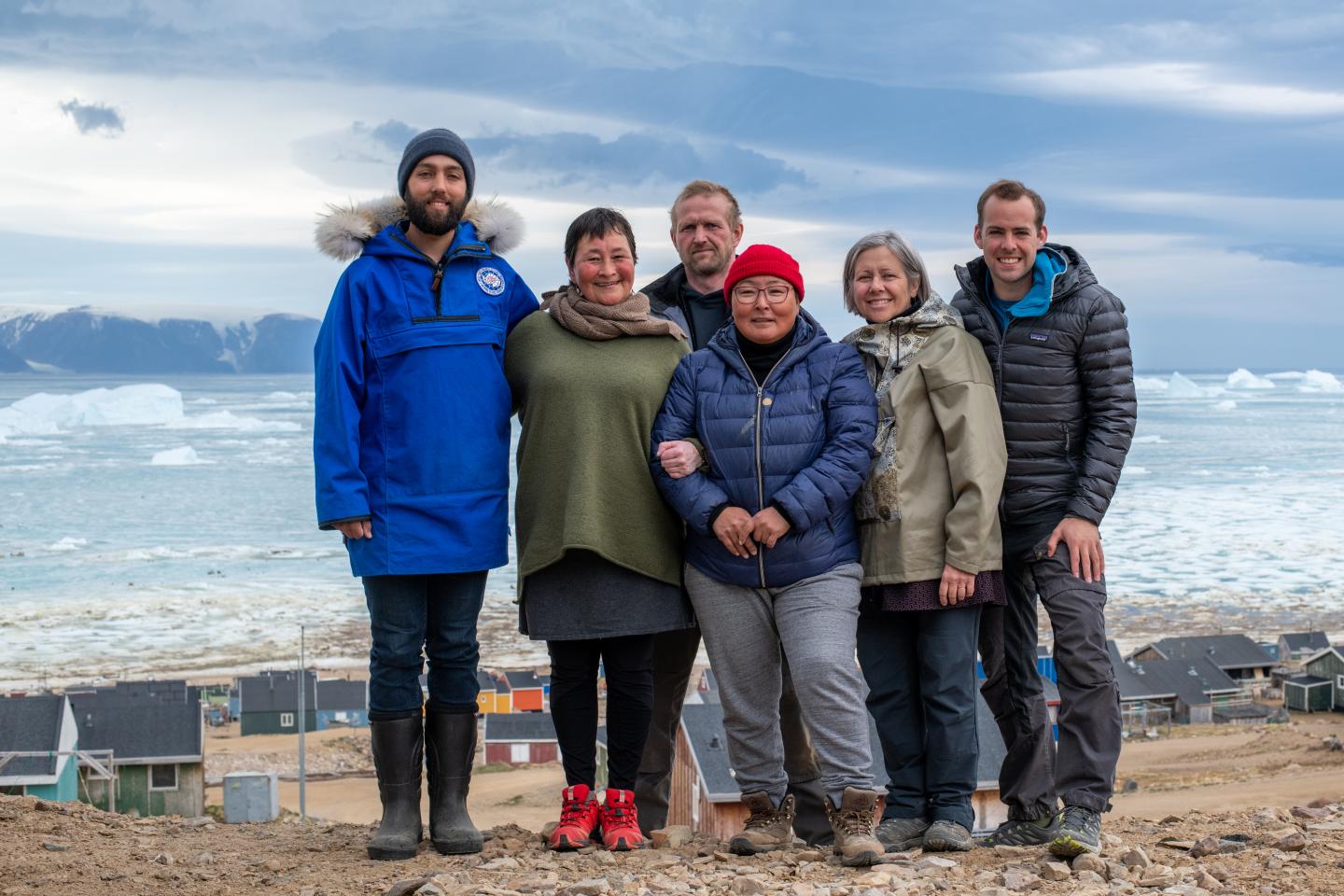
Thayer School of Engineering at Dartmouth has been awarded a $2.6 million grant from the National Science Foundation (NSF) to partner with Qaanaaq, an Arctic hunting and fishing community in northern Greenland, in the residents’ transition to renewable energy and an affordable, sustainable future. The project is expected to produce sustainable technological solutions that will also benefit other communities facing the effects of the climate crisis, including areas in the mid-latitudes.
The people of Qaanaaq asked Mary Albert, professor of engineering at Dartmouth, to collaborate with them in their transition to affordable, renewable energy. Albert, who will lead the team and knows the citizens from prior work in Greenland, has worked in Greenland for many years studying snow and climate.
Albert notes that the people of northern Greenland, many of whom make their living by hunting and fishing through sea ice, are excited about the prospect of decreasing their dependence on diesel and fossil fuels, which are expensive and unsustainable. Due to the conditions of the area, many common sources of sustainable energy such as hydro-power are not feasible.
“It’s not a straightforward problem—it’s multifaceted. It involves equity, policy, the economy, ecosystems, societal culture, as well as engineering principles. All those aspects come into innovative solutions for this community,” said Albert.
Albert is confident that the team, which includes research scientists, practitioners and community members in Greenland, will be able to improve living standards as well as create sustainable solutions through the combination of technology innovation, youth education, and governmental policy change.
“In order to have a healthy community, we need to address the economic issues that accompany our energy needs and help promote a more sustainable society,” said Lene Kielsen Holm, who is the Greenland Lead for the project. “Economic change would produce many beneficial side effects such as enabling more independence and bringing people back to a more balanced everyday life.”
The team expects to travel to Qaanaaq for two weeks in the spring and two weeks in the fall each year for the next four years starting in April 2020. Previous funding from the Arthur L. Irving Institute for Energy and Society at Dartmouth enabled the team to visit Qaanaaq earlier this year to help identify the area’s needs.
“This project demonstrates engaged science in action,” says Stephen Doig, who contributed to the grant proposal and will travel with the research team to Greenland as Research Director at the Irving Institute. “It’s about understanding common goals and aspirations and then helping create and act on a plan.”
Rounding out the Dartmouth team will be Christopher Polashenski, adjust assistant professor of engineering, and Weiyang (Fiona) Li, the William P. Harris Career Development Assistant Professor of Engineering, as well as three Thayer PhD students and a postdoctoral fellow.
“This is an amazing opportunity to link science and human needs directly,” said Polashenski. “Only by understanding the complex linkages between environmental change and human activities can we plan for our future.”
The grant is part of the NSF’s 10 Big Ideas program, which identifies and invests in research areas at the frontiers of science and engineering. Navigating the New Arctic, one of the 10 Big Ideas, recognizes that biological, physical, chemical, and social changes in the Arctic will fundamentally alter climate, weather, and ecosystems globally with profound impacts on the world’s economy and security.
Media Contact
Julie Bonette
[email protected]
Original Source
https:/