• HOME
  • NEWS
  • EXPLORE
    • CAREER
      • Companies
      • Jobs
    • EVENTS
    • iGEM
      • News
      • Team
    • PHOTOS
    • VIDEO
    • WIKI
  • BLOG
  • COMMUNITY
    • FACEBOOK
    • INSTAGRAM
    • TWITTER
Saturday, February 7, 2026
BIOENGINEER.ORG
No Result
View All Result
  • Login
  • HOME
  • NEWS
  • EXPLORE
    • CAREER
      • Companies
      • Jobs
        • Lecturer
        • PhD Studentship
        • Postdoc
        • Research Assistant
    • EVENTS
    • iGEM
      • News
      • Team
    • PHOTOS
    • VIDEO
    • WIKI
  • BLOG
  • COMMUNITY
    • FACEBOOK
    • INSTAGRAM
    • TWITTER
  • HOME
  • NEWS
  • EXPLORE
    • CAREER
      • Companies
      • Jobs
        • Lecturer
        • PhD Studentship
        • Postdoc
        • Research Assistant
    • EVENTS
    • iGEM
      • News
      • Team
    • PHOTOS
    • VIDEO
    • WIKI
  • BLOG
  • COMMUNITY
    • FACEBOOK
    • INSTAGRAM
    • TWITTER
No Result
View All Result
Bioengineer.org
No Result
View All Result
Home NEWS Science News Chemistry

Researchers strengthen weakest link in manufacturing strong materials

Bioengineer by Bioengineer
November 12, 2019
in Chemistry
Reading Time: 2 mins read
0
IMAGE
Share on FacebookShare on TwitterShare on LinkedinShare on RedditShare on Telegram

IMAGE

Credit: Kenta Yamanaka et al, Tohoku University


Industrial and automotive machinery, such as automotive engine parts, contain materials that are, heat-, wear-, and corrosion-resistant. They are known as “super engineering plastics,” and they continue to revolutionize manufacturing processes. While they are actually plastic, they are much stronger than the typical plastics we encounter in everyday life. These materials, however, create a corrosive environment during manufacturing.

That’s changing with a new innovation developed by a team of researchers based in Japan. They designed a new method to improve the wear and corrosion resistance of the machines that produce super engineering plastics. The researchers published their results on August 27 in npj Materials Degradation, a Nature journal.

“The global market for super engineering plastics has grown in recent years because they have remarkably high-temperature resistance, good mechanical strength and exceptional chemical and solvent resistance in high-temperature environments,” said Kenta Yamanaka, paper author and associate professor of deformation processing at the Institute for Materials Research at Tohoku University. “However, during the manufacturing process, the reciprocating screw in the manufacturing apparatus usually suffers from frequent wear loss because the semi-fluid raw materials commonly contain a large number of glass fibers as reinforcement.”

Super engineering plastics also decompose into sulfuric gas, inducing a highly corrosive environment in addition to the high physical wear conditions. The screws in the manufacturing machines cannot withstand such an environment for long.

To correct this issue, Yamanaka and the researchers studied a steel alloy known as high-speed steel, which is currently mainly used for tools. According to Yamanaka, the steel has outstanding mechanical properties at room and elevated temperatures, but it’s vulnerable to corrosion.

The researchers used an alloy based on high-speed steel and treated it with copper.

“The wear and corrosion resistance of steels generally show a trade-off relationship,” Yamanaka said. “In this study, we demonstrate that adding trace copper to high-hardness steels significantly improves the corrosion resistance of the alloys, resulting in an excellent combination of wear and corrosion resistance.”

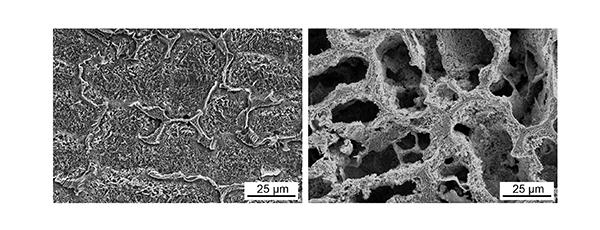
After analyzing the alloy through imaging and experimental studies, the researchers found that they had successfully developed a highly wear and corrosion-resistant steel. Next, they plan to further investigate the alloy’s properties for application in other fields.

###

Media Contact
Kenta Yamanaka
[email protected]
81-222-152-118

Original Source

https://www.tohoku.ac.jp/en/press/manufacturing_strong_materials.html

Related Journal Article

http://dx.doi.org/10.1038/s41529-019-0092-3

Tags: Chemistry/Physics/Materials SciencesMaterials
Share12Tweet8Share2ShareShareShare2

Related Posts

blank

Breakthrough in Environmental Cleanup: Scientists Develop Solar-Activated Biochar for Faster Remediation

February 7, 2026
blank

Cutting Costs: Making Hydrogen Fuel Cells More Affordable

February 6, 2026

Scientists Develop Hand-Held “Levitating” Time Crystals

February 6, 2026

Observing a Key Green-Energy Catalyst Dissolve Atom by Atom

February 6, 2026
Please login to join discussion

POPULAR NEWS

  • Robotic Ureteral Reconstruction: A Novel Approach

    Robotic Ureteral Reconstruction: A Novel Approach

    82 shares
    Share 33 Tweet 21
  • Digital Privacy: Health Data Control in Incarceration

    63 shares
    Share 25 Tweet 16
  • Study Reveals Lipid Accumulation in ME/CFS Cells

    57 shares
    Share 23 Tweet 14
  • Breakthrough in RNA Research Accelerates Medical Innovations Timeline

    53 shares
    Share 21 Tweet 13

About

We bring you the latest biotechnology news from best research centers and universities around the world. Check our website.

Follow us

Recent News

Phage-Antibiotic Combo Beats Resistant Peritoneal Infection

Boosting Remote Healthcare: Stepped-Wedge Trial Insights

Barriers and Boosters of Seniors’ Physical Activity in Karachi

Subscribe to Blog via Email

Enter your email address to subscribe to this blog and receive notifications of new posts by email.

Join 73 other subscribers
  • Contact Us

Bioengineer.org © Copyright 2023 All Rights Reserved.

Welcome Back!

Login to your account below

Forgotten Password?

Retrieve your password

Please enter your username or email address to reset your password.

Log In
No Result
View All Result
  • Homepages
    • Home Page 1
    • Home Page 2
  • News
  • National
  • Business
  • Health
  • Lifestyle
  • Science

Bioengineer.org © Copyright 2023 All Rights Reserved.