• HOME
  • NEWS
  • EXPLORE
    • CAREER
      • Companies
      • Jobs
    • EVENTS
    • iGEM
      • News
      • Team
    • PHOTOS
    • VIDEO
    • WIKI
  • BLOG
  • COMMUNITY
    • FACEBOOK
    • INSTAGRAM
    • TWITTER
Monday, May 11, 2026
BIOENGINEER.ORG
No Result
View All Result
  • Login
  • HOME
  • NEWS
  • EXPLORE
    • CAREER
      • Companies
      • Jobs
        • Lecturer
        • PhD Studentship
        • Postdoc
        • Research Assistant
    • EVENTS
    • iGEM
      • News
      • Team
    • PHOTOS
    • VIDEO
    • WIKI
  • BLOG
  • COMMUNITY
    • FACEBOOK
    • INSTAGRAM
    • TWITTER
  • HOME
  • NEWS
  • EXPLORE
    • CAREER
      • Companies
      • Jobs
        • Lecturer
        • PhD Studentship
        • Postdoc
        • Research Assistant
    • EVENTS
    • iGEM
      • News
      • Team
    • PHOTOS
    • VIDEO
    • WIKI
  • BLOG
  • COMMUNITY
    • FACEBOOK
    • INSTAGRAM
    • TWITTER
No Result
View All Result
Bioengineer.org
No Result
View All Result
Home NEWS Science News Biology

Satellites are key to monitoring ocean carbon

Bioengineer by Bioengineer
November 4, 2019
in Biology
Reading Time: 3 mins read
0
IMAGE
Share on FacebookShare on TwitterShare on LinkedinShare on RedditShare on Telegram

IMAGE

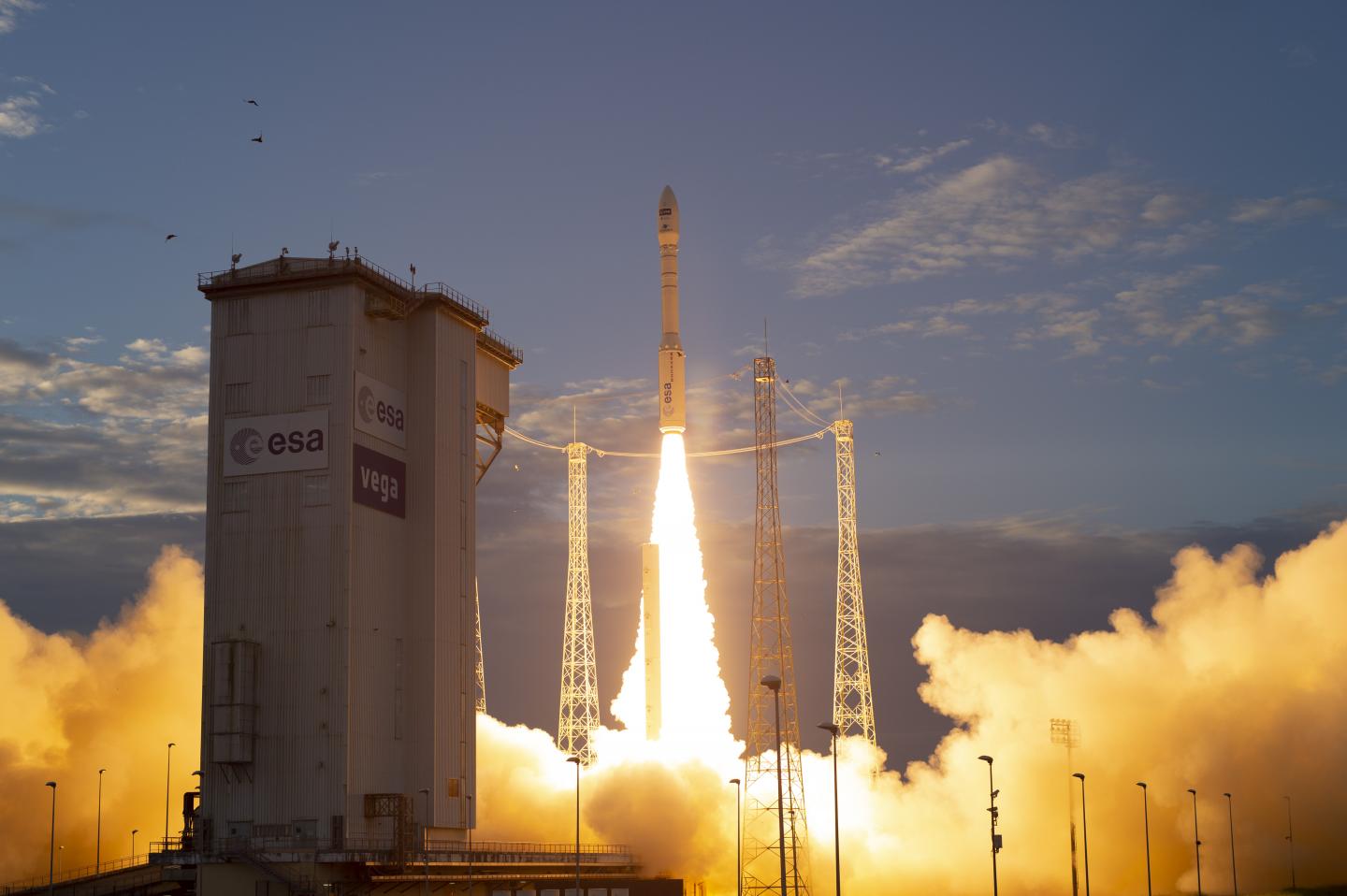
Credit: ESA, S Corvaja


Satellites now play a key role in monitoring carbon levels in the oceans, but we are only just beginning to understand their full potential.

Our ability to predict future climate relies upon being able to monitor where our carbon emissions go. So we need to know how much stays in the atmosphere, or becomes stored in the oceans or on

land. The oceans in particular have helped to slow climate change as they absorb and then store the carbon for thousands of years.

The IPCC Special Report on the Oceans and Cryosphere in a Changing Climate, published in September, identified this critical role that the ocean play in regulating our climate along with the need to increase our monitoring and understanding of ocean health.

But the vast nature of the oceans, covering over 70% of the Earth’s surface, illustrates why satellites are an important component of any monitoring.

The new study, led by the University of Exeter, says that increased exploitation of existing satellites will enable us to fill “critical knowledge gaps” for monitoring our climate.

The work reports that satellites originally launched to study the wind, also have the capability to observe how rain, wind, waves, foam and temperature all combine to control the movement of heat and carbon dioxide between the ocean and the atmosphere.

Additionally, satellites launched to monitor gas emissions over the land are also able to measure carbon dioxide emissions as they disperse over the ocean.

Future satellite missions offer even greater potential for new knowledge, including the ability to study the internal circulation of the oceans. New constellations of commercial satellites, designed to monitor the weather and life on land, are also capable of helping to monitor ocean health.

“Monitoring carbon uptake by the oceans is now critical to understand our climate and for ensuring the future health of the animals that live there,” said lead author Dr Jamie Shutler, of the Centre for Geography and Environmental Science on Exeter’s Penryn Campus in Cornwall.

“By monitoring the oceans we can gather the necessary information to help protect ecosystems at risk and motivate societal shifts towards cutting carbon emissions.”

The research team included multiple European research institutes and universities, the US National Oceanic and Atmospheric Administration, the Japan Aerospace Exploration Agency and the European Space Agency.

The researchers call for a “robust network” that can routinely observe the oceans.

This network would need to combine data from many different satellites with information from automated instruments on ships, autonomous vehicles and floats that can routinely measure surface water carbon dioxide.

And recent computing advancements, such as Google Earth Engine, which provides free access and computing for scientific analysis of satellite datasets, could also be used.

The study suggests that an international charter that makes satellite data freely available during major disasters should be expanded to include the “long-term man-made climate disaster”, enabling commercial satellite operators to easily contribute.

The research was supported by the International Space Science Institute ISSI Bern, Switzerland, and initiated by Dr Shutler at the University of Exeter and Dr Craig Donlon at the European Space Agency.

The paper, published this week in Frontiers in Ecology and Environment, is entitled: “Satellites will address critical science priorities for quantifying ocean carbon.”

###

Media Contact
Alex Morrison
[email protected]
44-013-927-24828

Tags: Atmospheric ScienceClimate ChangeClimate ScienceEarth ScienceOceanographySatellite Missions/ShuttlesSpace/Planetary Science
Share14Tweet9Share3ShareShareShare2

Related Posts

Ancient Plant Populations Reveal Fresh Insights into Climate Resilience — Biology

Ancient Plant Populations Reveal Fresh Insights into Climate Resilience

May 8, 2026
Rare Brain Disorders in Children Linked to Mutations in Lesser-Known Protein Complex — Biology

Rare Brain Disorders in Children Linked to Mutations in Lesser-Known Protein Complex

May 8, 2026

From Odd Insect to Underwater Predator: The Remarkable Evolution of a Bloodthirsty Fruit Fly

May 8, 2026

SNU Professor Sangwoo Seo’s Team Develops Next-Generation CRISPR Biocontainment Technology to Control Microbial Survival Without DNA Cleavage

May 8, 2026
Please login to join discussion

POPULAR NEWS

  • Research Indicates Potential Connection Between Prenatal Medication Exposure and Elevated Autism Risk

    840 shares
    Share 336 Tweet 210
  • New Study Reveals Plants Can Detect the Sound of Rain

    727 shares
    Share 290 Tweet 181
  • Salmonella Haem Blocks Macrophages, Boosts Infection

    61 shares
    Share 24 Tweet 15
  • Breastmilk Balances E. coli and Beneficial Bacteria in Infant Gut Microbiomes

    57 shares
    Share 23 Tweet 14

About

We bring you the latest biotechnology news from best research centers and universities around the world. Check our website.

Follow us

Recent News

New Post-Hoc Analysis Explores Daily Oral Orforglipron Use in Adults Over 65 with Obesity, Regardless of Diabetes Status

Evaluating Digoxin Use in Patients with Symptomatic Rheumatic Heart Disease

Evaluating the Effectiveness and Safety of Digitalis Glycosides in Treating Heart Failure

Subscribe to Blog via Email

Enter your email address to subscribe to this blog and receive notifications of new posts by email.

Join 82 other subscribers
  • Contact Us

Bioengineer.org © Copyright 2023 All Rights Reserved.

Welcome Back!

Login to your account below

Forgotten Password?

Retrieve your password

Please enter your username or email address to reset your password.

Log In
No Result
View All Result
  • Homepages
    • Home Page 1
    • Home Page 2
  • News
  • National
  • Business
  • Health
  • Lifestyle
  • Science

Bioengineer.org © Copyright 2023 All Rights Reserved.