• HOME
  • NEWS
  • EXPLORE
    • CAREER
      • Companies
      • Jobs
    • EVENTS
    • iGEM
      • News
      • Team
    • PHOTOS
    • VIDEO
    • WIKI
  • BLOG
  • COMMUNITY
    • FACEBOOK
    • INSTAGRAM
    • TWITTER
Saturday, February 7, 2026
BIOENGINEER.ORG
No Result
View All Result
  • Login
  • HOME
  • NEWS
  • EXPLORE
    • CAREER
      • Companies
      • Jobs
        • Lecturer
        • PhD Studentship
        • Postdoc
        • Research Assistant
    • EVENTS
    • iGEM
      • News
      • Team
    • PHOTOS
    • VIDEO
    • WIKI
  • BLOG
  • COMMUNITY
    • FACEBOOK
    • INSTAGRAM
    • TWITTER
  • HOME
  • NEWS
  • EXPLORE
    • CAREER
      • Companies
      • Jobs
        • Lecturer
        • PhD Studentship
        • Postdoc
        • Research Assistant
    • EVENTS
    • iGEM
      • News
      • Team
    • PHOTOS
    • VIDEO
    • WIKI
  • BLOG
  • COMMUNITY
    • FACEBOOK
    • INSTAGRAM
    • TWITTER
No Result
View All Result
Bioengineer.org
No Result
View All Result
Home NEWS Science News Biology

Detection dogs and DNA on the trail of endangered lizards

Bioengineer by Bioengineer
October 30, 2019
in Biology
Reading Time: 2 mins read
0
IMAGE
Share on FacebookShare on TwitterShare on LinkedinShare on RedditShare on Telegram

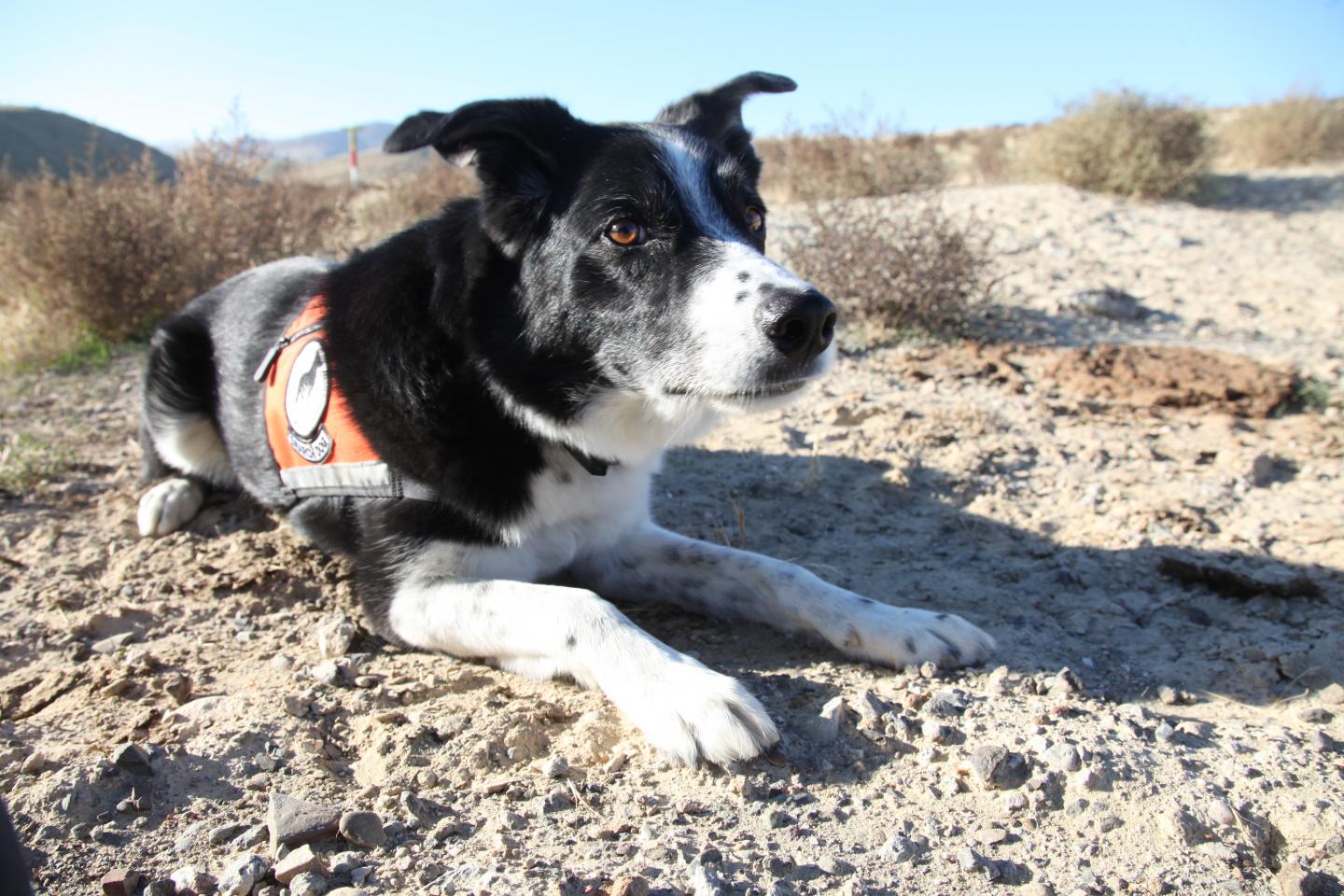
Noninvasive scat sampling could strengthen reptile conservation
IMAGE

Credit: Mike Westphal, Bureau of Land Management

Detection dogs trained to sniff out the scat of an endangered lizard in California’s San Joaquin Valley, combined with genetic species identification, could represent a new noninvasive sampling technique for lizard conservation worldwide. That is according to a study published today from the University of California, Davis, in partnership with the nonprofit Working Dogs for Conservation, U.S. Geological Survey and the U.S. Bureau of Land Management.

Scientists have used trained conservation dogs to locate scat and collect DNA samples for everything from bears and foxes to gorillas and whales. But the technique had not been used for reptiles until this study, for which scientists developed a novel approach to identify the presence of the blunt-nosed leopard lizard in the Panoche Hills Recreation Area and Carrizo Plain National Monument, both managed by BLM.

They developed new methods to recover DNA from feces and genetically identify lizard species in the same area. The study, published in the Journal of Wildlife Management, is a proof of concept for a host of reptiles.

“So many reptilian species have been hit so hard,” said lead author Mark Statham, an associate researcher with the Mammalian Ecology and Conservation Unit of the UC Davis School of Veterinary Medicine. “A large proportion of them are endangered or threatened. This is a really valuable way for people to be able to survey them.”

NO DIRECT CONTACT NEEDED

Current methods for surveying lizard species typically rely on live capture or visual surveys. Scat sampling allows biologists to study elusive, rare or dangerous animals without the need for direct contact. In addition to informing about the presence, habitat and genetics of an animal, scat can also be analyzed to inform researchers about diet, hormones, parasites and other health factors.

Using the new method, the authors genetically identified specific species for 78 percent of the 327 samples collected by dog-handler teams across four years. Most (82 percent) of those identified were confirmed as being from blunt-nosed leopard lizards.

To meet regulatory monitoring requirements, more research is needed to assess the viability of using detection dogs to recover usable DNA at larger scales. But the research highlights the broad potential this method holds for surveying and monitoring reptiles.

###

Study coauthors include Deborah A. Woollett, Alice Whitelaw and Ngaio L. Richards of Working Dogs for Conservation; Susan Fresquez, Jerene Pfeiffer and Benjamin Sacks from UC Davis School of Veterinary Medicine; Jonathan Richmond from the U.S. Geological Survey; and Michael F. Westphal of the U.S. Bureau of Land Management.

Funding was provided by the Bureau of Land Management.

Media Contact
Kat Kerlin
[email protected]
530-752-7704

Tags: BiodiversityBioinformaticsBiologyEcology/EnvironmentGeneticsPets/EthologyPopulation BiologyZoology/Veterinary Science
Share12Tweet8Share2ShareShareShare2

Related Posts

Florida Cane Toad: Complex Spread and Selective Evolution

Florida Cane Toad: Complex Spread and Selective Evolution

February 7, 2026
New Study Uncovers Mechanism Behind Burn Pit Particulate Matter–Induced Lung Inflammation

New Study Uncovers Mechanism Behind Burn Pit Particulate Matter–Induced Lung Inflammation

February 6, 2026

DeepBlastoid: Advancing Automated and Efficient Evaluation of Human Blastoids with Deep Learning

February 6, 2026

Navigating the Gut: The Role of Formic Acid in the Microbiome

February 6, 2026
Please login to join discussion

POPULAR NEWS

  • Robotic Ureteral Reconstruction: A Novel Approach

    Robotic Ureteral Reconstruction: A Novel Approach

    82 shares
    Share 33 Tweet 21
  • Digital Privacy: Health Data Control in Incarceration

    63 shares
    Share 25 Tweet 16
  • Study Reveals Lipid Accumulation in ME/CFS Cells

    57 shares
    Share 23 Tweet 14
  • Breakthrough in RNA Research Accelerates Medical Innovations Timeline

    53 shares
    Share 21 Tweet 13

About

We bring you the latest biotechnology news from best research centers and universities around the world. Check our website.

Follow us

Recent News

Evaluating Pediatric Emergency Care Quality in Ethiopia

TPMT Expression Predictions Linked to Azathioprine Side Effects

Improving Dementia Care with Enhanced Activity Kits

Subscribe to Blog via Email

Enter your email address to subscribe to this blog and receive notifications of new posts by email.

Join 73 other subscribers
  • Contact Us

Bioengineer.org © Copyright 2023 All Rights Reserved.

Welcome Back!

Login to your account below

Forgotten Password?

Retrieve your password

Please enter your username or email address to reset your password.

Log In
No Result
View All Result
  • Homepages
    • Home Page 1
    • Home Page 2
  • News
  • National
  • Business
  • Health
  • Lifestyle
  • Science

Bioengineer.org © Copyright 2023 All Rights Reserved.