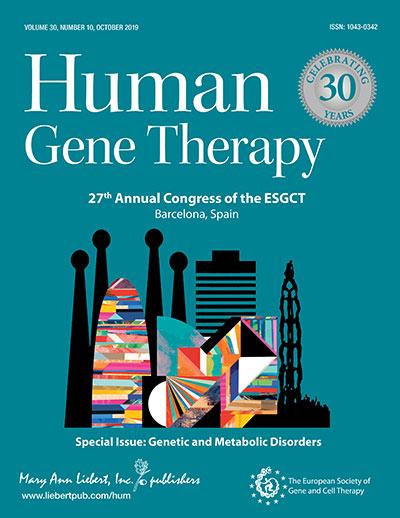
Credit: Mary Ann Liebert, Inc., publishers
New Rochelle, NY, October 29, 2019–Researchers are making great strides toward de-veloping gene-based strategies to treat a variety of inherited neurometabolic diseases characterized by severe neurological involvement. A review of the approaches currently under preclinical or clinical investigation is published in Human Gene Therapy, a peer-reviewed journal from Mary Ann Liebert, Inc., publishers. Click here to read the full-text article free on the Human Gene Therapy website through November 25, 2019.
In the article entitled “Gene-Based Approaches to Inherited Neurometabolic Diseases,” coauthors Valentina Poletti and Alessandra Biffi, Dana-Farber/Boston Children’s Can-cer and Blood Disorders Center (Boston, MA), and University of Padova (Italy), describe the characteristics needed for a gene therapy to treat neurometabolic diseases to be suc-cessful. The researchers focus in particular on progress made in the development of gene-based approaches to treat X-linked adrenoleukodystrophy (ALD), metachromatic leu-kodystropy (MLD), mucopolysaccharidoses (MPSs), and neuronal ceroid liposuscinoses (NCLs). They identify microglia as emerging key players in inherited neurodegenerative diseases, and therefore as important targets for achieving therapeutic efficacy in gene-based strategies.
“Drs. Poletti and Biffi document some of the dramatic clinical benefits that gene therapy has brought to infants and children with neurometabolic disorders,” says Editor-in-Chief Terence R. Flotte, MD, Celia and Isaac Haidak Professor of Medical Education and Dean, Provost, and Executive Deputy Chancellor, University of Massachusetts Medical School, Worcester, MA. “The breakthrough was the insight to use genetic alteration of bone marrow stem cells to cure diseases within the brain, using microglia as the vehicle. This platform has brought hope to many families with previously incurable diseases.”
###
About the Journal
Human Gene Therapy, the Official Journal of the European Society of Gene and Cell Therapy, British Society for Gene and Cell Therapy, French Society of Cell and Gene Therapy, German Society of Gene Therapy, and five other gene therapy societies, is an authoritative peer-reviewed journal published monthly in print and online. Led by Editor-in-Chief Terence R. Flotte, MD, Celia and Isaac Haidak Professor of Medical Education and Dean, Provost, and Executive Deputy Chancellor, University of Massachusetts Medical School, Human Gene Therapy presents reports on the transfer and expression of genes in mammals, including humans. Related topics include improvements in vector development, delivery systems, and animal models, particularly in the areas of cancer, heart disease, viral disease, genetic disease, and neurological disease, as well as ethical, legal, and regulatory issues related to the gene transfer in humans. Its companion journals, Human Gene Therapy Methods, published bimonthly and focused on the application of gene therapy to product testing and development, and Human Gene Therapy Clinical Development, published quarterly, features data relevant to the regulatory review and commercial development of cell and gene therapy products. Tables of contents for all three publications and a free sample issue may be viewed on the Human Gene Therapy website.
About the Publisher
Mary Ann Liebert, Inc., publishers is a privately held, fully integrated media company known for establishing authoritative peer-reviewed journals in many promising areas of science and biomedical research, including Nucleic Acid Therapeutics, Tissue Engineering, Stem Cells and Development, and Cellular Reprogramming. Its biotechnology trade magazine, GEN (Genetic Engineering & Biotechnology News), was the first in its field and is today the industry’s most widely read publication worldwide. A complete list of the firm’s 80 journals, books, and newsmagazines is available on the Mary Ann Liebert, Inc., publishers website.
Media Contact
Kathryn Ryan
[email protected]
914-740-2250
Original Source
https:/
Related Journal Article
http://dx.