Engineering and medicine team up to develop new diagnostic tool
Credit: (Photo/Tom Cogill)
The National Institutes of Health has awarded a $2.7 million grant to scientists from the University of Virginia to study a genetic variation associated with coronary heart disease.
Together, experts from UVA’s Division of Cardiovascular Medicine, the Robert M. Berne Cardiovascular Research Center and the Department of Biomedical Engineering hope to uncover the disease’s origin and development. A breakthrough here could lead to more effective, individualized treatments for coronary heart disease.
According to the Center for Disease Control and Prevention, cardiovascular disease is the leading cause of death in the U.S. for both men and women, and coronary heart disease, a type of cardiovascular disease also known as “heart artery plaque” or “hardening of the arteries,” claims over 370,000 lives annually.
“Identifying new approaches to address cardiovascular disease promises to provide added benefit in terms of treatment and prevention,” said Dr. Coleen McNamara, Frances Myers Ball professor of internal medicine at the UVA School of Medicine. “We are grateful to the UVA Center for Engineering in Medicine for the seed grant that funded work to generate key feasibility data for this successful grant application.”
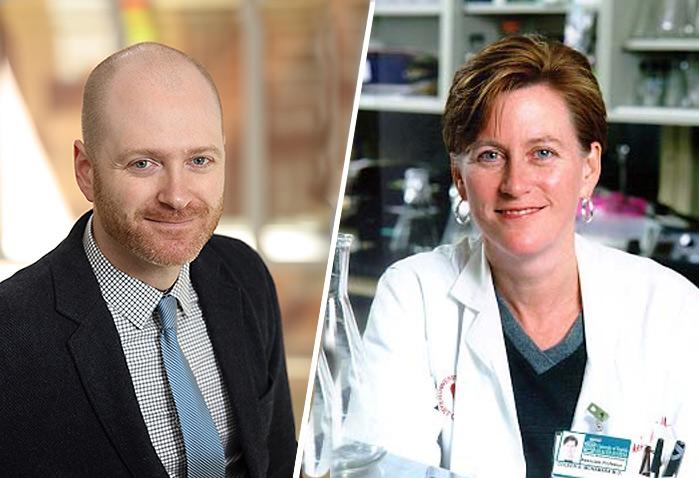
Dr. McNamara will work with Eli Zunder, a UVA assistant professor of biomedical engineering. Combining their disciplines of medicine and engineering, they will develop a technique to investigate the cellular and molecular processes behind the deadly buildup of plaque in the arteries, called atherosclerosis.
Dr. McNamara’s group is credited with discovering a link to cardiovascular disease on the ID3 gene: a genetic variation called a “single nucleotide polymorphism.” Yet it remains a mystery exactly how the genetic variation influences the production of arterial wall plaque. Zunder said McNamara had “previously shown that cells of the immune system are likely to play a role in the ID3-cardiovascular disease association, but we suspected that other cell types may be involved.”
McNamara and Zunder aim to find out what functions the ID3 gene regulates by examining cell behavior in the artery wall.
Dr. McNamara and Zunder will use Zunder’s expertise in flow cytometry, a laboratory method used to analyze cell characteristics, to examine the behavior of multiple different cell types in the arterial wall simultaneously. This high-dimensional analysis will create a comprehensive picture of how the ID3 variation affects the artery wall.
If the exact connection between the ID3 gene and cardiovascular disease is revealed, then a patient’s genetic makeup might be used to inform treatment strategies. “By adding newly identified measurements to heart plaque risk scores,” Dr. McNamara said, “we may have a way to enhance predictive capabilities and eventually provide precision treatment based on a patient’s genotype.”
“We have known for 20 years that the ID3 gene was connected to cardiovascular disease, and we identified the association of the single nucleotide polymorphism with human artery plaque 10 years ago,” Dr. McNamara said. “But we did not have the technology to identify the unique changes on a single-cell level that would enhance our insights into how this occurs. With Eli Zunder’s biomedical advancements and the marriage of our two specialties, we may be able to uncover the processes that trigger disease and create an effective precision diagnostic tool in a much shorter time frame.”
“Our pilot study was designed to test the feasibility of applying my single-cell analysis techniques to this system,” said Zunder. “The preliminary results have been very promising, and now we’re excited to apply this technique to further investigate other parts of the system.”
Dr. McNamara and Zunder’s research has also garnered attention from the American Heart Association, which recently awarded them two related grants totaling $500,000 over the next three years.
Media Contact
Wende Hope
[email protected]
434-806-9326
Original Source
https:/