• HOME
  • NEWS
  • EXPLORE
    • CAREER
      • Companies
      • Jobs
    • EVENTS
    • iGEM
      • News
      • Team
    • PHOTOS
    • VIDEO
    • WIKI
  • BLOG
  • COMMUNITY
    • FACEBOOK
    • INSTAGRAM
    • TWITTER
Friday, May 15, 2026
BIOENGINEER.ORG
No Result
View All Result
  • Login
  • HOME
  • NEWS
  • EXPLORE
    • CAREER
      • Companies
      • Jobs
        • Lecturer
        • PhD Studentship
        • Postdoc
        • Research Assistant
    • EVENTS
    • iGEM
      • News
      • Team
    • PHOTOS
    • VIDEO
    • WIKI
  • BLOG
  • COMMUNITY
    • FACEBOOK
    • INSTAGRAM
    • TWITTER
  • HOME
  • NEWS
  • EXPLORE
    • CAREER
      • Companies
      • Jobs
        • Lecturer
        • PhD Studentship
        • Postdoc
        • Research Assistant
    • EVENTS
    • iGEM
      • News
      • Team
    • PHOTOS
    • VIDEO
    • WIKI
  • BLOG
  • COMMUNITY
    • FACEBOOK
    • INSTAGRAM
    • TWITTER
No Result
View All Result
Bioengineer.org
No Result
View All Result
Home NEWS Science News

A compound effective to chemotherapy-resistant cancer cells identified

Bioengineer by Bioengineer
October 18, 2019
in Science News
Reading Time: 2 mins read
0
IMAGE
Share on FacebookShare on TwitterShare on LinkedinShare on RedditShare on Telegram

IMAGE

Credit: Hokkaido University


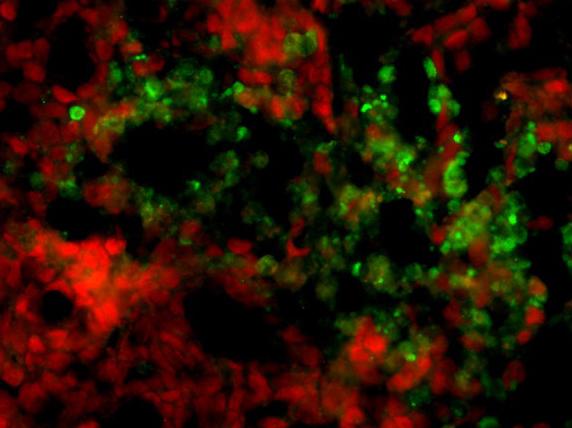
A compound effective in killing chemotherapy-resistant glioblastoma-initiating cells (GICs) has been identified, raising hopes of producing drugs capable of eradicating refractory tumors with low toxicity.

Despite longstanding and earnest endeavors to develop new remedies, the prognosis of most glioblastoma patients undergoing chemotherapies and radiotherapies remains poor. Glioblastoma, a malignant glioma, has a median survival period of approximately 15 months. One of the reasons for this is the lack of methods to eradicate its cancer stem cells, or glioblastoma-initiating cells (GICs), that demonstrate tumorigenicity (ability to form tumors) and resistance to chemotherapies and radiotherapies.

In a study published in Neuro-Oncology, the collaborative research group between Hokkaido University, FUJIFILM Corporation, and the National Institute of Advanced Industrial Science and Technology (AIST) successfully cultured human GICs resistant to temozolomide (TMZ), a standard drug used for treating glioblastoma. Next, using Fujifilm’s compound library, they conducted a high-throughput drug screening to identify a compound that can specifically kill or inflict damage to GICs, not normal cells such as neural stem cells and astrocytes. The efficacy of the candidate compounds was examined using cytotoxic activities, expressions of various cell markers, and tumor-suppressive activities as indicators.

Compound 10580 was successfully identified as being capable of killing or inflicting damages to GICs. The research group identified that the compound inhibited the activity of dihydroorotate dehydrogenase (DHODH), an essential enzyme for pyrimidine synthesis found in the mitochondria’s inner membrane.

While analyzing the compound’s efficacy, it was also discovered that the compound decreased the expression of stem cell factors in GICs, unraveling a part of its molecular mechanism. Moreover, the compound was orally administered to tumor-bearing mice, which confirmed its strong anti-cancer efficacy. The mice exhibited no visible toxicity, suggesting that the compound is non-toxic to normal cells.

“Compound 10580 is a promising candidate for developing drugs against glioblastoma and other recurring cancers. Further technological developments of a drug delivery system or 10580 derivatives, which can cross the blood-brain barrier, are needed,” says Toru Kondo of Hokkaido University’s Institute for Genetic Medicine who led the study.

###

Media Contact
Naoki Namba
[email protected]
81-117-062-185

Original Source

https://www.global.hokudai.ac.jp/blog/a-compound-effective-to-chemotherapy-resistant-cancer-cells-identified/

Related Journal Article

http://dx.doi.org/10.1093/neuonc/noz170

Tags: BiologyBiomedical/Environmental/Chemical EngineeringcancerCell BiologyMedicine/HealthMolecular BiologyneurobiologyPharmaceutical SciencePharmaceutical Sciences
Share14Tweet9Share3ShareShareShare2

Related Posts

New Targeted Radiopharmaceutical Therapy Achieves Remission in Pancreatic Cancer Model — Cancer

New Targeted Radiopharmaceutical Therapy Achieves Remission in Pancreatic Cancer Model

May 15, 2026

E190D Mutation Lowers Clade 2.3.4.4b H5N1 Fitness

May 15, 2026

Why Are Nearly Everyone Right-Handed? It Might Be Linked to How We Learned to Walk

May 15, 2026

Harnessing Interfacial Ionic Mobility to Develop Heat-Moldable Nanoparticle Aggregates

May 15, 2026
Please login to join discussion

POPULAR NEWS

  • Research Indicates Potential Connection Between Prenatal Medication Exposure and Elevated Autism Risk

    843 shares
    Share 337 Tweet 211
  • New Study Reveals Plants Can Detect the Sound of Rain

    729 shares
    Share 291 Tweet 182
  • Salmonella Haem Blocks Macrophages, Boosts Infection

    62 shares
    Share 25 Tweet 16
  • Breastmilk Balances E. coli and Beneficial Bacteria in Infant Gut Microbiomes

    58 shares
    Share 23 Tweet 15

About

We bring you the latest biotechnology news from best research centers and universities around the world. Check our website.

Follow us

Recent News

New Targeted Radiopharmaceutical Therapy Achieves Remission in Pancreatic Cancer Model

E190D Mutation Lowers Clade 2.3.4.4b H5N1 Fitness

Why Are Nearly Everyone Right-Handed? It Might Be Linked to How We Learned to Walk

Subscribe to Blog via Email

Enter your email address to subscribe to this blog and receive notifications of new posts by email.

Join 82 other subscribers
  • Contact Us

Bioengineer.org © Copyright 2023 All Rights Reserved.

Welcome Back!

Login to your account below

Forgotten Password?

Retrieve your password

Please enter your username or email address to reset your password.

Log In
No Result
View All Result
  • Homepages
    • Home Page 1
    • Home Page 2
  • News
  • National
  • Business
  • Health
  • Lifestyle
  • Science

Bioengineer.org © Copyright 2023 All Rights Reserved.