• HOME
  • NEWS
  • EXPLORE
    • CAREER
      • Companies
      • Jobs
    • EVENTS
    • iGEM
      • News
      • Team
    • PHOTOS
    • VIDEO
    • WIKI
  • BLOG
  • COMMUNITY
    • FACEBOOK
    • INSTAGRAM
    • TWITTER
Friday, August 28, 2026
BIOENGINEER.ORG
No Result
View All Result
  • Login
  • HOME
  • NEWS
  • EXPLORE
    • CAREER
      • Companies
      • Jobs
        • Lecturer
        • PhD Studentship
        • Postdoc
        • Research Assistant
    • EVENTS
    • iGEM
      • News
      • Team
    • PHOTOS
    • VIDEO
    • WIKI
  • BLOG
  • COMMUNITY
    • FACEBOOK
    • INSTAGRAM
    • TWITTER
  • HOME
  • NEWS
  • EXPLORE
    • CAREER
      • Companies
      • Jobs
        • Lecturer
        • PhD Studentship
        • Postdoc
        • Research Assistant
    • EVENTS
    • iGEM
      • News
      • Team
    • PHOTOS
    • VIDEO
    • WIKI
  • BLOG
  • COMMUNITY
    • FACEBOOK
    • INSTAGRAM
    • TWITTER
No Result
View All Result
Bioengineer.org
No Result
View All Result
Home NEWS Science News Biology

Photosynthesis olympics: can the best wheat varieties be even better?

Bioengineer by Bioengineer
October 17, 2019
in Biology
Reading Time: 3 mins read
0
IMAGE
Share on FacebookShare on TwitterShare on LinkedinShare on RedditShare on Telegram

IMAGE

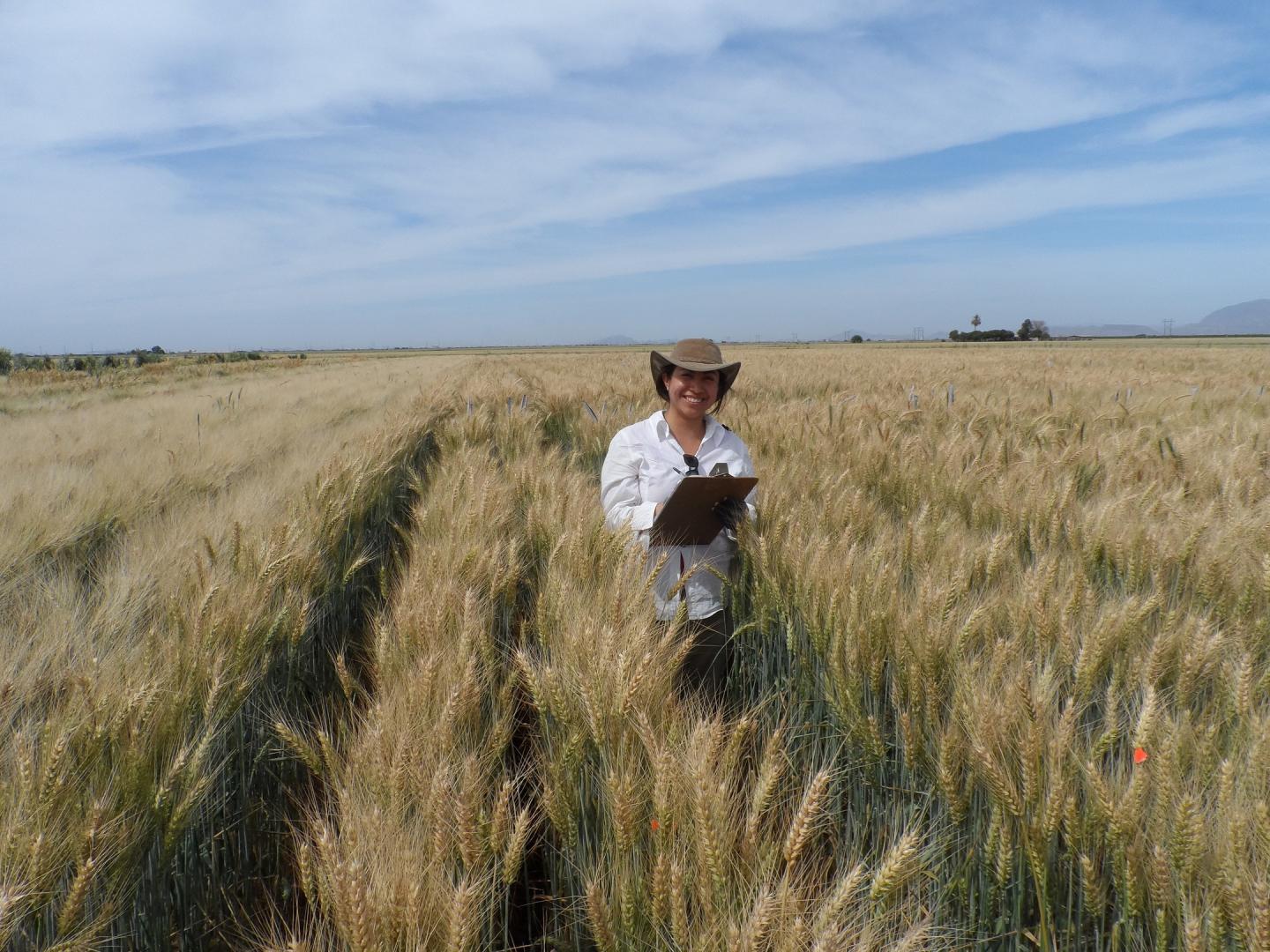
Credit: Dr Viridiana Silva-Perez/CoETP

Scientists have put elite wheat varieties through a sort of “Photosynthesis Olympics” to find which varieties have the best performing photosynthesis. This could ultimately help grain growers to get more yield for less inputs in the farm.

“In this study we surveyed diverse high-performing wheat varieties to see if their differences in photosynthetic performance were due to their genetic makeup or to the different environments where they were grown,” said lead researcher Dr Viridiana Silva-Perez from the ARC Centre of Excellence for Translational Photosynthesis (CoETP).

The scientists found that the best performing varieties were more than 30 percent better than the worst performing ones and up to 90 percent of the differences were due to their genes and not to the environment they grew in.

“We focused on traits related to photosynthesis and found that some traits behaved similarly in different environments. This is useful for breeders, because it is evidence of the huge potential that photosynthesis improvement could have on yield, a potential that hasn’t been exploited until now,” says Dr Silva-Perez.

During the study, published recently in the Journal of Experimental Botany, the scientists worked in Australia and Mexico, taking painstaking measurements in the field and inside glasshouses.

“The results that we obtained from our “Photosynthesis Olympics”, as we like to call them, are very exciting because we have demonstrated that there is scope to make plants more efficient, even for varieties working in the best conditions possible, such as with limited water and fertiliser restrictions. This means for example, that breeders have the potential to get more yield from a plant with the same amount of nitrogen applied,” says CoETP Director Professor Robert Furbank, one of the authors of this study.

Photosynthesis – the process by which plants convert sunlight, water and CO2 into organic matter – is a very complex process involving traits at different levels, from the molecular level, such as content of the main photosynthetic enzyme Rubisco, to the leaf, such as nitrogen content in the leaf and then to the whole canopy level.

“This work is an important result for the CoETP, which aims to improve the process of photosynthesis to increase the production of major food crops such as wheat, rice and sorghum. There is a huge amount of collaboration, both institutional and interdisciplinary, that needs to take place to achieve this type of research. Without the invaluable cooperation between statisticians, plant breeders, molecular scientists and plant physiologists, we would have never achieved these results,” says co-author Tony Condon from CSIRO and the CoETP.

###

This research has been funded by the ARC Centre of Excellence for Translational Photosynthesis, in Australia, and CONACYT and the Sustainable Modernization of Traditional Agriculture (MasAgro) initiative from the Secretariat of Agriculture and Rural Development (SADER), in Mexico. It is a collaboration between the CoETP, the International Maize and Wheat Improvement Centre (CIMMYT), CSIRO, ANU and the Grains Research and Development Corporation (GRDC). Access to glasshouse and field experiments was supported by Grains Research & Development Corporation funding (CSP00168).

Media Contact
Natalia Bateman
[email protected]
040-108-3380

Original Source

http://photosynthesis.org.au/photosynthesis-olympics-can-the-best-wheat-varieties-be-even-better/

Related Journal Article

http://dx.doi.org/10.1093/jxb/erz439

Tags: Agricultural Production/EconomicsAgricultureFertilizers/Pest ManagementGenesPlant Sciences
Share12Tweet8Share2ShareShareShare2

Related Posts

Genetic study identifies barley hotspots for inherited cold-stress resilience

Genetic study identifies barley hotspots for inherited cold-stress resilience

August 28, 2026
One Health Lessons from Pteropus medius: Nipah Spillover, Microbiota, and Antimicrobial Resistance

One Health Lessons from Pteropus medius: Nipah Spillover, Microbiota, and Antimicrobial Resistance

August 28, 2026

Beijing’s Chaoyang District Urban Parks Provide Refuges for Diverse Birdlife

August 28, 2026

Unexpected Cardiac Tumor Diagnosed as Histiocytosis in Case Report

August 28, 2026
Please login to join discussion

POPULAR NEWS

  • MD-VAE Embeds Concepts in Variational Autoencoders Using Multiple Decoders

    29 shares
    Share 12 Tweet 7
  • New AI Framework Integrates Multiple Data Sources While Protecting Privacy

    29 shares
    Share 12 Tweet 7
  • Reinforcement Learning Coordinates Three Swarm Algorithms to Improve Continuous Optimization

    29 shares
    Share 12 Tweet 7
  • Brazilian study tracks global prostate cancer incidence, deaths, disability, and prevalence, 1990–2021

    29 shares
    Share 12 Tweet 7

About

We bring you the latest biotechnology news from best research centers and universities around the world. Check our website.

Follow us

Recent News

MD-VAE Embeds Concepts in Variational Autoencoders Using Multiple Decoders

New AI Framework Integrates Multiple Data Sources While Protecting Privacy

Reinforcement Learning Coordinates Three Swarm Algorithms to Improve Continuous Optimization

Subscribe to Blog via Email

Enter your email address to subscribe to this blog and receive notifications of new posts by email.

Join 85 other subscribers
  • Contact Us

Bioengineer.org © Copyright 2023 All Rights Reserved.

Welcome Back!

Login to your account below

Forgotten Password?

Retrieve your password

Please enter your username or email address to reset your password.

Log In
No Result
View All Result
  • Homepages
    • Home Page 1
    • Home Page 2
  • News
  • National
  • Business
  • Health
  • Lifestyle
  • Science

Bioengineer.org © Copyright 2023 All Rights Reserved.