• HOME
  • NEWS
  • EXPLORE
    • CAREER
      • Companies
      • Jobs
    • EVENTS
    • iGEM
      • News
      • Team
    • PHOTOS
    • VIDEO
    • WIKI
  • BLOG
  • COMMUNITY
    • FACEBOOK
    • INSTAGRAM
    • TWITTER
Saturday, February 7, 2026
BIOENGINEER.ORG
No Result
View All Result
  • Login
  • HOME
  • NEWS
  • EXPLORE
    • CAREER
      • Companies
      • Jobs
        • Lecturer
        • PhD Studentship
        • Postdoc
        • Research Assistant
    • EVENTS
    • iGEM
      • News
      • Team
    • PHOTOS
    • VIDEO
    • WIKI
  • BLOG
  • COMMUNITY
    • FACEBOOK
    • INSTAGRAM
    • TWITTER
  • HOME
  • NEWS
  • EXPLORE
    • CAREER
      • Companies
      • Jobs
        • Lecturer
        • PhD Studentship
        • Postdoc
        • Research Assistant
    • EVENTS
    • iGEM
      • News
      • Team
    • PHOTOS
    • VIDEO
    • WIKI
  • BLOG
  • COMMUNITY
    • FACEBOOK
    • INSTAGRAM
    • TWITTER
No Result
View All Result
Bioengineer.org
No Result
View All Result
Home NEWS Science News Health

Common denominator that triggers asthma in favorable environments

Bioengineer by Bioengineer
October 7, 2019
in Health
Reading Time: 2 mins read
0
IMAGE
Share on FacebookShare on TwitterShare on LinkedinShare on RedditShare on Telegram

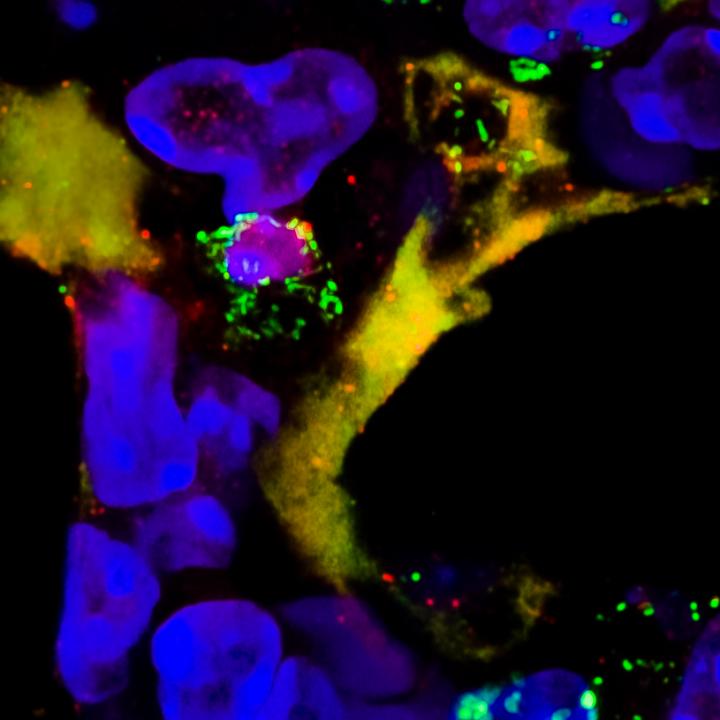
Researchers of the University of Liège have identified how all these pro-allergic environments act in the same way on the pulmonary immune system to induce the development of allergic asthma
IMAGE

Credit: GIGA/University of Liège


In recent decades, asthma has become a major public health problem. The exponential increase in asthma cases in industrialized countries over the past 50 years is due to major changes in our environment. Among these environmental factors: excessive hygiene, ambient air pollution or respiratory viral infections… Until now, the mechanism by which these particular environments induce the development of asthma was unknown. In a study published in Nature Immunology, Professors Thomas Marichal (FRS-FNRS Research Associate, Welbio and ERC investigator) and Fabrice Bureau (Welbio investigator) and their teams from GIGA ULiège identified a totally unexpected actor who represents a common denominator in different pro-allergic environments: particular neutrophils are recruited into the lung and are responsible for allergic sensitization and asthma development. This discovery allows new therapeutic options to be considered in the prevention and treatment of allergic asthma.

Coraline Radermecker, the first author of the study, first developed three models of asthma in mice induced by pro-allergic environments: excess hygiene, exposure to ozone (an air pollutant) and infection with the influenza virus. In all three models, only mice exposed to pro-allergic environments and then exposed to mites, major allergens in humans, developed symptoms of allergic asthma. She and her colleagues then observed the recruitment of specific innate immune cells, neutrophils, only in the lungs of mice exposed to pro-allergic environments. These neutrophils, once in the lung, release their DNA, causing inflammation that is conducive to the development of an allergic response such as asthma. Surprisingly, when mice exposed to pro-allergic environments are treated with compounds that prevent the recruitment of these neutrophils or the release of their DNA, mice are protected from disease development.

A recent study identified this same type of particular neutrophils in the blood of a population of American farmers, the Hutterites, exposed to a very high rate of hygiene and having a very high prevalence of allergic asthma. The latter suggests that these neutrophils are also present in humans and may be involved in the development of asthma in humans.

In addition, a molecule already used in human medicine to treat cystic fibrosis, pulmozyme, could be used to destroy DNA released by neutrophils and prevent the development of asthma in people exposed to high-risk environments.

###

Media Contact
Thomas Marichal
[email protected]
32-436-69555

Related Journal Article

http://dx.doi.org/10.1038/s41590-019-0496-9

Tags: Immunology/Allergies/AsthmaMedicine/Health
Share12Tweet8Share2ShareShareShare2

Related Posts

Boosting Remote Healthcare: Stepped-Wedge Trial Insights

February 7, 2026

Barriers and Boosters of Seniors’ Physical Activity in Karachi

February 7, 2026

Evaluating Pediatric Emergency Care Quality in Ethiopia

February 7, 2026

TPMT Expression Predictions Linked to Azathioprine Side Effects

February 7, 2026
Please login to join discussion

POPULAR NEWS

  • Robotic Ureteral Reconstruction: A Novel Approach

    Robotic Ureteral Reconstruction: A Novel Approach

    82 shares
    Share 33 Tweet 21
  • Digital Privacy: Health Data Control in Incarceration

    63 shares
    Share 25 Tweet 16
  • Study Reveals Lipid Accumulation in ME/CFS Cells

    57 shares
    Share 23 Tweet 14
  • Breakthrough in RNA Research Accelerates Medical Innovations Timeline

    53 shares
    Share 21 Tweet 13

About

We bring you the latest biotechnology news from best research centers and universities around the world. Check our website.

Follow us

Recent News

Boosting Remote Healthcare: Stepped-Wedge Trial Insights

Barriers and Boosters of Seniors’ Physical Activity in Karachi

Evaluating Pediatric Emergency Care Quality in Ethiopia

Subscribe to Blog via Email

Enter your email address to subscribe to this blog and receive notifications of new posts by email.

Join 73 other subscribers
  • Contact Us

Bioengineer.org © Copyright 2023 All Rights Reserved.

Welcome Back!

Login to your account below

Forgotten Password?

Retrieve your password

Please enter your username or email address to reset your password.

Log In
No Result
View All Result
  • Homepages
    • Home Page 1
    • Home Page 2
  • News
  • National
  • Business
  • Health
  • Lifestyle
  • Science

Bioengineer.org © Copyright 2023 All Rights Reserved.