• HOME
  • NEWS
  • EXPLORE
    • CAREER
      • Companies
      • Jobs
    • EVENTS
    • iGEM
      • News
      • Team
    • PHOTOS
    • VIDEO
    • WIKI
  • BLOG
  • COMMUNITY
    • FACEBOOK
    • INSTAGRAM
    • TWITTER
Sunday, March 29, 2026
BIOENGINEER.ORG
No Result
View All Result
  • Login
  • HOME
  • NEWS
  • EXPLORE
    • CAREER
      • Companies
      • Jobs
        • Lecturer
        • PhD Studentship
        • Postdoc
        • Research Assistant
    • EVENTS
    • iGEM
      • News
      • Team
    • PHOTOS
    • VIDEO
    • WIKI
  • BLOG
  • COMMUNITY
    • FACEBOOK
    • INSTAGRAM
    • TWITTER
  • HOME
  • NEWS
  • EXPLORE
    • CAREER
      • Companies
      • Jobs
        • Lecturer
        • PhD Studentship
        • Postdoc
        • Research Assistant
    • EVENTS
    • iGEM
      • News
      • Team
    • PHOTOS
    • VIDEO
    • WIKI
  • BLOG
  • COMMUNITY
    • FACEBOOK
    • INSTAGRAM
    • TWITTER
No Result
View All Result
Bioengineer.org
No Result
View All Result
Home NEWS Science News Chemistry

Tracking Alzheimer’s disease pathology in single neuronal cells

Bioengineer by Bioengineer
September 26, 2019
in Chemistry
Reading Time: 3 mins read
0
IMAGE
Share on FacebookShare on TwitterShare on LinkedinShare on RedditShare on Telegram

IMAGE

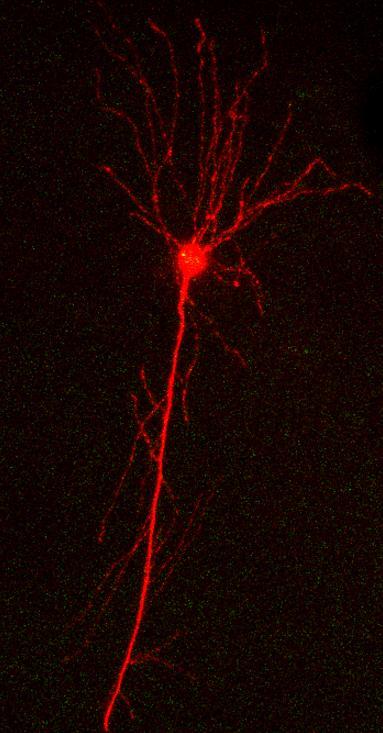
Credit: University of Warwick

  • Aggregates of Tau protein in the brain are a hallmark of neurodegeneration, particularly in Alzheimer’s disease.
  • Researchers at the University of Warwick have introduced fluorescently labelled Tau aggregates (oligomers) into single brain neurons and were able to track their movement and effects.
  • They found the introduced Tau oligomers interfered with the action potential waveform, modified the strength of neuronal communication and blocked events that underlie memory storage by mis-localising to synapses.
  • Preventing Tau from oligomerising could be a new therapeutic target for Alzheimer’s disease

University of Warwick researchers have developed a superior method to describe the very earliest effects that Alzheimer’s Disease proteins have on the properties of brain cells.

In the paper ‘Introduction of Tau oligomers into cortical neurons alters action potential dynamics and disrupts synaptic transmission and plasticity’ published in the journal eNeuro. Researchers directly identify new therapeutic targets and describe a new standard for future research activity.

Alzheimer’s disease is characterised by the accumulation of Amyloid beta plaques outside neurons and the build-up of Tau protein inside neurons. Tau protein normally contributes to neuronal stability and the movement of various components inside of cells. However, sometimes it can change and become toxic.

Tau starts off as a monomer (a single molecule), two bind together to become a dimer, then when a few bind-together they become oligomers, which are believed to be the toxic species damaging neurons.

The precise actions of these tau oligomers are still being characterised, but scientists at the University of Warwick have developed a novel approach of introducing low concentrations of structurally-defined tau oligomers directly into single neurons in the brain.

This has allowed them to provide detailed characterisation of the concentration and time-dependent actions of tau oligomers on neuronal properties and their movement through a neuron. Of particular interest, tau oligomers localised at synapses, where neurons communicate between one another, and interfered with processes that may underlie memory. These effects are lost if Tau protein is introduced in the form of single molecules (monomers).

Dr Mark Wall from the School of Life Sciences at the University of Warwick comments:

“The key finding is that introducing tau oligomers into single healthy neurons produces marked effects within a short time frame – around 30 minutes. By recording from pairs of connected cells we have been able to characterise the effects of tau on synaptic transmission at unparalleled levels of detail.

“What is even more amazing is that the tau gets trafficked to the synapses and effects processes which may underlie memory.”

Thus, preventing tau from oligomerising could be a potential therapeutic approach in many forms of dementia including Alzheimer’s Disease.

###

NOTES TO EDITORS:

High-res images available at: https://warwick.ac.uk/services/communications/medialibrary/images/september2019/tau-page-001.jpg

Paper available to view at: https://www.eneuro.org/content/early/2019/09/25/ENEURO.0166-19.2019

FOR FURTHER INFORMATION PLEASE CONTACT:

Alice Scott

Media Relations Manager – Science

University of Warwick

Tel: +44 (0) 2476 574 255 or +44 (0) 7920 531 221

E-mail: [email protected]

Media Contact
Alice Scott
[email protected]

Original Source

https://warwick.ac.uk/newsandevents/pressreleases/tracking_alzheimers_disease

Related Journal Article

http://dx.doi.org/10.1523/ENEURO.0166-19.2019

Tags: AlzheimerMedicine/Healthneurobiology
Share12Tweet8Share2ShareShareShare2

Related Posts

Isolated H2-Reduced Clusters Boost CO2-to-Methanol Catalysis

Isolated H2-Reduced Clusters Boost CO2-to-Methanol Catalysis

March 25, 2026
blank

Physicists Identify Electronic Drivers Behind Flat Band Quantum Materials

March 21, 2026

Würzburg Chemistry Professor Claudia Höbartner Receives Prestigious Honor

March 20, 2026

Scientists Reveal How Magnets Control Metamaterial Behavior

March 20, 2026
Please login to join discussion

POPULAR NEWS

  • blank

    Revolutionary AI Model Enhances Precision in Detecting Food Contamination

    96 shares
    Share 38 Tweet 24
  • Imagine a Social Media Feed That Challenges Your Views Instead of Reinforcing Them

    1004 shares
    Share 397 Tweet 248
  • Uncovering Functions of Cavernous Malformation Proteins in Organoids

    54 shares
    Share 22 Tweet 14
  • Promising Outcomes from First Clinical Trials of Gene Regulation in Epilepsy

    51 shares
    Share 20 Tweet 13

About

We bring you the latest biotechnology news from best research centers and universities around the world. Check our website.

Follow us

Recent News

In-Sensor Cryptography Links Physical Process to Digital Identity

Can Psychosocial Factors Influence Cancer Risk?

Depression Factors in Elderly: Pre vs. Post-COVID Analysis

Subscribe to Blog via Email

Enter your email address to subscribe to this blog and receive notifications of new posts by email.

Join 78 other subscribers
  • Contact Us

Bioengineer.org © Copyright 2023 All Rights Reserved.

Welcome Back!

Login to your account below

Forgotten Password?

Retrieve your password

Please enter your username or email address to reset your password.

Log In
No Result
View All Result
  • Homepages
    • Home Page 1
    • Home Page 2
  • News
  • National
  • Business
  • Health
  • Lifestyle
  • Science

Bioengineer.org © Copyright 2023 All Rights Reserved.