• HOME
  • NEWS
  • EXPLORE
    • CAREER
      • Companies
      • Jobs
    • EVENTS
    • iGEM
      • News
      • Team
    • PHOTOS
    • VIDEO
    • WIKI
  • BLOG
  • COMMUNITY
    • FACEBOOK
    • INSTAGRAM
    • TWITTER
Sunday, February 8, 2026
BIOENGINEER.ORG
No Result
View All Result
  • Login
  • HOME
  • NEWS
  • EXPLORE
    • CAREER
      • Companies
      • Jobs
        • Lecturer
        • PhD Studentship
        • Postdoc
        • Research Assistant
    • EVENTS
    • iGEM
      • News
      • Team
    • PHOTOS
    • VIDEO
    • WIKI
  • BLOG
  • COMMUNITY
    • FACEBOOK
    • INSTAGRAM
    • TWITTER
  • HOME
  • NEWS
  • EXPLORE
    • CAREER
      • Companies
      • Jobs
        • Lecturer
        • PhD Studentship
        • Postdoc
        • Research Assistant
    • EVENTS
    • iGEM
      • News
      • Team
    • PHOTOS
    • VIDEO
    • WIKI
  • BLOG
  • COMMUNITY
    • FACEBOOK
    • INSTAGRAM
    • TWITTER
No Result
View All Result
Bioengineer.org
No Result
View All Result
Home NEWS Science News Chemistry

New method for detecting quantum states of electrons

Bioengineer by Bioengineer
September 17, 2019
in Chemistry
Reading Time: 2 mins read
0
IMAGE
Share on FacebookShare on TwitterShare on LinkedinShare on RedditShare on Telegram

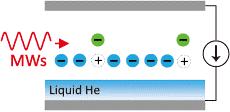
Electrons on liquid helium may have applications in quantum computing
IMAGE

Credit: OIST

Quantum computing harnesses enigmatic properties of small particles to process complex information. But quantum systems are fragile and error-prone, and useful quantum computers have yet to come to fruition.

Researchers in the Quantum Dynamics Unit at the Okinawa Institute of Science and Technology Graduate University (OIST) devised a new method — called image charge detection — to detect electrons’ transitions to quantum states. Electrons can serve as quantum bits, the smallest unit of quantum information; these bits are foundational to larger computational systems. Quantum computers may be used to understand the mechanism of superconductivity, cryptography, artificial intelligence, among other applications.

“There is a huge gap between controlling few quantum bits and building a quantum computer,” said Dr. Erika Kawakami, the lead author of a new study, published in Physical Review Letters with editor’s suggestion. “With the current state-of-art quantum bits, a quantum computer would need to be the size of a football field. Our new approach could potentially create a ten-centimeter chip.”

A New Potential for Electrons on Helium

Electrons need to be immobilized to serve as quantum bits; otherwise they move freely. To create an electron-capturing system, the researchers used liquid helium, which liquefies at cold temperatures, as a substrate. Since helium is free of impurities, these electrons are expected to retain quantum states longer than in any other materials, which is important for realizing a quantum computer.

Prof. Denis Konstantinov and his collaborators, Kawakami and Dr. Asem Elarabi, placed a parallel-plate capacitor inside of a copper cell cooled to 0.2 degrees Kelvin (-272.8 degrees Celsius) and filled with condensed liquid helium. Electrons generated by a tungsten filament sat atop the liquid helium’s surface, between the two capacitor plates. Then, microwave radiation introduced into the copper cell excited electrons’ quantum states, causing the electrons to move away from the bottom capacitor plate and come closer to the top capacitor plate.

The researchers confirmed the excitation of quantum states by observing an electrostatic phenomenon called image charge. Like a reflection in a mirror, image charge precisely reflects the movement of electrons. If an electron moves further from the capacitor plate, then the image charge moves alongside it.

Moving forward, the researchers hope to use this image charge detection to measure an individual electron’s spin state, or quantum orbital state, without disrupting the integrity of the quantum systems.

“Currently, we can detect the quantum states of an ensemble of many electrons,” Konstantinov said. “The strong point of this new method is that we can scale down this technique to a single electron and to use it as a quantum bit.”

###

Media Contact
Tomomi Okubo
[email protected]

Original Source

https://www.oist.jp/news-center/news/2019/9/4/new-method-detecting-quantum-states-electrons

Related Journal Article

http://dx.doi.org/10.1103/PhysRevLett.123.086801

Tags: Chemistry/Physics/Materials SciencesMaterialsNanotechnology/Micromachines
Share12Tweet8Share2ShareShareShare2

Related Posts

blank

Breakthrough in Environmental Cleanup: Scientists Develop Solar-Activated Biochar for Faster Remediation

February 7, 2026
blank

Cutting Costs: Making Hydrogen Fuel Cells More Affordable

February 6, 2026

Scientists Develop Hand-Held “Levitating” Time Crystals

February 6, 2026

Observing a Key Green-Energy Catalyst Dissolve Atom by Atom

February 6, 2026
Please login to join discussion

POPULAR NEWS

  • Robotic Ureteral Reconstruction: A Novel Approach

    Robotic Ureteral Reconstruction: A Novel Approach

    82 shares
    Share 33 Tweet 21
  • Digital Privacy: Health Data Control in Incarceration

    63 shares
    Share 25 Tweet 16
  • Breakthrough in RNA Research Accelerates Medical Innovations Timeline

    53 shares
    Share 21 Tweet 13
  • Mapping Tertiary Lymphoid Structures for Kidney Cancer Biomarkers

    50 shares
    Share 20 Tweet 13

About

We bring you the latest biotechnology news from best research centers and universities around the world. Check our website.

Follow us

Recent News

Evaluating a Self-Care App for Chest Trauma Patients

Anesthesia Method’s Impact on Elderly Hip Fracture Recovery

Menopause Care: Insights from Workforce Review and Consultation

Subscribe to Blog via Email

Enter your email address to subscribe to this blog and receive notifications of new posts by email.

Join 73 other subscribers
  • Contact Us

Bioengineer.org © Copyright 2023 All Rights Reserved.

Welcome Back!

Login to your account below

Forgotten Password?

Retrieve your password

Please enter your username or email address to reset your password.

Log In
No Result
View All Result
  • Homepages
    • Home Page 1
    • Home Page 2
  • News
  • National
  • Business
  • Health
  • Lifestyle
  • Science

Bioengineer.org © Copyright 2023 All Rights Reserved.