• HOME
  • NEWS
  • EXPLORE
    • CAREER
      • Companies
      • Jobs
    • EVENTS
    • iGEM
      • News
      • Team
    • PHOTOS
    • VIDEO
    • WIKI
  • BLOG
  • COMMUNITY
    • FACEBOOK
    • INSTAGRAM
    • TWITTER
Saturday, February 7, 2026
BIOENGINEER.ORG
No Result
View All Result
  • Login
  • HOME
  • NEWS
  • EXPLORE
    • CAREER
      • Companies
      • Jobs
        • Lecturer
        • PhD Studentship
        • Postdoc
        • Research Assistant
    • EVENTS
    • iGEM
      • News
      • Team
    • PHOTOS
    • VIDEO
    • WIKI
  • BLOG
  • COMMUNITY
    • FACEBOOK
    • INSTAGRAM
    • TWITTER
  • HOME
  • NEWS
  • EXPLORE
    • CAREER
      • Companies
      • Jobs
        • Lecturer
        • PhD Studentship
        • Postdoc
        • Research Assistant
    • EVENTS
    • iGEM
      • News
      • Team
    • PHOTOS
    • VIDEO
    • WIKI
  • BLOG
  • COMMUNITY
    • FACEBOOK
    • INSTAGRAM
    • TWITTER
No Result
View All Result
Bioengineer.org
No Result
View All Result
Home NEWS Science News Biology

Lobster organs and reflexes damaged by marine seismic surveys

Bioengineer by Bioengineer
July 25, 2019
in Biology
Reading Time: 2 mins read
0
IMAGE
Share on FacebookShare on TwitterShare on LinkedinShare on RedditShare on Telegram

IMAGE

Credit: Rob McCauley

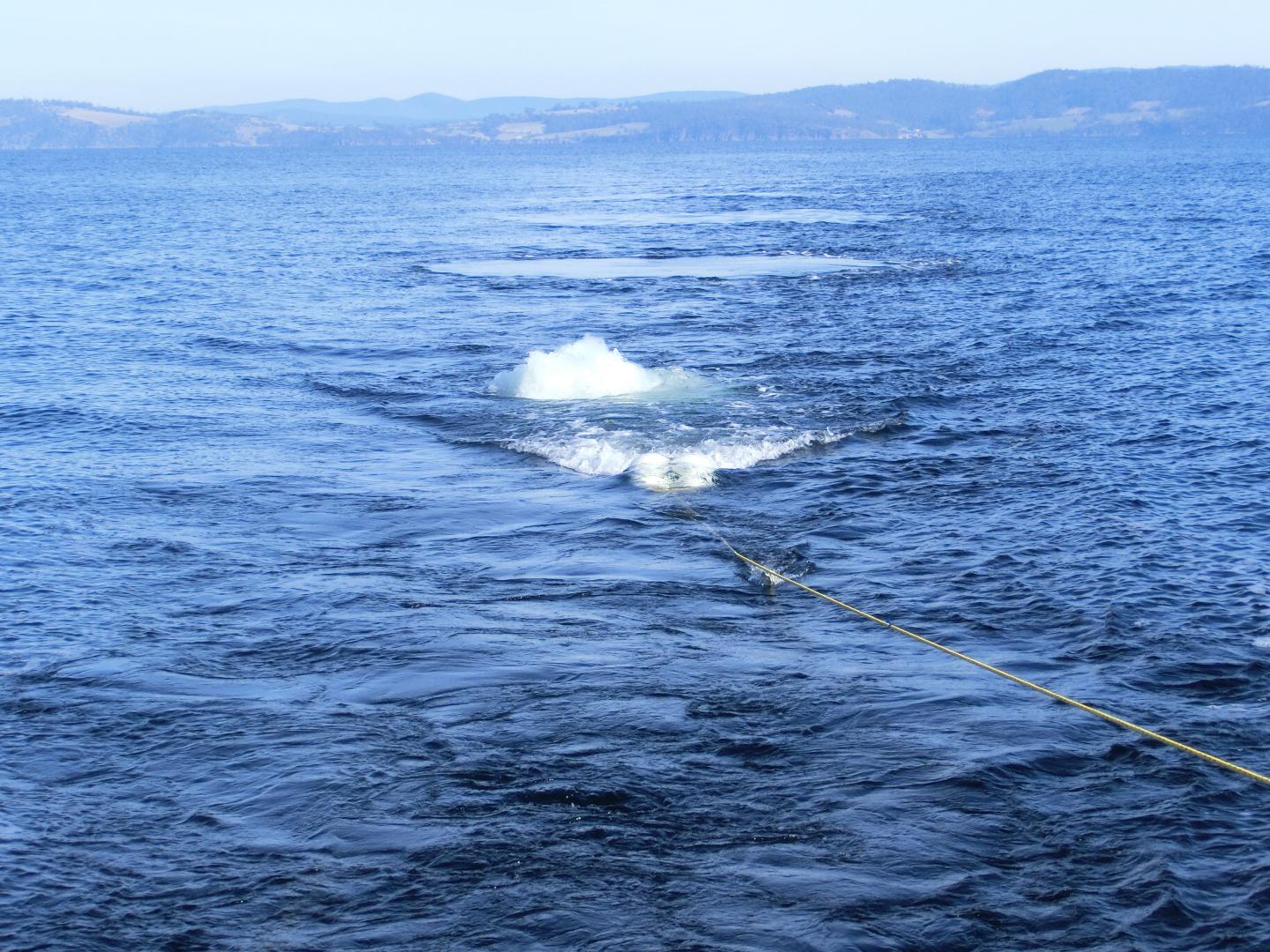
A new study of the impact on marine life of seismic air guns, used in geological surveys of the seafloor, has found that the sensory organs and righting reflexes of rock lobster can be damaged by exposure to air gun signals.

Published in the journal Proceedings of the Royal Society B, the research by scientists from IMAS and the Centre for Marine Science and Technology at Curtin University is the latest in a series of studies they have conducted into how seismic surveys affect marine animals.

The study was funded by the Australian Government through the Fisheries Research and Development Corporation (FRDC), Origin Energy, and the Victorian Government’s CarbonNet Project.

Lead author Dr Ryan Day said researchers exposed rock lobster to seismic air gun noise during field tests in Tasmania’s Storm Bay and examined the effects on a key sensory organ, the statocyst, and the lobsters’ reflexes.

“While the impact of air guns on whales and fishes has been relatively well-studied, the effects on marine invertebrates such as lobsters, crabs and squid remain poorly understood,” Dr Day said.

“We chose to study the impact on rock lobster because they are a high value fishery and an important part of global marine ecosystems.

“Previous studies have shown that the statocyst, a sensory organ on a lobster’s head, is critical in controlling their righting reflex, enabling them to remain coordinated and evade predators.

“After exposing lobsters to the equivalent of a commercial air gun signal at a range of 100-150 metres, our study found that the animals suffered significant and lasting damage to their statocyst and righting reflexes.

“The damage was incurred at the time of exposure and persisted for at least one year – surprisingly, even after the exposed lobsters moulted,” Dr Day said.

The study’s Principal Investigator, Associate Professor Jayson Semmens, said that while the ecological impacts of the damage were not evaluated, the impairment would likely affect a lobster’s ability to function in the wild.

“This study adds to a growing body of research that shows marine invertebrates can suffer physiological impacts and changes to their reflexes in response to anthropogenic noise such as seismic surveys,” Associate Professor Semmens said.

“In recent years our research team has also looked at the impact of seismic surveys on lobster embryos, scallops and zooplankton

“Such studies are important to enable government, industry and the community to make informed decisions about how such activities can best be conducted while minimising negative outcomes for fisheries and ecosystems globally,” he said.

###

Media Contact
Andrew Rhodes
[email protected]

Original Source

http://www.imas.utas.edu.au/__data/assets/pdf_file/0011/1252766/Seismic-airgun-lobster-reflex-study-Ryan-Day-MR.pdf

Related Journal Article

http://dx.doi.org/10.1098/rspb.2019.1424

Tags: AcousticsBiologyEcology/EnvironmentGeology/SoilMarine/Freshwater BiologyPollution/Remediation
Share12Tweet8Share2ShareShareShare2

Related Posts

Florida Cane Toad: Complex Spread and Selective Evolution

Florida Cane Toad: Complex Spread and Selective Evolution

February 7, 2026
New Study Uncovers Mechanism Behind Burn Pit Particulate Matter–Induced Lung Inflammation

New Study Uncovers Mechanism Behind Burn Pit Particulate Matter–Induced Lung Inflammation

February 6, 2026

DeepBlastoid: Advancing Automated and Efficient Evaluation of Human Blastoids with Deep Learning

February 6, 2026

Navigating the Gut: The Role of Formic Acid in the Microbiome

February 6, 2026
Please login to join discussion

POPULAR NEWS

  • Robotic Ureteral Reconstruction: A Novel Approach

    Robotic Ureteral Reconstruction: A Novel Approach

    82 shares
    Share 33 Tweet 21
  • Digital Privacy: Health Data Control in Incarceration

    63 shares
    Share 25 Tweet 16
  • Study Reveals Lipid Accumulation in ME/CFS Cells

    57 shares
    Share 23 Tweet 14
  • Breakthrough in RNA Research Accelerates Medical Innovations Timeline

    53 shares
    Share 21 Tweet 13

About

We bring you the latest biotechnology news from best research centers and universities around the world. Check our website.

Follow us

Recent News

Phage-Antibiotic Combo Beats Resistant Peritoneal Infection

Boosting Remote Healthcare: Stepped-Wedge Trial Insights

Barriers and Boosters of Seniors’ Physical Activity in Karachi

Subscribe to Blog via Email

Enter your email address to subscribe to this blog and receive notifications of new posts by email.

Join 73 other subscribers
  • Contact Us

Bioengineer.org © Copyright 2023 All Rights Reserved.

Welcome Back!

Login to your account below

Forgotten Password?

Retrieve your password

Please enter your username or email address to reset your password.

Log In
No Result
View All Result
  • Homepages
    • Home Page 1
    • Home Page 2
  • News
  • National
  • Business
  • Health
  • Lifestyle
  • Science

Bioengineer.org © Copyright 2023 All Rights Reserved.