• HOME
  • NEWS
  • EXPLORE
    • CAREER
      • Companies
      • Jobs
    • EVENTS
    • iGEM
      • News
      • Team
    • PHOTOS
    • VIDEO
    • WIKI
  • BLOG
  • COMMUNITY
    • FACEBOOK
    • INSTAGRAM
    • TWITTER
Sunday, March 29, 2026
BIOENGINEER.ORG
No Result
View All Result
  • Login
  • HOME
  • NEWS
  • EXPLORE
    • CAREER
      • Companies
      • Jobs
        • Lecturer
        • PhD Studentship
        • Postdoc
        • Research Assistant
    • EVENTS
    • iGEM
      • News
      • Team
    • PHOTOS
    • VIDEO
    • WIKI
  • BLOG
  • COMMUNITY
    • FACEBOOK
    • INSTAGRAM
    • TWITTER
  • HOME
  • NEWS
  • EXPLORE
    • CAREER
      • Companies
      • Jobs
        • Lecturer
        • PhD Studentship
        • Postdoc
        • Research Assistant
    • EVENTS
    • iGEM
      • News
      • Team
    • PHOTOS
    • VIDEO
    • WIKI
  • BLOG
  • COMMUNITY
    • FACEBOOK
    • INSTAGRAM
    • TWITTER
No Result
View All Result
Bioengineer.org
No Result
View All Result
Home NEWS Science News Biology

New deactivation mechanism for switch proteins detected

Bioengineer by Bioengineer
July 22, 2019
in Biology
Reading Time: 3 mins read
0
IMAGE
Share on FacebookShare on TwitterShare on LinkedinShare on RedditShare on Telegram

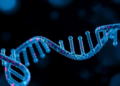
For decades, researchers have been debating over which of two mechanisms deactivates switch proteins. Now, a third scenario has emerged.

IMAGE

Credit: RUB, Kramer

A new mechanism for the deactivation of switch proteins has been identified by researchers from Ruhr-Universität Bochum, headed by Professor Klaus Gerwert and Dr. Till Rudack from the Department of Biophysics, and the University of Uppsala in Sweden. Switch proteins such as Ras regulate many processes in the body and affect diseases such as cancer. The research team published their report on the newly discovered mechanism in the current issue of the Journal of the American Chemical Society, JACS, on 10 July 2019.

Ultra-accelerated reactions

Bound to switch proteins, the GTP molecule is vital for the deactivation of many of them. If one of the three phosphate groups is detached from GTP, the protein switches to “off”, thus affecting cellular processes. “The proteins are extremely efficient and accelerate reactions that would usually take billions of years so that they are executed within the fraction of a second,” says Klaus Gerwert.

At least one water molecule is always involved in the deactivation process. To date, researchers assumed that this water molecule had to be activated – namely by a reaction partner transferring a proton to the water molecule. “The nature of the reaction partner has been argued for decades – is it the GTP itself or is it a protein component,” explains Carsten Kötting, one of the authors from the Bochum-based team. “In the current study, we have surprisingly identified an entirely new mechanism, where the activation takes place without any proton transfer whatsoever.”

Theory versus experiment

Using computer-aided analysis, the team studied all deactivation options for seven different switch protein systems. The researchers thus identified various speeds for the deactivation process. They compared the calculated speeds with values gained in experiments through time-resolved infrared spectroscopy.

While the values for the two previously suspected mechanisms deviated strongly from each other, the experimental results for the newly identified mechanism corresponded with theoretical assumptions – for all seven tested systems, at that. “The matches show that our newly discovered deactivation mechanism is universal and, consequently, is relevant for numerous cellular processes,” concludes Till Rudack.

Mechanism relevant for tumour formation

“Diseases are often caused by a defect in the deactivation mechanism of key proteins,” says Till Rudack. “In order to understand the molecular processes underlying diseases and to develop therapies, we have to understand the deactivation mechanism first.”

The newly identified deactivation mechanism is, for example, responsible for switching Ras off, a protein whose defects result in uncontrolled cellular growth in tumours. Researchers have been trying for decades to find a drug that affects the dysfunctional Ras protein in human tumours. “We expect that our results explain why the search has remained fruitless to date,” says Klaus Gerwert. “The correct molecular deactivation mechanism can now become the starting point for the development of anti-cancer drugs.”

###

Media Contact
Till Rudack
[email protected]

Original Source

https://news.rub.de/english/press-releases/2019-07-22-biophysics-new-deactivation-mechanism-switch-proteins-detected

Related Journal Article

http://dx.doi.org/10.1021/jacs.9b03193

Tags: BiologyBiomechanics/BiophysicsMolecular Biology
Share12Tweet8Share2ShareShareShare2

Related Posts

How to sway group opinions: Encourage opponents to stay undecided

How to sway group opinions: Encourage opponents to stay undecided

March 23, 2026
Deep Learning Model Maps How Individual Cells Shape Disease Outcomes

Deep Learning Model Maps How Individual Cells Shape Disease Outcomes

March 20, 2026

Removing only 15 female sharks annually could endanger the entire population, scientists warn

March 20, 2026

Scientists Urge Fragrance Industry to Transition from Sustainability Talk to Active Funding of Plant Conservation

March 20, 2026
Please login to join discussion

POPULAR NEWS

  • blank

    Revolutionary AI Model Enhances Precision in Detecting Food Contamination

    96 shares
    Share 38 Tweet 24
  • Imagine a Social Media Feed That Challenges Your Views Instead of Reinforcing Them

    1004 shares
    Share 397 Tweet 248
  • Uncovering Functions of Cavernous Malformation Proteins in Organoids

    54 shares
    Share 22 Tweet 14
  • Promising Outcomes from First Clinical Trials of Gene Regulation in Epilepsy

    51 shares
    Share 20 Tweet 13

About

We bring you the latest biotechnology news from best research centers and universities around the world. Check our website.

Follow us

Recent News

In-Sensor Cryptography Links Physical Process to Digital Identity

Can Psychosocial Factors Influence Cancer Risk?

Depression Factors in Elderly: Pre vs. Post-COVID Analysis

Subscribe to Blog via Email

Enter your email address to subscribe to this blog and receive notifications of new posts by email.

Join 78 other subscribers
  • Contact Us

Bioengineer.org © Copyright 2023 All Rights Reserved.

Welcome Back!

Login to your account below

Forgotten Password?

Retrieve your password

Please enter your username or email address to reset your password.

Log In
No Result
View All Result
  • Homepages
    • Home Page 1
    • Home Page 2
  • News
  • National
  • Business
  • Health
  • Lifestyle
  • Science

Bioengineer.org © Copyright 2023 All Rights Reserved.