• HOME
  • NEWS
  • EXPLORE
    • CAREER
      • Companies
      • Jobs
    • EVENTS
    • iGEM
      • News
      • Team
    • PHOTOS
    • VIDEO
    • WIKI
  • BLOG
  • COMMUNITY
    • FACEBOOK
    • INSTAGRAM
    • TWITTER
Monday, October 5, 2026
BIOENGINEER.ORG
No Result
View All Result
  • Login
  • HOME
  • NEWS
  • EXPLORE
    • CAREER
      • Companies
      • Jobs
        • Lecturer
        • PhD Studentship
        • Postdoc
        • Research Assistant
    • EVENTS
    • iGEM
      • News
      • Team
    • PHOTOS
    • VIDEO
    • WIKI
  • BLOG
  • COMMUNITY
    • FACEBOOK
    • INSTAGRAM
    • TWITTER
  • HOME
  • NEWS
  • EXPLORE
    • CAREER
      • Companies
      • Jobs
        • Lecturer
        • PhD Studentship
        • Postdoc
        • Research Assistant
    • EVENTS
    • iGEM
      • News
      • Team
    • PHOTOS
    • VIDEO
    • WIKI
  • BLOG
  • COMMUNITY
    • FACEBOOK
    • INSTAGRAM
    • TWITTER
No Result
View All Result
Bioengineer.org
No Result
View All Result
Home NEWS Science News Chemistry

Could the heat of the Earth’s crust become the ultimate energy source?

Bioengineer by Bioengineer
July 18, 2019
in Chemistry
Reading Time: 3 mins read
0
IMAGE
Share on FacebookShare on TwitterShare on LinkedinShare on RedditShare on Telegram

IMAGE

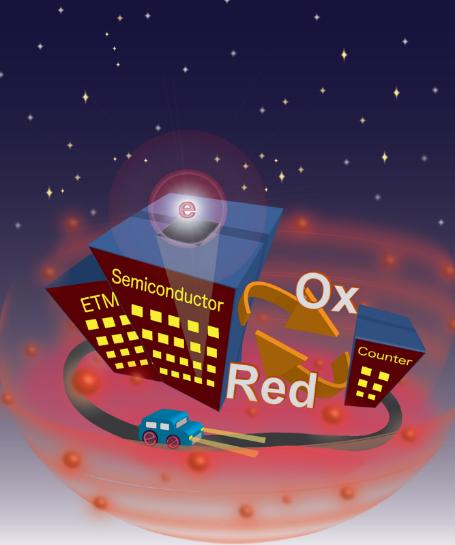
Credit: Journal of Materials Chemistry A, Sachiko Matsushita

In a world where energy consumption is on the rise, our only hope is the development of new energy-generation technologies. Although currently used renewable energy sources such as wind and solar energy have their merits, there is a gigantic, permanent, and untapped energy source quite literally under our noses: geothermal energy.

Generating electricity from geothermal energy requires devices that can somehow make use of the heat within the Earth’s crust. Recently, a team of scientists at Tokyo Tech, led by Dr. Sachiko Matsushita, have made great progress in the understanding and development of sensitized thermal cells (STCs), a kind of battery that can generate electric power at 100 °C or less.

Several methods for converting heat into electric power exist, however, their large-scale application is not feasible. For example, hot-and-cold redox batteries and devices based on the Seebeck effect are not possible to simply bury them inside a heat source and exploit them.

Dr. Matsushita’s team have previously reported the use of STCs as a new method for converting heat directly into electric power using dye-sensitized solar cells. They also replaced the dye with a semiconductor to allow the system to operate using heat instead of light. Figure 1 illustratively represents the STC, a battery that consists of three layers sandwiched between electrodes: an electron transport layer (ETM), a semiconductor layer (germanium), and a solid electrolyte layer (copper ions). In short, electrons go from a low-energy state to a high-energy state in the semiconductor by becoming thermally excited and then get transferred naturally to the ETM. Afterwards, they leave through the electrode, go through an external circuit, pass through the counter electrode, and then reach the electrolyte. Oxidation and reduction reactions involving copper ions take place at both interfaces of the electrolyte, resulting in low-energy electrons being transferred to the semiconductor layer so that the process can begin anew, thus completing an electric circuit.

However, it was not clear at that time whether such a battery could be used as a perpetual engine or if the current would stop at some point. After testing, the team observed that electricity indeed stopped flowing after a certain time and proposed a mechanism explaining this phenomenon. Basically, current stops because the redox reactions at the electrolyte layer stop owing to the relocation of the different types of copper ions. Most importantly, and also surprisingly, they found out that the battery can revert this situation itself in the presence of heat by simply opening the external circuit for some time; in other words, by using a simple switch. “With such a design, heat, usually regarded as low-quality energy, would become a great renewable energy source,” states Matsushita.

The team is very excited about their discovery because of its applicability, eco-friendliness, and potential for helping solve the global energy crisis. “There is no fear of radiation, no fear of expensive oil, no instability of power generation like when relying on the sun or the wind,” remarks Matsushita. Further refinements to this type of battery will be the aim of future research, with the hope of one day solving humanity’s energy needs without harming our planet.

###

Media Contact
Kazuhide Hasegawa
[email protected]

Related Journal Article

http://dx.doi.org/10.1039/C9TA04060A

Tags: Chemistry/Physics/Materials SciencesMaterials
Share12Tweet8Share2ShareShareShare2

Related Posts

New HPLC Method Simultaneously Tracks Three Diabetes Drugs in One Pill

New HPLC Method Simultaneously Tracks Three Diabetes Drugs in One Pill

October 5, 2026
Tiny Cellulose Rods Keep Pea Starch Gels Fresh by Locking Up Water

Tiny Cellulose Rods Keep Pea Starch Gels Fresh by Locking Up Water

October 5, 2026

Silver Framework and Carbon Black Team Up to Detect Heart Drug Ticagrelor at Trillionth-of-a-Mole Levels

October 5, 2026

Molten Salt Electrochemistry Turns CO2 Into Carbon That Steels Itself Away

October 5, 2026
Please login to join discussion

POPULAR NEWS

  • Alloys That Shrink Their Own Grains: New PIX Mechanism Refines Metals With Heat Alone

    Alloys That Shrink Their Own Grains: New PIX Mechanism Refines Metals With Heat Alone

    29 shares
    Share 12 Tweet 7
  • Endurance Exercise Reshapes the Liver in Males and Females Through Distinct Molecular Routes

    29 shares
    Share 12 Tweet 7
  • Single Transcription Factor PU.1 Rapidly Converts Fibroblasts into Macrophage-Lineage Cells

    29 shares
    Share 12 Tweet 7
  • New Scale Measures How Ready Nurse Educators Really Are for the AI Era

    29 shares
    Share 12 Tweet 7

About

We bring you the latest biotechnology news from best research centers and universities around the world. Check our website.

Follow us

Recent News

Alloys That Shrink Their Own Grains: New PIX Mechanism Refines Metals With Heat Alone

Endurance Exercise Reshapes the Liver in Males and Females Through Distinct Molecular Routes

Single Transcription Factor PU.1 Rapidly Converts Fibroblasts into Macrophage-Lineage Cells

Subscribe to Blog via Email

Success! An email was just sent to confirm your subscription. Please find the email now and click 'Confirm' to start subscribing.

Join 85 other subscribers
  • Contact Us

Bioengineer.org © Copyright 2023 All Rights Reserved.

Welcome Back!

Login to your account below

Forgotten Password?

Retrieve your password

Please enter your username or email address to reset your password.

Log In
No Result
View All Result
  • Homepages
    • Home Page 1
    • Home Page 2
  • News
  • National
  • Business
  • Health
  • Lifestyle
  • Science

Bioengineer.org © Copyright 2023 All Rights Reserved.