• HOME
  • NEWS
  • EXPLORE
    • CAREER
      • Companies
      • Jobs
    • EVENTS
    • iGEM
      • News
      • Team
    • PHOTOS
    • VIDEO
    • WIKI
  • BLOG
  • COMMUNITY
    • FACEBOOK
    • INSTAGRAM
    • TWITTER
Wednesday, May 13, 2026
BIOENGINEER.ORG
No Result
View All Result
  • Login
  • HOME
  • NEWS
  • EXPLORE
    • CAREER
      • Companies
      • Jobs
        • Lecturer
        • PhD Studentship
        • Postdoc
        • Research Assistant
    • EVENTS
    • iGEM
      • News
      • Team
    • PHOTOS
    • VIDEO
    • WIKI
  • BLOG
  • COMMUNITY
    • FACEBOOK
    • INSTAGRAM
    • TWITTER
  • HOME
  • NEWS
  • EXPLORE
    • CAREER
      • Companies
      • Jobs
        • Lecturer
        • PhD Studentship
        • Postdoc
        • Research Assistant
    • EVENTS
    • iGEM
      • News
      • Team
    • PHOTOS
    • VIDEO
    • WIKI
  • BLOG
  • COMMUNITY
    • FACEBOOK
    • INSTAGRAM
    • TWITTER
No Result
View All Result
Bioengineer.org
No Result
View All Result
Home NEWS Science News Biology

Biomedical scientist to study how body’s cannabis-like molecules influence obesity

Bioengineer by Bioengineer
July 10, 2019
in Biology
Reading Time: 2 mins read
0
IMAGE
Share on FacebookShare on TwitterShare on LinkedinShare on RedditShare on Telegram

Research is supported by a five-year grant to UC Riverside from the National Institutes of Health
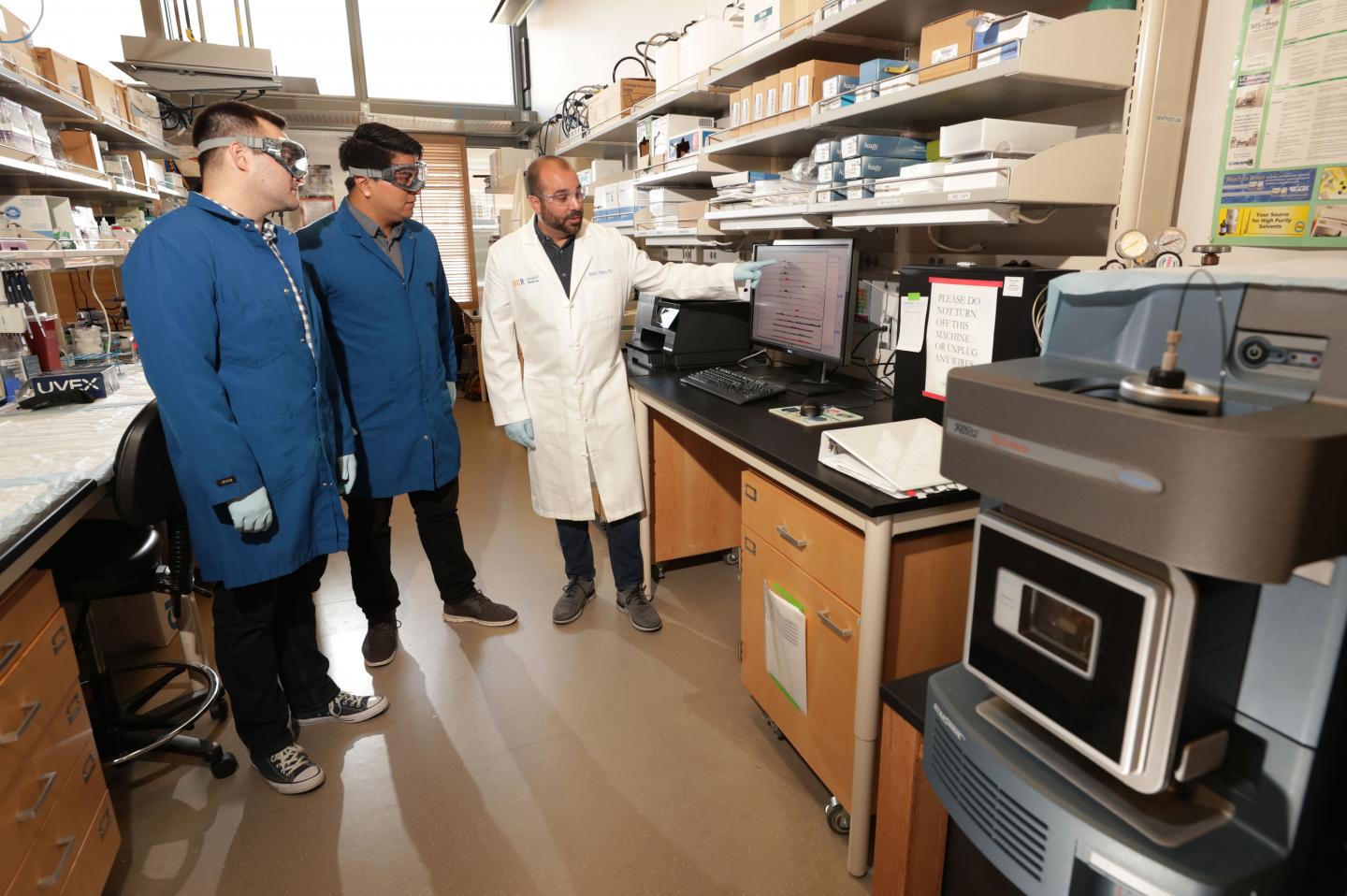
IMAGE

Credit: Stan Lim, UC Riverside.

RIVERSIDE, Calif. — More than two-thirds of adults in the United States are overweight or obese. Eating foods containing high levels of fats and sugars — the “Western diet” — can lead to obesity and significantly reduce life expectancy.

Nicholas DiPatrizio, an assistant professor of biomedical sciences in the School of Medicine at the University of California, Riverside, has received a five-year grant of more than $1.7 million from the National Institute of Diabetes and Digestive and Kidney Diseases of the National Institutes of Health, or NIH, to identify novel gut-brain endocannabinoid signaling pathways that control feeding behavior and become impaired in obesity.

“Our work, which will be done on a mouse model, will support the discovery and development of novel therapeutic strategies to safely treat obesity and related metabolic disorders,” DiPatrizio said. “Currently, a critical barrier to effective treatment of obesity is a lack of reliable therapeutic options.”

Endocannabinoids are cannabis-like molecules made naturally by the body to regulate a wide variety of physiological processes. As with cannabis, endocannabinoids can enhance feeding behavior. The endocannabinoid system in mice is extremely similar to the one in humans.

Recent studies on mice from the DiPatrizio lab have shown that the endocannabinoid system in the gut plays a critical role in gut-brain signaling — especially where feeling satiated is concerned. The system becomes impaired in diet-induced obesity, resulting in the mice steadily gaining weight and not feeling full even after consuming a large amount of food.

“We think the endocannabinoid system gets remodeled after exposure to high-energy nutrients and contributes to overeating in diet-induced obesity,” DiPatrizio said. “Our preliminary results support this hypothesis.”

DiPatrizio explained that food intake and energy balance are controlled by a dynamic interplay of gut-brain signaling pathways; the molecular underpinnings in these processes and their impairment in obesity, however, remain poorly understood.

“What are the specific components in the Western diet that at the molecular level impact gut-brain endocannabinoid system signaling and diet-induced obesity?” he said. “We will work to identify these components.”

DiPatrizio, who recently received UCR’s first cannabis grant, will be joined in the research by doctoral students and staff in his lab.

###

The content of this news release does not necessarily represent the official views of the NIH. The award number of the grant to DiPatrizio is R01DK119498.

The University of California, Riverside is a doctoral research university, a living laboratory for groundbreaking exploration of issues critical to Inland Southern California, the state and communities around the world. Reflecting California’s diverse culture, UCR’s enrollment is more than 24,000 students. The campus opened a medical school in 2013 and has reached the heart of the Coachella Valley by way of the UCR Palm Desert Center. The campus has an annual statewide economic impact of almost $2 billion. To learn more, email [email protected].

Media Contact
Iqbal Pittalwala
[email protected]

Tags: AddictionAlternative MedicineBiologyDiet/Body WeightEating Disorders/ObesityMedicine/HealthMetabolism/Metabolic DiseasesMolecular BiologyPublic Health
Share12Tweet8Share2ShareShareShare2

Related Posts

Cutting-Edge Genomic Techniques Reveal Unexpected Cellular Changes in the Aging Brain — Biology

Cutting-Edge Genomic Techniques Reveal Unexpected Cellular Changes in the Aging Brain

May 12, 2026
USC Researchers Initiate Study on the Most Advanced Lab-Grown Kidney Structures — Biology

USC Researchers Initiate Study on the Most Advanced Lab-Grown Kidney Structures

May 12, 2026

Childbirth in Humans Is Not Uniquely Challenging Among Mammals, New Research Shows

May 12, 2026

From Complexity to Clarity: Unraveling the “Topological Laws” Governing Cell Death

May 11, 2026
Please login to join discussion

POPULAR NEWS

  • Research Indicates Potential Connection Between Prenatal Medication Exposure and Elevated Autism Risk

    842 shares
    Share 337 Tweet 211
  • New Study Reveals Plants Can Detect the Sound of Rain

    728 shares
    Share 290 Tweet 182
  • Salmonella Haem Blocks Macrophages, Boosts Infection

    62 shares
    Share 25 Tweet 16
  • Breastmilk Balances E. coli and Beneficial Bacteria in Infant Gut Microbiomes

    57 shares
    Share 23 Tweet 14

About

We bring you the latest biotechnology news from best research centers and universities around the world. Check our website.

Follow us

Recent News

Older Adults’ Views on Medication After Hospital Discharge

Flexible Carbon Nanotube Transistors Surpass 100 GHz

Glycocalyx Exchange Powers Liquid Biopsies of Endothelium

Subscribe to Blog via Email

Enter your email address to subscribe to this blog and receive notifications of new posts by email.

Join 82 other subscribers
  • Contact Us

Bioengineer.org © Copyright 2023 All Rights Reserved.

Welcome Back!

Login to your account below

Forgotten Password?

Retrieve your password

Please enter your username or email address to reset your password.

Log In
No Result
View All Result
  • Homepages
    • Home Page 1
    • Home Page 2
  • News
  • National
  • Business
  • Health
  • Lifestyle
  • Science

Bioengineer.org © Copyright 2023 All Rights Reserved.