• HOME
  • NEWS
  • EXPLORE
    • CAREER
      • Companies
      • Jobs
    • EVENTS
    • iGEM
      • News
      • Team
    • PHOTOS
    • VIDEO
    • WIKI
  • BLOG
  • COMMUNITY
    • FACEBOOK
    • INSTAGRAM
    • TWITTER
Saturday, February 7, 2026
BIOENGINEER.ORG
No Result
View All Result
  • Login
  • HOME
  • NEWS
  • EXPLORE
    • CAREER
      • Companies
      • Jobs
        • Lecturer
        • PhD Studentship
        • Postdoc
        • Research Assistant
    • EVENTS
    • iGEM
      • News
      • Team
    • PHOTOS
    • VIDEO
    • WIKI
  • BLOG
  • COMMUNITY
    • FACEBOOK
    • INSTAGRAM
    • TWITTER
  • HOME
  • NEWS
  • EXPLORE
    • CAREER
      • Companies
      • Jobs
        • Lecturer
        • PhD Studentship
        • Postdoc
        • Research Assistant
    • EVENTS
    • iGEM
      • News
      • Team
    • PHOTOS
    • VIDEO
    • WIKI
  • BLOG
  • COMMUNITY
    • FACEBOOK
    • INSTAGRAM
    • TWITTER
No Result
View All Result
Bioengineer.org
No Result
View All Result
Home NEWS Science News Biology

Pet tags link widely used flame retardant to hyperthyroidism in cats

Bioengineer by Bioengineer
July 10, 2019
in Biology
Reading Time: 2 mins read
0
IMAGE
Share on FacebookShare on TwitterShare on LinkedinShare on RedditShare on Telegram

IMAGE

Credit: Adapted from Environmental Science & Technology 2019, DOI: 10.1021/acs.est.9b02226

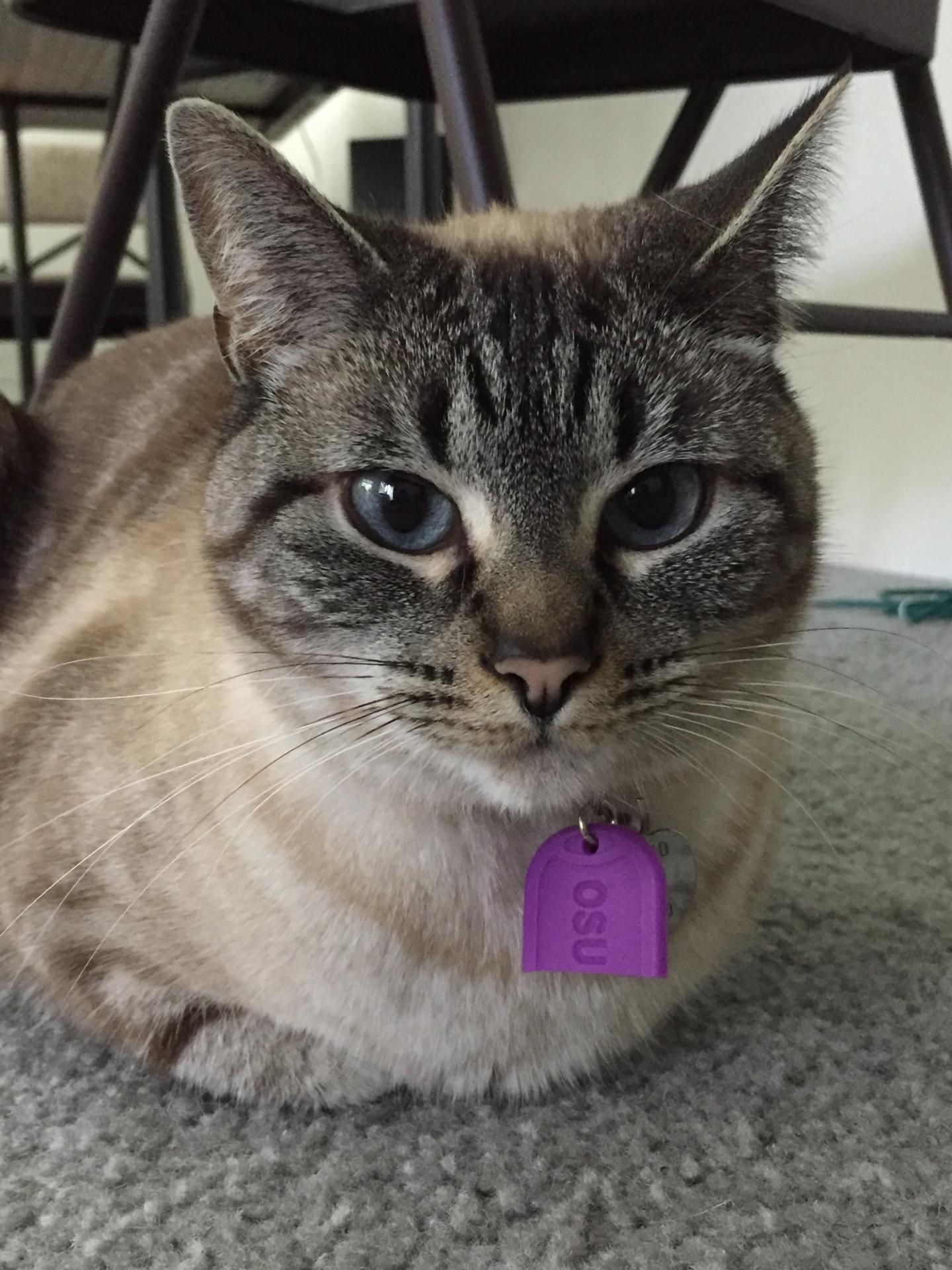
Feline hyperthyroidism is the most common endocrine-related disease of older cats, and its prevalence has skyrocketed since the first case was diagnosed in 1979. At the same time, new household flame retardants were introduced, and recently, scientists have suspected a link. Now, researchers reporting in ACS’ Environmental Science & Technology have associated hyperthyroidism with another class of flame retardants, using silicone pet tags similar to the popular wristbands that many people wear for charitable causes.

In the mid-1970s, manufacturers began to put polybrominated diphenyl ethers (PBDEs) into textiles, polyurethane foam, plastics and electronics. But in 2004, U.S. manufacturers started voluntarily phasing out these flame retardants amidst environmental and health concerns. Alternatives including organophosphate esters (OPEs), such as tris(1,3-dichloroisopropyl) phosphate (TDCIPP), were added instead, but recent research suggests these flame retardants, like PBDEs, can act as endocrine disruptors. Prior research suggested a link between PBDE levels and feline hyperthyroidism, but so far OPEs have not been examined in this context. Kim Anderson and colleagues wondered if they could use silicone pet tags to assess hyperthyroid and non-hyperthyroid housecats’ exposure to various flame retardants, including OPEs. Silicone picks up volatile and semi-volatile organic compounds, and wristbands made of the material have been used in previous studies to monitor human exposure to environmental chemicals.

To find out, the researchers recruited owners of 78 housecats seven years and older, half with hyperthyroidism and half without, to allow their pets to participate in the study. They gave the cats’ owners silicone tags to put on their pets. After the cats had worn the tags for seven days, the researchers analyzed the silicone and found higher levels of TDCIPP from those cats with hyperthyroidism. Among non-hyperthyroid cats, TDCIPP exposure correlated with serum concentrations of a hormone elevated in hyperthyroidism. Higher TDCIPP exposures were associated with air freshener use, houses built since 2005 and cats that prefer to nap on upholstered furniture.

###

The authors acknowledge funding from the National Institute of Environmental Health Sciences and the Food Safety and Environmental Stewardship Program.

The paper’s abstract will be available on July 10 at 8 a.m. Eastern time here: http://pubs.acs.org/doi/abs/acs.est.9b02226

For more research news, journalists and public information officers are encouraged to apply for complimentary press registration for the ACS fall 2019 national meeting in San Diego.

The American Chemical Society, the world’s largest scientific society, is a not-for-profit organization chartered by the U.S. Congress. ACS is a global leader in providing access to chemistry-related information and research through its multiple databases, peer-reviewed journals and scientific conferences. ACS does not conduct research, but publishes and publicizes peer-reviewed scientific studies. Its main offices are in Washington, D.C., and Columbus, Ohio.

To automatically receive news releases from the American Chemical Society, contact [email protected].

Follow us: Twitter | Facebook

Media Contact
Katie Cottingham
[email protected]

Tags: Chemistry/Physics/Materials SciencesEndocrinologyPets/EthologyPolymer ChemistryZoology/Veterinary Science
Share12Tweet8Share2ShareShareShare2

Related Posts

Florida Cane Toad: Complex Spread and Selective Evolution

Florida Cane Toad: Complex Spread and Selective Evolution

February 7, 2026
New Study Uncovers Mechanism Behind Burn Pit Particulate Matter–Induced Lung Inflammation

New Study Uncovers Mechanism Behind Burn Pit Particulate Matter–Induced Lung Inflammation

February 6, 2026

DeepBlastoid: Advancing Automated and Efficient Evaluation of Human Blastoids with Deep Learning

February 6, 2026

Navigating the Gut: The Role of Formic Acid in the Microbiome

February 6, 2026
Please login to join discussion

POPULAR NEWS

  • Robotic Ureteral Reconstruction: A Novel Approach

    Robotic Ureteral Reconstruction: A Novel Approach

    82 shares
    Share 33 Tweet 21
  • Digital Privacy: Health Data Control in Incarceration

    63 shares
    Share 25 Tweet 16
  • Study Reveals Lipid Accumulation in ME/CFS Cells

    57 shares
    Share 23 Tweet 14
  • Breakthrough in RNA Research Accelerates Medical Innovations Timeline

    53 shares
    Share 21 Tweet 13

About

We bring you the latest biotechnology news from best research centers and universities around the world. Check our website.

Follow us

Recent News

Evaluating Pediatric Emergency Care Quality in Ethiopia

TPMT Expression Predictions Linked to Azathioprine Side Effects

Improving Dementia Care with Enhanced Activity Kits

Subscribe to Blog via Email

Success! An email was just sent to confirm your subscription. Please find the email now and click 'Confirm' to start subscribing.

Join 73 other subscribers
  • Contact Us

Bioengineer.org © Copyright 2023 All Rights Reserved.

Welcome Back!

Login to your account below

Forgotten Password?

Retrieve your password

Please enter your username or email address to reset your password.

Log In
No Result
View All Result
  • Homepages
    • Home Page 1
    • Home Page 2
  • News
  • National
  • Business
  • Health
  • Lifestyle
  • Science

Bioengineer.org © Copyright 2023 All Rights Reserved.