• HOME
  • NEWS
  • EXPLORE
    • CAREER
      • Companies
      • Jobs
    • EVENTS
    • iGEM
      • News
      • Team
    • PHOTOS
    • VIDEO
    • WIKI
  • BLOG
  • COMMUNITY
    • FACEBOOK
    • INSTAGRAM
    • TWITTER
Monday, May 11, 2026
BIOENGINEER.ORG
No Result
View All Result
  • Login
  • HOME
  • NEWS
  • EXPLORE
    • CAREER
      • Companies
      • Jobs
        • Lecturer
        • PhD Studentship
        • Postdoc
        • Research Assistant
    • EVENTS
    • iGEM
      • News
      • Team
    • PHOTOS
    • VIDEO
    • WIKI
  • BLOG
  • COMMUNITY
    • FACEBOOK
    • INSTAGRAM
    • TWITTER
  • HOME
  • NEWS
  • EXPLORE
    • CAREER
      • Companies
      • Jobs
        • Lecturer
        • PhD Studentship
        • Postdoc
        • Research Assistant
    • EVENTS
    • iGEM
      • News
      • Team
    • PHOTOS
    • VIDEO
    • WIKI
  • BLOG
  • COMMUNITY
    • FACEBOOK
    • INSTAGRAM
    • TWITTER
No Result
View All Result
Bioengineer.org
No Result
View All Result
Home NEWS Science News Science

Technology allows researchers to see patients’ real-time pain while in the clinic

Bioengineer by Bioengineer
June 28, 2019
in Science
Reading Time: 2 mins read
0
Share on FacebookShare on TwitterShare on LinkedinShare on RedditShare on Telegram

ANN ARBOR–Many patients, especially those who are anesthetized or emotionally challenged, cannot communicate precisely about their pain.

For this reason, University of Michigan researchers have developed a technology to help clinicians “see” and map patient pain in real-time, through special augmented reality glasses. Their small feasibility study appears in the Journal of Medical Internet Research.

The technology was tested on 21 volunteer dental patients, and researchers hope to one day include other types of pain and conditions. It’s years away from widespread use in a clinical setting, but the feasibility study is a good first step for dental patients, said Alex DaSilva, associate professor at the U-M School of Dentistry and director of the Headache and Orofacial Pain Effort Lab.

The portable CLARAi (clinical augmented reality and artificial intelligence) platform combines visualization with brain data using neuroimaging to navigate through a patient’s brain while they’re in the chair.

“It’s very hard for us to measure and express our pain, including its expectation and associated anxiety,” DaSilva said. “Right now, we have a one to 10 rating system, but that’s far from a reliable and objective pain measurement.”

In the study, researchers triggered pain by administering cold to the teeth. Researchers used brain pain data to develop algorithms that, when coupled with new software and neuroimaging hardware, predicted pain or the absence of it about 70% of the time.

Participants wore a sensor-outfitted cap that detected changes to blood flow and oxygenation, thus measuring brain activity and responses to pain. That information was transmitted to a computer and interpreted.

Wearing special augmented reality glasses (in this case, the Microsoft HoloLens), researchers viewed the subject’s brain activity in real time on a reconstructed brain template, while the subjects sat in the clinical chair. The red and blue dots on the image denote location and level of brain activity, and this “pain signature” was mirror-displayed on the augmented reality screen. The more pain signatures the algorithm learns to read, the more accurate the pain assessment.

###

Co-authors include: Xiao-Su Hu, Andrew Racek, Thiago Nascimento, Mary Bender, Theodore Hall, Sean Petty, Stephanie O’Malley and Niko Kaciroti of U-M; Roger Ellwood of Colgate Palmolive; and Eric Maslowski of Ann Arbor-based Moxytech Inc.

Media Contact
Laura Bailey
[email protected]
http://dx.doi.org/10.2196/13594

Tags: EducationMedicine/HealthTechnology/Engineering/Computer Science
Share12Tweet8Share2ShareShareShare2

Related Posts

Five or more hours of smartphone usage per day may increase obesity

July 25, 2019
IMAGE

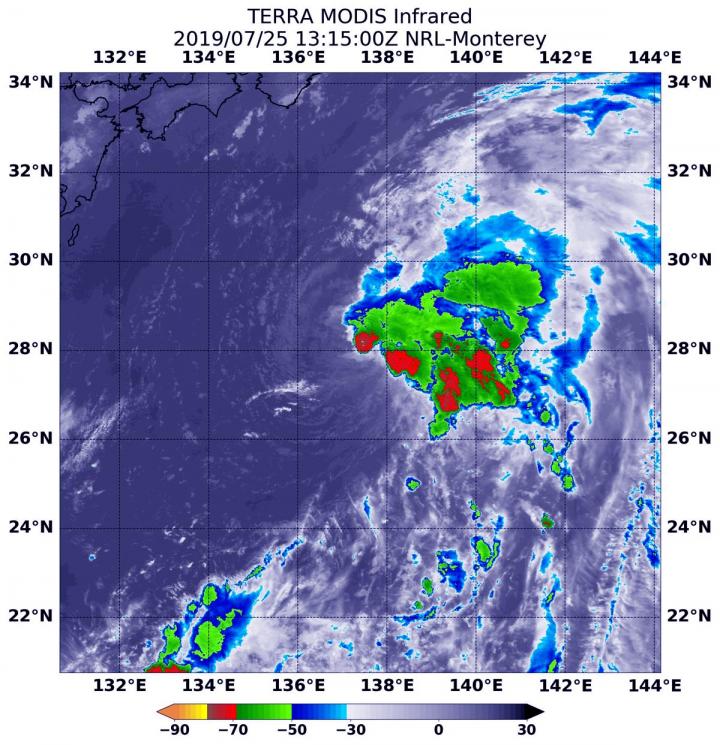
NASA’s terra satellite finds tropical storm 07W’s strength on the side

July 25, 2019

NASA finds one burst of energy in weakening Depression Dalila

July 25, 2019

Researcher’s innovative flood mapping helps water and emergency management officials

July 25, 2019
Please login to join discussion

POPULAR NEWS

  • Research Indicates Potential Connection Between Prenatal Medication Exposure and Elevated Autism Risk

    841 shares
    Share 336 Tweet 210
  • New Study Reveals Plants Can Detect the Sound of Rain

    728 shares
    Share 290 Tweet 182
  • Salmonella Haem Blocks Macrophages, Boosts Infection

    62 shares
    Share 25 Tweet 16
  • Breastmilk Balances E. coli and Beneficial Bacteria in Infant Gut Microbiomes

    57 shares
    Share 23 Tweet 14

About

We bring you the latest biotechnology news from best research centers and universities around the world. Check our website.

Follow us

Recent News

Humans and Zebra Finches Share Similar Speech Learning Techniques #ASA190

New Study Uncovers How Fungal Parasites Attack Strawberries and Raspberries

City of Hope Researchers to Present Groundbreaking Immunotherapy and Precision Medicine Advances Across Multiple Cancer Types at ASCO 2026

Subscribe to Blog via Email

Enter your email address to subscribe to this blog and receive notifications of new posts by email.

Join 82 other subscribers
  • Contact Us

Bioengineer.org © Copyright 2023 All Rights Reserved.

Welcome Back!

Login to your account below

Forgotten Password?

Retrieve your password

Please enter your username or email address to reset your password.

Log In
No Result
View All Result
  • Homepages
    • Home Page 1
    • Home Page 2
  • News
  • National
  • Business
  • Health
  • Lifestyle
  • Science

Bioengineer.org © Copyright 2023 All Rights Reserved.