• HOME
  • NEWS
  • EXPLORE
    • CAREER
      • Companies
      • Jobs
    • EVENTS
    • iGEM
      • News
      • Team
    • PHOTOS
    • VIDEO
    • WIKI
  • BLOG
  • COMMUNITY
    • FACEBOOK
    • INSTAGRAM
    • TWITTER
Saturday, February 7, 2026
BIOENGINEER.ORG
No Result
View All Result
  • Login
  • HOME
  • NEWS
  • EXPLORE
    • CAREER
      • Companies
      • Jobs
        • Lecturer
        • PhD Studentship
        • Postdoc
        • Research Assistant
    • EVENTS
    • iGEM
      • News
      • Team
    • PHOTOS
    • VIDEO
    • WIKI
  • BLOG
  • COMMUNITY
    • FACEBOOK
    • INSTAGRAM
    • TWITTER
  • HOME
  • NEWS
  • EXPLORE
    • CAREER
      • Companies
      • Jobs
        • Lecturer
        • PhD Studentship
        • Postdoc
        • Research Assistant
    • EVENTS
    • iGEM
      • News
      • Team
    • PHOTOS
    • VIDEO
    • WIKI
  • BLOG
  • COMMUNITY
    • FACEBOOK
    • INSTAGRAM
    • TWITTER
No Result
View All Result
Bioengineer.org
No Result
View All Result
Home NEWS Science News Chemistry

NRL payloads deployed by SpaceX to study space weather and spacecraft propulsion

Bioengineer by Bioengineer
June 25, 2019
in Chemistry
Reading Time: 2 mins read
0
IMAGE
Share on FacebookShare on TwitterShare on LinkedinShare on RedditShare on Telegram

IMAGE

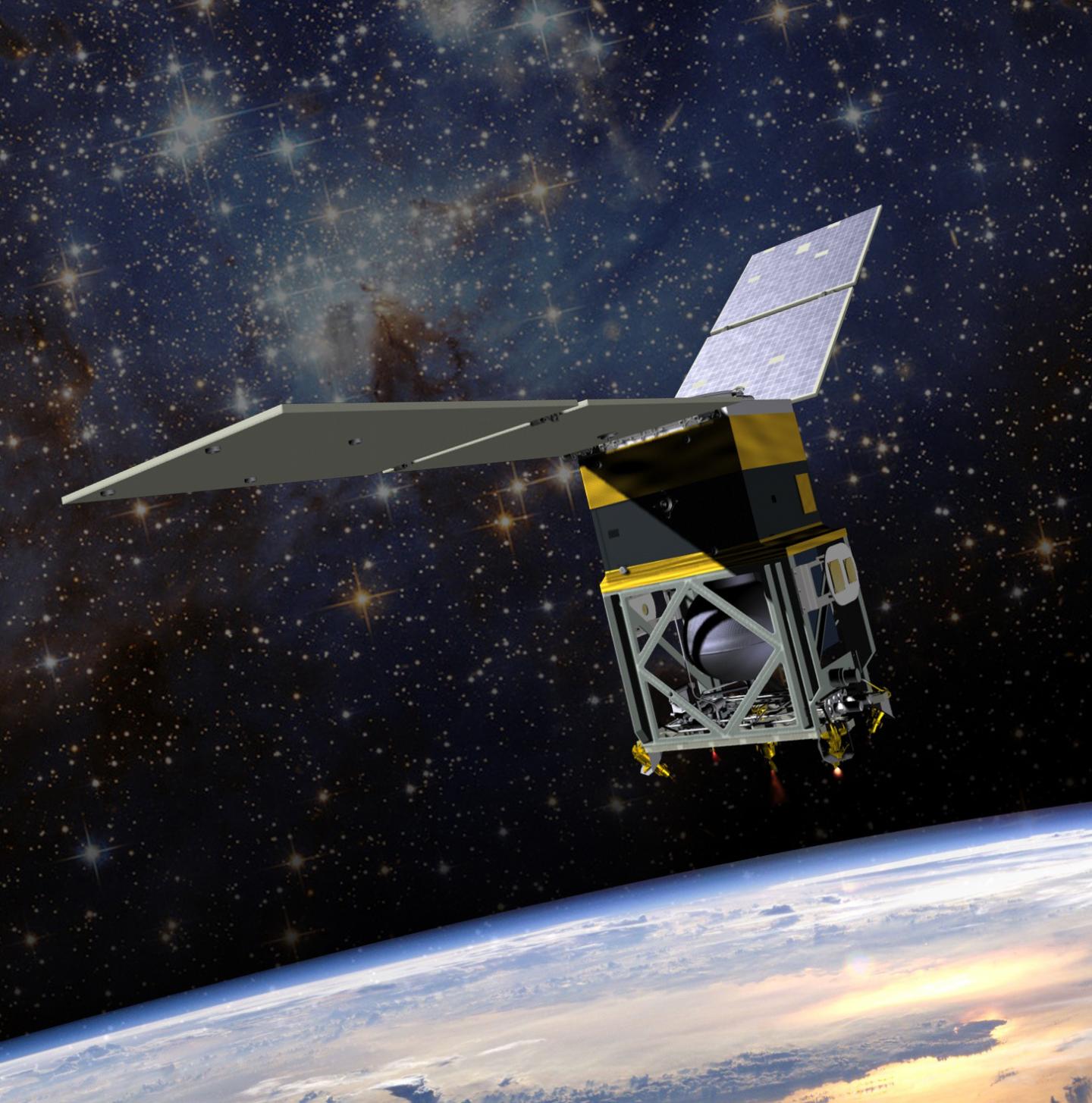
Credit: (Graphic courtesy of NASA/Ball Aerospace)

WASHINGTON – U.S. Naval Research Laboratory researchers designed and built two science payloads that went up with SpaceX’s Falcon 9 Heavy rocket launch on June 25.

The Small Wind and Temperature Spectrometer (SWATS) will help researchers understand the dynamics of the upper layers of Earth’s atmosphere, while the Tether Electrodynamic Propulsion CubeSat Experiment (TEPCE) will investigate orbital energy created by the Earth’s magnetic field that could propel future spacecraft.

Operating in low Earth orbit, SWATS will monitor atmospheric densities, winds and temperatures while traveling in an elliptical orbit at altitudes between 350 and 700 kilometers above the Earth’s surface. The payload rides aboard NASA’s Green Propellant Infusion Mission (GPIM).

“It’s important to have in situ [direct] measurements, as well as remote sensing measurements,” said Andy Nicholas, lead investigator for SWATS. “[Those measurements will] inform the models and improve predictions for the ionosphere.”

Navy researchers are studying the ionosphere because of its effects on over-the-horizon radar and other long-range communications technologies.

The other NRL passenger on this SpaceX mission, TEPCE is a miniaturized satellite, known as a CubeSat. Once in space, it will divide into two objects connected by a 1-kilometer-long tether. The system will collect electrons from the Earth’s space environment and transmit the electrons from one object to the other.

Its designers expect the Earth’s magnetic field to exert a force on the electrons in the tether, producing a velocity change that will affect both the magnitude and direction of the spacecraft.

“What this means is a possible new propulsion capability for spacecraft,” said Shannon Coffey, TEPCE’s principal investigator. “Which may decrease the amount of propellant that we have to use.”

In all, this SpaceX launch carried more than two dozen science payloads into orbit.

###

Media Contact
Mary Estacion
[email protected]

Original Source

https://edit-www.nrl.navy.mil/news/releases/us-naval-research-laboratory-payloads-launch-spacex-rocket-study-space-weather-and

Tags: AstrophysicsEarth ScienceEnergy SourcesExperiments in SpaceGeophysics/GravitySatellite Missions/ShuttlesSpace/Planetary Science
Share12Tweet8Share2ShareShareShare2

Related Posts

blank

Breakthrough in Environmental Cleanup: Scientists Develop Solar-Activated Biochar for Faster Remediation

February 7, 2026
blank

Cutting Costs: Making Hydrogen Fuel Cells More Affordable

February 6, 2026

Scientists Develop Hand-Held “Levitating” Time Crystals

February 6, 2026

Observing a Key Green-Energy Catalyst Dissolve Atom by Atom

February 6, 2026
Please login to join discussion

POPULAR NEWS

  • Robotic Ureteral Reconstruction: A Novel Approach

    Robotic Ureteral Reconstruction: A Novel Approach

    82 shares
    Share 33 Tweet 21
  • Digital Privacy: Health Data Control in Incarceration

    63 shares
    Share 25 Tweet 16
  • Study Reveals Lipid Accumulation in ME/CFS Cells

    57 shares
    Share 23 Tweet 14
  • Breakthrough in RNA Research Accelerates Medical Innovations Timeline

    53 shares
    Share 21 Tweet 13

About

We bring you the latest biotechnology news from best research centers and universities around the world. Check our website.

Follow us

Recent News

Improving Dementia Care with Enhanced Activity Kits

Decoding Prostate Cancer Origins via snFLARE-seq, mxFRIZNGRND

Digital Health Perspectives from Baltic Sea Experts

Subscribe to Blog via Email

Enter your email address to subscribe to this blog and receive notifications of new posts by email.

Join 73 other subscribers
  • Contact Us

Bioengineer.org © Copyright 2023 All Rights Reserved.

Welcome Back!

Login to your account below

Forgotten Password?

Retrieve your password

Please enter your username or email address to reset your password.

Log In
No Result
View All Result
  • Homepages
    • Home Page 1
    • Home Page 2
  • News
  • National
  • Business
  • Health
  • Lifestyle
  • Science

Bioengineer.org © Copyright 2023 All Rights Reserved.