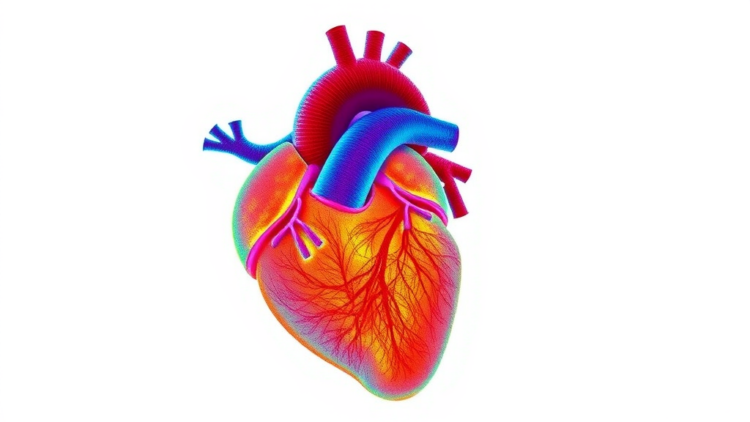
When the diagnostic accuracy of coronary CT angiography matches that of catheter angiography
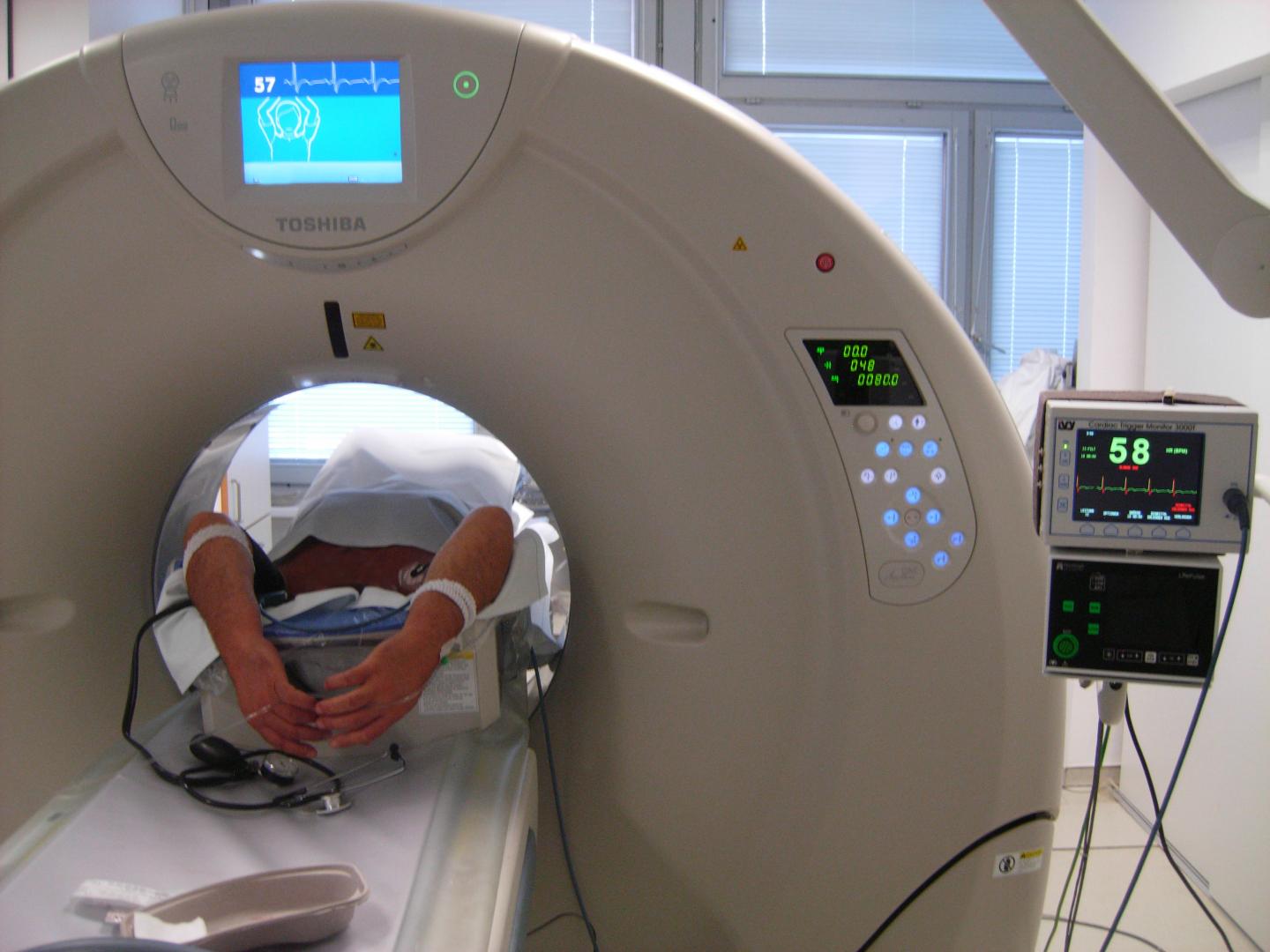
Credit: Photo: Dewey/Charité
When a patient complains about chest pain, diagnosis will usually involve catheter angiography to evaluate the adequacy of blood supply to the heart. Researchers from Charité – Universitätsmedizin Berlin have now established that, in certain cases, the diagnostic reliability of non-invasive coronary computed tomography (CT) angiography is as good as that of coronary angiography – thereby dispensing with the need for invasive procedures. Results from this research have been published in The BMJ*.
Symptoms such as dull chest pain or a feeling of tightness in the chest may be indicative of coronary artery disease (CAD), a condition which develops when a narrowing of the coronary arteries limits the blood supply to the heart muscle. In the worst-case scenario, CAD can lead to a life-threatening heart attack or sudden cardiac death. Prompt diagnosis is therefore essential.
Until now, patients with suspected CAD have often been examined using cardiac catheterization for coronary angiography, a procedure that involves a tube (catheter) being inserted into a blood vessel via a small incision in the groin or arm and then advanced to the heart. The advantage of this method is that it combines diagnosis with treatment: if a narrowed segment is detected, the intervention to open up the affected artery can be performed immediately. However, the procedure is not without its risks, and out of a total of 880,000 patients who undergo the procedure in Germany every year, 58% do not require such an intervention. Led by Charité, an international research consortium has now been able to show that, in certain patients, an equally accurate diagnosis can be achieved using cardiac CT angiography – a non-invasive imaging method.
Research groups from 22 countries worked together to analyze the data of more than 5,300 patients from a total of 65 completed studies. Their analysis revealed that coronary CT angiography is a suitable diagnostic technique in patients with a low to intermediate probability of CAD. “Physicians can determine a patient’s probability of having CAD using individual factors such as age, sex and type of chest pain,” says study lead Prof. Dr. Marc Dewey, Deputy Head of the Department of Radiology on Campus Charité Mitte. “If this probability is between 7 and 67 percent, coronary CT angiography will provide a reliable diagnosis as to whether or not the patient has narrowed arteries. Cardiac catheterization is indicated in patients with higher probabilities, as these patients are likely to need an intervention.”
“Cardiac CT is a gentle technique, which only lasts a few minutes,” emphasizes the study’s first author, Robert Haase, a doctoral student and member of Prof. Dewey’s research group. The technique involves a circular X-ray machine taking 1,000 images per second from various angles. These images are then combined to produce a 3D reconstruction of the heart. Contrast agents are used to make the coronary arteries clearly visible. “Our work shows that, in both men and women, this method is capable of clearly visualizing narrowed segments,” adds Robert Haase.
“Our findings will make it easier for physicians to determine which patients may benefit from having a coronary CT angiogram rather than a catheter-based procedure to diagnose coronary artery disease,” says Prof. Dewey. The radiologist also hopes that the study will contribute to the harmonization of clinical practice guidelines. Country-specific guidelines continue to vary in terms of courses of action recommended when dealing with suspected CAD.
###
*Haase et al., Diagnosis of obstructive coronary artery disease using computed tomography angiography in patients with stable chest pain depending on clinical probability and in clinically important subgroups: meta-analysis of individual patient data. BMJ. 2019; 365:l1945. doi: 10.1136/bmj.l1945
Media Contact
Marc Dewey
[email protected]
Original Source
https:/
Related Journal Article
http://dx.