• HOME
  • NEWS
  • EXPLORE
    • CAREER
      • Companies
      • Jobs
    • EVENTS
    • iGEM
      • News
      • Team
    • PHOTOS
    • VIDEO
    • WIKI
  • BLOG
  • COMMUNITY
    • FACEBOOK
    • INSTAGRAM
    • TWITTER
Saturday, February 7, 2026
BIOENGINEER.ORG
No Result
View All Result
  • Login
  • HOME
  • NEWS
  • EXPLORE
    • CAREER
      • Companies
      • Jobs
        • Lecturer
        • PhD Studentship
        • Postdoc
        • Research Assistant
    • EVENTS
    • iGEM
      • News
      • Team
    • PHOTOS
    • VIDEO
    • WIKI
  • BLOG
  • COMMUNITY
    • FACEBOOK
    • INSTAGRAM
    • TWITTER
  • HOME
  • NEWS
  • EXPLORE
    • CAREER
      • Companies
      • Jobs
        • Lecturer
        • PhD Studentship
        • Postdoc
        • Research Assistant
    • EVENTS
    • iGEM
      • News
      • Team
    • PHOTOS
    • VIDEO
    • WIKI
  • BLOG
  • COMMUNITY
    • FACEBOOK
    • INSTAGRAM
    • TWITTER
No Result
View All Result
Bioengineer.org
No Result
View All Result
Home NEWS Science News Science

Researcher gets $4 million to better predict mental health disorders

Bioengineer by Bioengineer
June 17, 2019
in Science
Reading Time: 2 mins read
0
Share on FacebookShare on TwitterShare on LinkedinShare on RedditShare on Telegram

Psychology professor Vince Calhoun and his team plan to develop novel algorithms to study individuals with mood and psychosis disorders

ATLANTA–Vince Calhoun, Distinguished University Professor of Psychology at Georgia State University and director of the Center for Translational Research in Neuroimaging and Data Science (TReNDS), has received nearly $4 million from the National Institutes of Health’s National Institute of Mental Health to develop new models that use brain imaging and genomic data to better predict mental health disorders.

Most mood and psychosis disorders, such as schizophrenia, depression and bipolar disorder, lack biomarkers that healthcare experts can use for diagnosis. Psychiatrists can’t see evidence of depression, for example, on an X-ray or a blood test. Symptoms and contributing risk factors of mental health disorders are also highly variable and diverse. The disorders are influenced a number of interrelated genetic factors and environmental factors, such as stress.

Analyzing a patient’s genetics and brain activity could provide a better mode of diagnosis. However, brain imaging data and genomic data are high dimensional, meaning the number of data points is so large it makes calculations very difficult, and include complex relationships that are poorly understood.

Calhoun and his team plan to develop novel algorithms that can better capture dynamic brain imaging and genomics data, and apply those algorithms to study individuals with mood and psychosis disorders. The team will compare the accuracy of two approaches to mental health diagnosis–the standard diagnostic category approach, in which clinicians use a checklist of symptoms to assign a diagnosis, and a data-driven approach, in which experts analyze brain data to determine a diagnosis. They will also analyze the accuracy of a dimensional approach to diagnosis, which places patients along a spectrum based on the degree of symptoms.

“Mood disorders and psychosis disorders are incredibly complex and variable, with a range of underlying causes,” Calhoun said. “Two people may have the same diagnosis without sharing symptoms–or have the same symptoms with different diagnoses. There is also growing consensus that we should approach mental illness as a continuum, rather than slotting patients into an all-or-nothing category.”

###

Calhoun is a Georgia Research Alliance Eminent Scholar in Brain Health & Image Analysis. He has brought a number of ongoing National Institutes of Health and National Science Foundation grant awards to the university, totaling more than $18 million.

TReNDS is a tri-institutional center supported by Georgia State, the Georgia Institute of Technology and Emory University. The center is focused on making better use of complex brain imaging data through improved analysis, with a goal of identifying biomarkers that can help address brain health and disease.

An abstract of the grant, 1R01MH118695-01A1, is available at the NIH Project RePORTer website.

Media Contact
Jennifer Marquez
[email protected]
https://news.gsu.edu/2019/06/17/georgia-state-researcher-receives-4-million-grant-to-use-brain-imaging-genomic-data-to-better-predict-mental-health-disorders/

Tags: Computer ScienceDiagnosticsMedicine/HealthMental Healthneurobiology
Share12Tweet8Share2ShareShareShare2

Related Posts

Five or more hours of smartphone usage per day may increase obesity

July 25, 2019
IMAGE

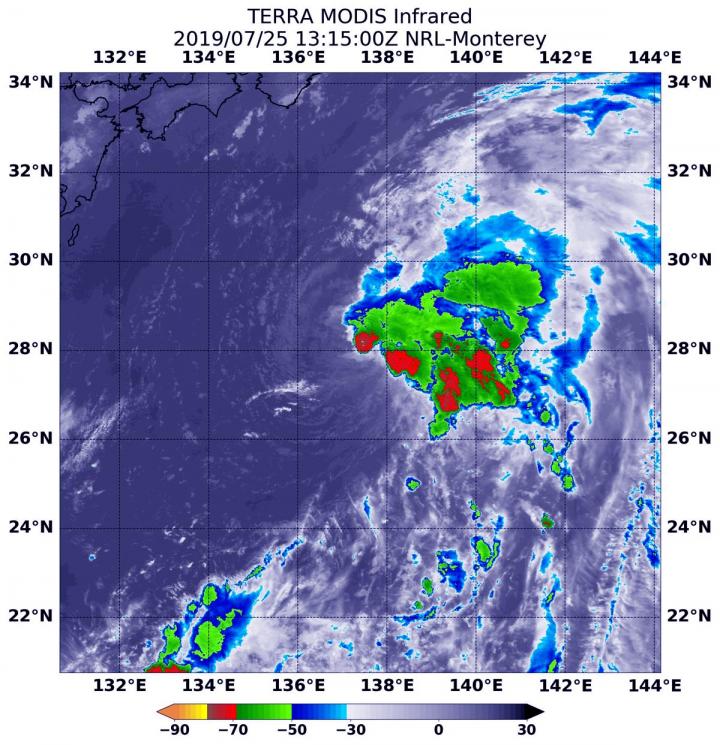
NASA’s terra satellite finds tropical storm 07W’s strength on the side

July 25, 2019

NASA finds one burst of energy in weakening Depression Dalila

July 25, 2019

Researcher’s innovative flood mapping helps water and emergency management officials

July 25, 2019
Please login to join discussion

POPULAR NEWS

  • Robotic Ureteral Reconstruction: A Novel Approach

    Robotic Ureteral Reconstruction: A Novel Approach

    82 shares
    Share 33 Tweet 21
  • Digital Privacy: Health Data Control in Incarceration

    63 shares
    Share 25 Tweet 16
  • Study Reveals Lipid Accumulation in ME/CFS Cells

    57 shares
    Share 23 Tweet 14
  • Breakthrough in RNA Research Accelerates Medical Innovations Timeline

    53 shares
    Share 21 Tweet 13

About

We bring you the latest biotechnology news from best research centers and universities around the world. Check our website.

Follow us

Recent News

Evaluating Pediatric Emergency Care Quality in Ethiopia

TPMT Expression Predictions Linked to Azathioprine Side Effects

Improving Dementia Care with Enhanced Activity Kits

Subscribe to Blog via Email

Success! An email was just sent to confirm your subscription. Please find the email now and click 'Confirm' to start subscribing.

Join 73 other subscribers
  • Contact Us

Bioengineer.org © Copyright 2023 All Rights Reserved.

Welcome Back!

Login to your account below

Forgotten Password?

Retrieve your password

Please enter your username or email address to reset your password.

Log In
No Result
View All Result
  • Homepages
    • Home Page 1
    • Home Page 2
  • News
  • National
  • Business
  • Health
  • Lifestyle
  • Science

Bioengineer.org © Copyright 2023 All Rights Reserved.