• HOME
  • NEWS
  • EXPLORE
    • CAREER
      • Companies
      • Jobs
    • EVENTS
    • iGEM
      • News
      • Team
    • PHOTOS
    • VIDEO
    • WIKI
  • BLOG
  • COMMUNITY
    • FACEBOOK
    • INSTAGRAM
    • TWITTER
Monday, March 30, 2026
BIOENGINEER.ORG
No Result
View All Result
  • Login
  • HOME
  • NEWS
  • EXPLORE
    • CAREER
      • Companies
      • Jobs
        • Lecturer
        • PhD Studentship
        • Postdoc
        • Research Assistant
    • EVENTS
    • iGEM
      • News
      • Team
    • PHOTOS
    • VIDEO
    • WIKI
  • BLOG
  • COMMUNITY
    • FACEBOOK
    • INSTAGRAM
    • TWITTER
  • HOME
  • NEWS
  • EXPLORE
    • CAREER
      • Companies
      • Jobs
        • Lecturer
        • PhD Studentship
        • Postdoc
        • Research Assistant
    • EVENTS
    • iGEM
      • News
      • Team
    • PHOTOS
    • VIDEO
    • WIKI
  • BLOG
  • COMMUNITY
    • FACEBOOK
    • INSTAGRAM
    • TWITTER
No Result
View All Result
Bioengineer.org
No Result
View All Result
Home NEWS Science News Biology

No evidence for increased egg predation in the Arctic

Bioengineer by Bioengineer
June 14, 2019
in Biology
Reading Time: 2 mins read
0
IMAGE
Share on FacebookShare on TwitterShare on LinkedinShare on RedditShare on Telegram

Published in Science on June 14, 2019
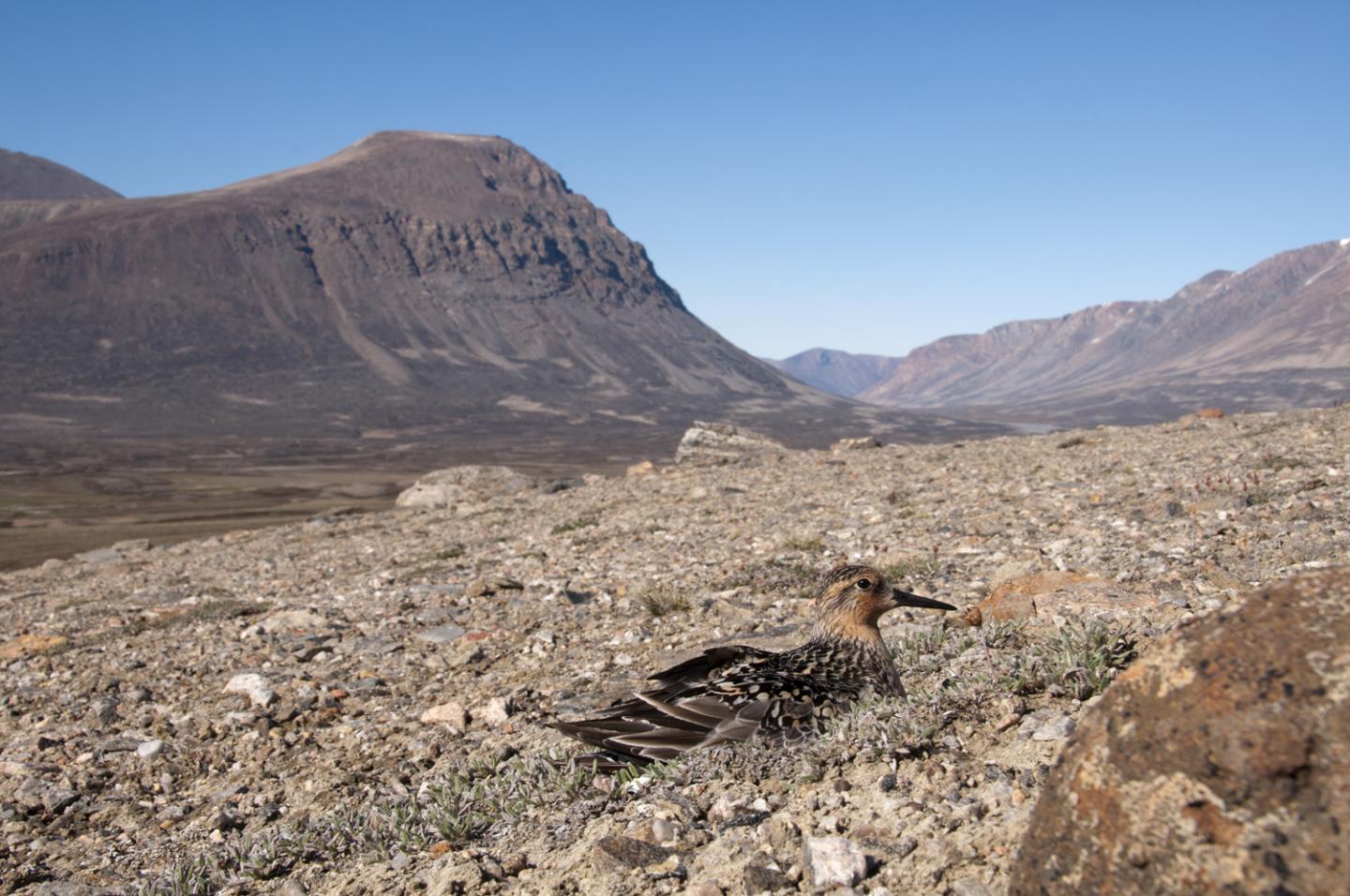
IMAGE

Credit: Jeroen Reneerkens

Climate and ecosystems are changing, but predation on shorebird nests has changed little across the globe over the past 60 years, finds an international team of 60 researchers. The study published in Science on 14 June 2019 challenges a recent claim that shorebird eggs are more often eaten by predators due to climate change, and more so in the Arctic compared to the tropics. The research shows that these claims are a methodological artefact.

The further from the equator, the fewer predators?

For many years, it was generally accepted by biologists that shorebirds decrease the chances of losing their clutch to a predator, by locating their nest further away from the equator.This could explain why so many shorebirds make the annual effort of long-distance migratory flights to the northern tundra to lay their eggs. A publication in Science in 2018 gave a remarkable twist to that long-standing idea and claimed the opposite. Now, Bulla and colleagues show that there is little support for the long-standing hypothesis, but also that the opposite conclusions are untenable and likely a methodological artifact.

Not egg predation but research methods have changed

First author Martin Bulla and his colleagues scrutinize the results, methods and data published the previous year in Science, to understand whether nest predation has indeed changed over the past 60 years across the globe and whether predation rates on nests are now higher in the Arctic than in the tropics. Contrary to the claims, nest predation has changed little over time, and there appears to be no latitudinal gradient in nest predation: neither higher nor lower nest predation in the Arctic versus the tropics. Instead, data collection and analysis methods have changed over time, which likely drove the patterns reported in last year’s Science study. In particular, Bulla and colleagues identified a bias in how the fate of nests was determined over time, such that the incidence of predation was underestimated in older studies. The researchers corrected for that bias and re-analyzed the data, resulting in their conclusions.

Human impacts deserve attention

Contrary to what was previously reported in Science and many media outlets, there is no clear evidence that “the Arctic is no longer a safe haven for shorebirds”. There is no doubt that many species of shorebirds worldwide face serious challenges due to human impacts, and the conservation of these birds deserves all possible attention. However, Bulla and colleagues warn that the issues are complex, and actions to save species must be based on sound data and unbiased analyses. Anything less, only distracts the attention from the real problems.

###

Media Contact
Henriette de Waal
[email protected]

Original Source

https://www.nioz.nl/en/news/no-evidence-for-increased-egg-predation-in-the-arctic

Related Journal Article

http://dx.doi.org/10.1126/science.aaw8529

Tags: BiologyClimate ChangeEcology/Environment
Share12Tweet8Share2ShareShareShare2

Related Posts

RNA Decay Controls Antigen Expression in Trypanosomes

RNA Decay Controls Antigen Expression in Trypanosomes

March 30, 2026
Conserved Pathway Breaks Down Homarine in Bacteria

Conserved Pathway Breaks Down Homarine in Bacteria

March 30, 2026

Lowering the Risk of Repeat Preterm Births Through Probiotic Therapy

March 30, 2026

Squid Evolution Ignited 100 Million Years Ago in Deep Ocean, Triggering Rapid Diversification

March 30, 2026
Please login to join discussion

POPULAR NEWS

  • blank

    Revolutionary AI Model Enhances Precision in Detecting Food Contamination

    96 shares
    Share 38 Tweet 24
  • Imagine a Social Media Feed That Challenges Your Views Instead of Reinforcing Them

    1005 shares
    Share 397 Tweet 248
  • Promising Outcomes from First Clinical Trials of Gene Regulation in Epilepsy

    51 shares
    Share 20 Tweet 13
  • Advancements in EV Battery Technology to Surpass Climate Change-Induced Degradation

    45 shares
    Share 18 Tweet 11

About

We bring you the latest biotechnology news from best research centers and universities around the world. Check our website.

Follow us

Recent News

Drone Imaging Unveils Fresh Insights into the Impact of Grazing on Grassland Ecosystems

New Study Reveals Intermittent Fasting Enhances Hormonal Balance in Women with PCOS

Plasmonic Nanocavities Unlock Detection of Layer-Breathing Vibrations in 2D Materials and Heterostructures

Subscribe to Blog via Email

Success! An email was just sent to confirm your subscription. Please find the email now and click 'Confirm' to start subscribing.

Join 78 other subscribers
  • Contact Us

Bioengineer.org © Copyright 2023 All Rights Reserved.

Welcome Back!

Login to your account below

Forgotten Password?

Retrieve your password

Please enter your username or email address to reset your password.

Log In
No Result
View All Result
  • Homepages
    • Home Page 1
    • Home Page 2
  • News
  • National
  • Business
  • Health
  • Lifestyle
  • Science

Bioengineer.org © Copyright 2023 All Rights Reserved.