• HOME
  • NEWS
  • EXPLORE
    • CAREER
      • Companies
      • Jobs
    • EVENTS
    • iGEM
      • News
      • Team
    • PHOTOS
    • VIDEO
    • WIKI
  • BLOG
  • COMMUNITY
    • FACEBOOK
    • INSTAGRAM
    • TWITTER
Sunday, March 29, 2026
BIOENGINEER.ORG
No Result
View All Result
  • Login
  • HOME
  • NEWS
  • EXPLORE
    • CAREER
      • Companies
      • Jobs
        • Lecturer
        • PhD Studentship
        • Postdoc
        • Research Assistant
    • EVENTS
    • iGEM
      • News
      • Team
    • PHOTOS
    • VIDEO
    • WIKI
  • BLOG
  • COMMUNITY
    • FACEBOOK
    • INSTAGRAM
    • TWITTER
  • HOME
  • NEWS
  • EXPLORE
    • CAREER
      • Companies
      • Jobs
        • Lecturer
        • PhD Studentship
        • Postdoc
        • Research Assistant
    • EVENTS
    • iGEM
      • News
      • Team
    • PHOTOS
    • VIDEO
    • WIKI
  • BLOG
  • COMMUNITY
    • FACEBOOK
    • INSTAGRAM
    • TWITTER
No Result
View All Result
Bioengineer.org
No Result
View All Result
Home NEWS Science News Biology

Bid to beat superbugs boosted by immune defence discovery

Bioengineer by Bioengineer
June 3, 2019
in Biology
Reading Time: 2 mins read
0
Share on FacebookShare on TwitterShare on LinkedinShare on RedditShare on Telegram

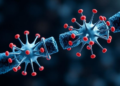
The fight against superbugs could be helped by the discovery of a potential therapy based on the body’s natural immune defences.

Scientists have found that a molecule produced by the body – called LL-37 – changes the way cells behave when they are invaded by bacteria.

The molecule acts like a fire alarm, experts say, warning the body’s immune system of the infection and the need for urgent action.

The team, from the University of Edinburgh’s Centre for Inflammation Research, focused on lung diseases caused by bacterial infections, which are a major cause of death worldwide.

These infections are increasingly resistant to antibiotics, making them difficult to treat.

Previous studies with mice found that LL-37 instructs cells in an infected lung to call in specialised cells, known as neutrophils, which can destroy bacterial threats.

In tests on human lung cells, researchers found that LL-37 specifically targets infected cells, revealing the danger and producing a signal that summons the neutrophils.

At the same time, this flood of LL-37 into the infected cells causes them to self-destruct, removing the threat to other healthy cells before the bacteria can grow and spread.

Experts say this discovery could lead to new approaches to treat these multi-drug resistant infections.

Dr Donald J. Davidson from the MRC Centre for Inflammation Research said: “Our search for alternative and complementary treatments for antibiotic-resistant infections is becoming ever more urgent. Trying to boost the best of the human body’s effective natural defences, like this, may prove to be an important part of our future solutions.”

###

The study, published in the journal PLoS Pathogens, was funded by the Medical Research Council.

Media Contact
Guy Atkinson
[email protected]
http://dx.doi.org/10.1371/journal.ppat.1007694

Tags: Cell BiologyImmunology/Allergies/AsthmaMedicine/Health
Share13Tweet8Share2ShareShareShare2

Related Posts

Two Salk Scientists Honored as 2025 AAAS Fellows

Two Salk Scientists Honored as 2025 AAAS Fellows

March 27, 2026
How to sway group opinions: Encourage opponents to stay undecided

How to sway group opinions: Encourage opponents to stay undecided

March 23, 2026

Deep Learning Model Maps How Individual Cells Shape Disease Outcomes

March 20, 2026

Removing only 15 female sharks annually could endanger the entire population, scientists warn

March 20, 2026
Please login to join discussion

POPULAR NEWS

  • blank

    Revolutionary AI Model Enhances Precision in Detecting Food Contamination

    96 shares
    Share 38 Tweet 24
  • Imagine a Social Media Feed That Challenges Your Views Instead of Reinforcing Them

    1004 shares
    Share 397 Tweet 248
  • Uncovering Functions of Cavernous Malformation Proteins in Organoids

    54 shares
    Share 22 Tweet 14
  • Promising Outcomes from First Clinical Trials of Gene Regulation in Epilepsy

    51 shares
    Share 20 Tweet 13

About

We bring you the latest biotechnology news from best research centers and universities around the world. Check our website.

Follow us

Recent News

In-Sensor Cryptography Links Physical Process to Digital Identity

Can Psychosocial Factors Influence Cancer Risk?

Depression Factors in Elderly: Pre vs. Post-COVID Analysis

Subscribe to Blog via Email

Enter your email address to subscribe to this blog and receive notifications of new posts by email.

Join 78 other subscribers
  • Contact Us

Bioengineer.org © Copyright 2023 All Rights Reserved.

Welcome Back!

Login to your account below

Forgotten Password?

Retrieve your password

Please enter your username or email address to reset your password.

Log In
No Result
View All Result
  • Homepages
    • Home Page 1
    • Home Page 2
  • News
  • National
  • Business
  • Health
  • Lifestyle
  • Science

Bioengineer.org © Copyright 2023 All Rights Reserved.