• HOME
  • NEWS
  • EXPLORE
    • CAREER
      • Companies
      • Jobs
    • EVENTS
    • iGEM
      • News
      • Team
    • PHOTOS
    • VIDEO
    • WIKI
  • BLOG
  • COMMUNITY
    • FACEBOOK
    • INSTAGRAM
    • TWITTER
Friday, November 13, 2026
BIOENGINEER.ORG
No Result
View All Result
  • Login
  • HOME
  • NEWS
  • EXPLORE
    • CAREER
      • Companies
      • Jobs
        • Lecturer
        • PhD Studentship
        • Postdoc
        • Research Assistant
    • EVENTS
    • iGEM
      • News
      • Team
    • PHOTOS
    • VIDEO
    • WIKI
  • BLOG
  • COMMUNITY
    • FACEBOOK
    • INSTAGRAM
    • TWITTER
No Result
View All Result
Bioengineer.org
No Result
View All Result
Home NEWS Science News Chemistry

Concussion symptoms reversed by magnetic therapy

Bioengineer by Bioengineer
May 30, 2019
in Chemistry
Reading Time: 3 mins read
0
IMAGE
Share on FacebookShare on TwitterShare on LinkedinShare on RedditShare on Telegram

IMAGE

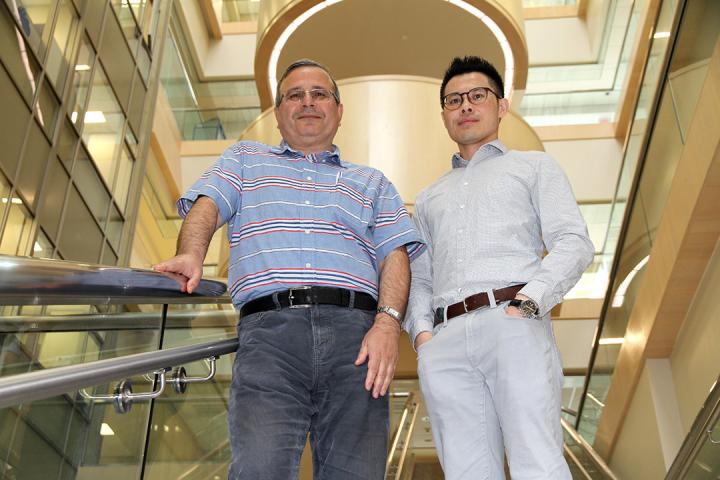
Credit: James Shewaga, University of Saskatchewan

Concussion symptoms–such as loss of balance, hazy comprehension, sleep disturbance and ability to walk straight–can be reversed by a new type of magnetic stimulation, research at the University of Saskatchewan (USask) shows.

Magnetic stimulation using a laptop-style device for 20 minutes per day improved the ability of rodents with concussion to walk in a straight line, navigate a maze, run on a wheel, and perform cognitive tests, according to research published in the Journal of Neurotrauma.

“Concussion is a major health concern effecting all sections of society from children whose brain is still developing to older people suffering falls,” said Professor Changiz Taghibiglou, who led the research. “The beauty of this therapy is not only that it is effective, but that it is non-invasive, easy to use and cost-effective.”

The USask team also found evidence that Low Frequency Magnetic Simulation could potentially protect the brain from future degeneration, a risk following serious concussions.

Concussion or mild traumatic brain injury (mTBI) is a major public health concern and can be caused by sports injuries, motor-vehicle accidents, falls and other head trauma.

The World Health Organization (WHO) estimates that more than 10 million people per year are affected by a traumatic brain injury (TBI).
In Canada, 160,000 people suffer from brain injuries annually, with over 1.5 million Canadians living with the consequences. Income lost from disabilities related to brain injuries in Canada is predicted to rise from $7.3billion to $8.2 billion between 2011 and 2031.

Concussion can also cause severe headaches and hamper a person’s ability to think straight and perform day-to-day tasks.

Within four days of treatment, rodents with repeated concussion had their ability to perform a variety of cognition and motor tests restored to almost normal levels. Their bodyclocks, governing sleep patterns, which can be thrown out of sync by concussion, were also restored to their normal function.

In the next stages of the research program, the USask team plans to conduct longer-term tests on rodents, followed by human trials.

The mice were exposed to low levels of magnetic stimulation, which mimic the way brain waves oscillate.

Mice with concussion that had not been treated were unable to perform the behavioral and neurological tasks, which included running on a wheel without falling off.

Taghibiglou also found that certain proteins, which are important to protect the brain from various neurological conditions, were restored to their normal level by the low-frequency magnetic stimulation. The proteins protect neurons and halt the progression of post-concussion inflammation and neurodegeneration.

Children and adolescents are particularly vulnerable to adverse effects of brain injuries as their brains are still developing into their early 20s.

“Traumatic brain injury is a clinical condition that poses significant challenges to patients, families and health professionals,” said Dr. Yanbo Zhang (M.D), professor of psychiatry in USask’s College of Medicine, and co-author of the paper.

“Patients can suffer long- lasting cognitive impairments, emotional and behavioural changes. Currently, we do not have effective treatment to improve the cognitive impairment. Low frequency magnetic stimulation provides a novel option for concussion treatment. It is portable, non-invasive and affordable.”

###

The brain injury research was funded by Canada’s Department of National Defence, the Saskatchewan Health Research Foundation, and the College of Medicine ComRAD fund.

Media Contact
Jennifer Thoma
jennifer.thoma@usask.ca

Related Journal Article

http://dx.doi.org/10.1089/neu.2018.5918

Tags: Circadian RhythmDecision-making/Problem SolvingHealth CareMedicine/HealthMemory/Cognitive ProcessesneurobiologyNeurochemistrySleep/Sleep DisordersSports MedicineTrauma/Injury
Share12Tweet8Share2ShareShareShare2

Related Posts

Computational Study Identifies DNA Aptamer Stabilizing Targeted Protein Degradation in Cholera Biofilms

Computational Study Identifies DNA Aptamer Stabilizing Targeted Protein Degradation in Cholera Biofilms

November 13, 2026
Review Outlines Valid Fracture Toughness Measurement and Multiscale Design for Polymeric Materials

Review Outlines Valid Fracture Toughness Measurement and Multiscale Design for Polymeric Materials

November 13, 2026

Plastic Waste Carbon Nanomaterial Removes Tetracycline From Water in Modeling Study

November 13, 2026

Coaxial Extruder Simultaneously 3D Prints Liquid Metals and Stretchable Polymer Shells

November 13, 2026
Please login to join discussion

POPULAR NEWS

  • Review Links Swine Inflammation and Necrosis Syndrome to Vascular Dysfunction

    Review Links Swine Inflammation and Necrosis Syndrome to Vascular Dysfunction

    29 shares
    Share 12 Tweet 7
  • Disrupted Overnight Emotional Distress Recalibration Found in Borderline Personality Disorder

    29 shares
    Share 12 Tweet 7
  • Positive Caregiving Experiences Buffer Strain Among Informal Carers, Dutch Study Finds

    29 shares
    Share 12 Tweet 7
  • Recycled PET Fibers Enhance Carbonated Concrete Durability

    29 shares
    Share 12 Tweet 7

About

We bring you the latest biotechnology news from best research centers and universities around the world. Check our website.

Follow us

Recent News

Ketogenic Diets Rich in Long-Chain Saturated Fats Increase Inflammation, Study Finds

New Algorithm Reduces Genomic Index Size by 18 Percent

Short Alkyl Chain Polyimide Anodes Enhance Aqueous Ammonium Ion Battery Performance

Subscribe to Blog via Email

Enter your email address to subscribe to this blog and receive notifications of new posts by email.

Join 87 other subscribers
  • Contact Us

Bioengineer.org © Copyright 2023 All Rights Reserved.

Welcome Back!

Login to your account below

Forgotten Password?

Retrieve your password

Please enter your username or email address to reset your password.

Log In
No Result
View All Result
  • Homepages
    • Home Page 1
    • Home Page 2
  • News
  • National
  • Business
  • Health
  • Lifestyle
  • Science

Bioengineer.org © Copyright 2023 All Rights Reserved.