• HOME
  • NEWS
  • EXPLORE
    • CAREER
      • Companies
      • Jobs
    • EVENTS
    • iGEM
      • News
      • Team
    • PHOTOS
    • VIDEO
    • WIKI
  • BLOG
  • COMMUNITY
    • FACEBOOK
    • INSTAGRAM
    • TWITTER
Saturday, February 7, 2026
BIOENGINEER.ORG
No Result
View All Result
  • Login
  • HOME
  • NEWS
  • EXPLORE
    • CAREER
      • Companies
      • Jobs
        • Lecturer
        • PhD Studentship
        • Postdoc
        • Research Assistant
    • EVENTS
    • iGEM
      • News
      • Team
    • PHOTOS
    • VIDEO
    • WIKI
  • BLOG
  • COMMUNITY
    • FACEBOOK
    • INSTAGRAM
    • TWITTER
  • HOME
  • NEWS
  • EXPLORE
    • CAREER
      • Companies
      • Jobs
        • Lecturer
        • PhD Studentship
        • Postdoc
        • Research Assistant
    • EVENTS
    • iGEM
      • News
      • Team
    • PHOTOS
    • VIDEO
    • WIKI
  • BLOG
  • COMMUNITY
    • FACEBOOK
    • INSTAGRAM
    • TWITTER
No Result
View All Result
Bioengineer.org
No Result
View All Result
Home NEWS Science News Health

Doctoral thesis contributes to further study of incurable Wolfram syndrome

Bioengineer by Bioengineer
May 29, 2019
in Health
Reading Time: 2 mins read
0
IMAGE
Share on FacebookShare on TwitterShare on LinkedinShare on RedditShare on Telegram

IMAGE

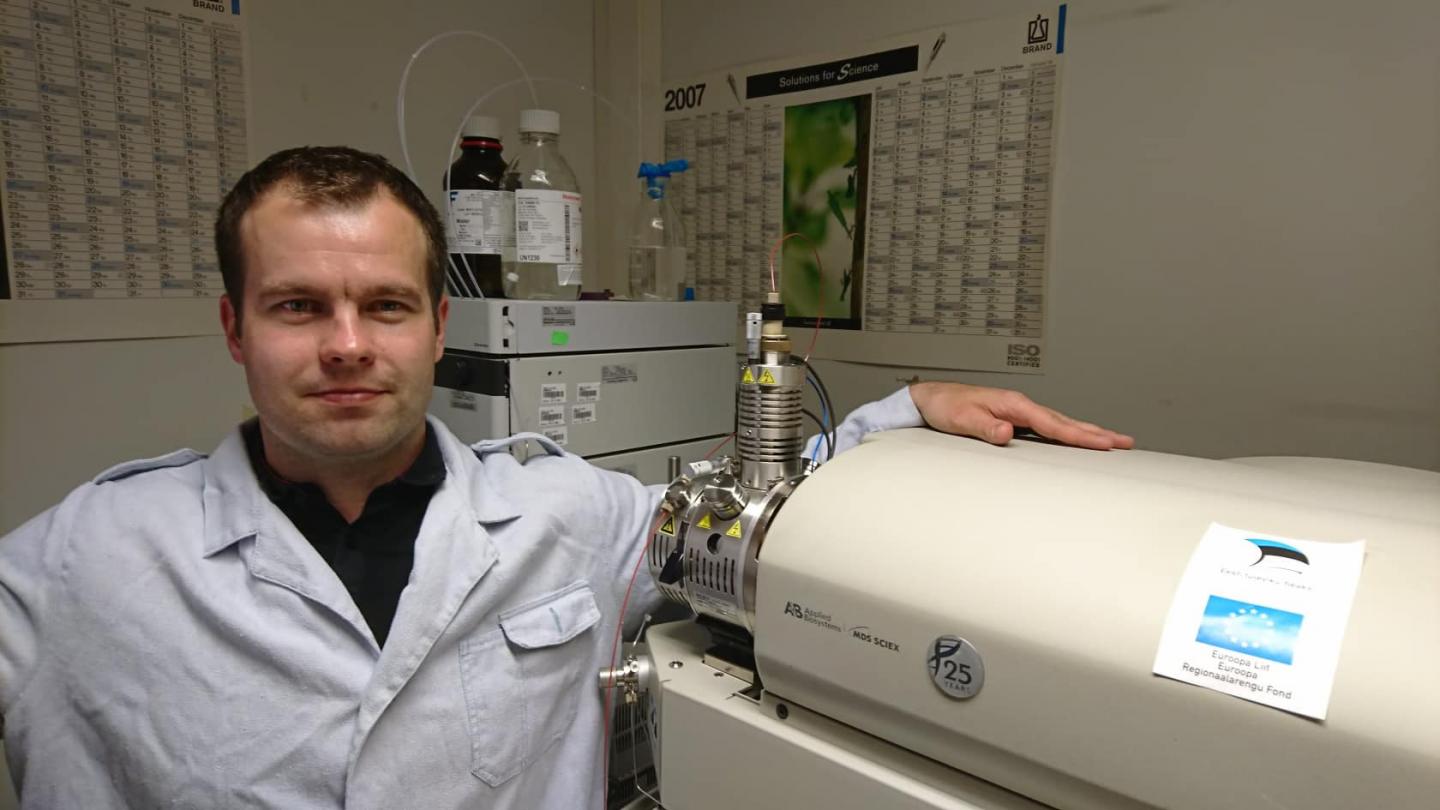
Credit: Rando Porosk

In the Faculty of Medicine at the University of Tartu, the first animal testings were conducted using antioxidant peptides designed and synthesised by scientists in Tartu, which may reduce oxidative stress. Oxidative stress also develops with a rare incurable genetic disease called Wolfram syndrome and it is studied profoundly by scientists all over the world.

Doctoral candidate of the Institute of Biomedicine and Translational Medicine at the University of Tartu, Rando Porosk, explained that oxidative stress is a condition where the reactive species, such as free radicals, dominate over the antioxidant defence system, and this may cause tissue damage as a result, for example. “Oxidative stress is the cause for concern primarily for those whose organism has more reactive species or whose antioxidant defence system is weaker. Deficient defence system may also result from the scarcity of certain vitamins,” described Porosk.

In his doctoral thesis titled “The Role of Oxidative Stress in Wolfram Syndrome 1 and Hypothermia”, Porosk studied the role of oxidative stress in the case of mild hypothermia or reduced body temperature as well as rare Wolfram syndrome. The latter is caused by a wolframin gene defect which also causes diabetes insipidus, diabetes mellitus, optical nerve atrophy and neurodegenerative disorders. A person suffering from this syndrome has diabetes as well as he/she will be blind and deaf.

According to the doctoral candidate, there is knowledge of Wolfram syndrome in the case of wolframin deficiency, as intracellular endoplasmic stress, as well as oxidative stress occurs. “We described the level of oxidative stress more profoundly than ever before in the model of mice suffering from Wolfram syndrome constructed by us and showed how the antioxidant UPF peptides designed by us decrease oxidative stress in various tissues.”

In Porosk’s doctoral thesis, the animal model has been described better when compared with earlier ones. This animal model can now be used in further research for describing Wolfram syndrome. “Profound description of metabolism provides information for further studies on a protein with hitherto unknown biofunction which is also wolframin that causes Wolfram syndrome. This way, its biofunction can be described even more profoundly.”

The mild hypothermia is used quite a lot in clinical practice for avoiding tissue damage. Right now, it is not exactly known what the protective hypothermia mechanism is about. “We showed in the research that mild hypothermia causes a stress response in various cell lines,” said Porosk in conclusion.

###

The doctoral supervisors are Senior Research Fellow in General Biochemistry with the Institute of Biomedicine and Translational Medicine of the University of Tartu, Kalle Kilk, Senior Research Fellow in General Biochemistry, Riina Mahlapuu, and Professor of Medical Metabolomics, Ursel Soomets.

Media Contact
Rando Porosk
[email protected]
Tags: Medicine/Health
Share12Tweet7Share2ShareShareShare1

Related Posts

Phage-Antibiotic Combo Beats Resistant Peritoneal Infection

February 7, 2026

Boosting Remote Healthcare: Stepped-Wedge Trial Insights

February 7, 2026

Barriers and Boosters of Seniors’ Physical Activity in Karachi

February 7, 2026

Evaluating Pediatric Emergency Care Quality in Ethiopia

February 7, 2026
Please login to join discussion

POPULAR NEWS

  • Robotic Ureteral Reconstruction: A Novel Approach

    Robotic Ureteral Reconstruction: A Novel Approach

    82 shares
    Share 33 Tweet 21
  • Digital Privacy: Health Data Control in Incarceration

    63 shares
    Share 25 Tweet 16
  • Study Reveals Lipid Accumulation in ME/CFS Cells

    57 shares
    Share 23 Tweet 14
  • Breakthrough in RNA Research Accelerates Medical Innovations Timeline

    53 shares
    Share 21 Tweet 13

About

We bring you the latest biotechnology news from best research centers and universities around the world. Check our website.

Follow us

Recent News

Phage-Antibiotic Combo Beats Resistant Peritoneal Infection

Boosting Remote Healthcare: Stepped-Wedge Trial Insights

Barriers and Boosters of Seniors’ Physical Activity in Karachi

Subscribe to Blog via Email

Enter your email address to subscribe to this blog and receive notifications of new posts by email.

Join 73 other subscribers
  • Contact Us

Bioengineer.org © Copyright 2023 All Rights Reserved.

Welcome Back!

Login to your account below

Forgotten Password?

Retrieve your password

Please enter your username or email address to reset your password.

Log In
No Result
View All Result
  • Homepages
    • Home Page 1
    • Home Page 2
  • News
  • National
  • Business
  • Health
  • Lifestyle
  • Science

Bioengineer.org © Copyright 2023 All Rights Reserved.