• HOME
  • NEWS
  • EXPLORE
    • CAREER
      • Companies
      • Jobs
    • EVENTS
    • iGEM
      • News
      • Team
    • PHOTOS
    • VIDEO
    • WIKI
  • BLOG
  • COMMUNITY
    • FACEBOOK
    • INSTAGRAM
    • TWITTER
Friday, January 2, 2026
BIOENGINEER.ORG
No Result
View All Result
  • Login
  • HOME
  • NEWS
  • EXPLORE
    • CAREER
      • Companies
      • Jobs
        • Lecturer
        • PhD Studentship
        • Postdoc
        • Research Assistant
    • EVENTS
    • iGEM
      • News
      • Team
    • PHOTOS
    • VIDEO
    • WIKI
  • BLOG
  • COMMUNITY
    • FACEBOOK
    • INSTAGRAM
    • TWITTER
  • HOME
  • NEWS
  • EXPLORE
    • CAREER
      • Companies
      • Jobs
        • Lecturer
        • PhD Studentship
        • Postdoc
        • Research Assistant
    • EVENTS
    • iGEM
      • News
      • Team
    • PHOTOS
    • VIDEO
    • WIKI
  • BLOG
  • COMMUNITY
    • FACEBOOK
    • INSTAGRAM
    • TWITTER
No Result
View All Result
Bioengineer.org
No Result
View All Result
Home NEWS Science News Health

Bonobo mothers help their sons to have more offspring

Bioengineer by Bioengineer
May 20, 2019
in Health
Reading Time: 2 mins read
0
IMAGE
Share on FacebookShare on TwitterShare on LinkedinShare on RedditShare on Telegram

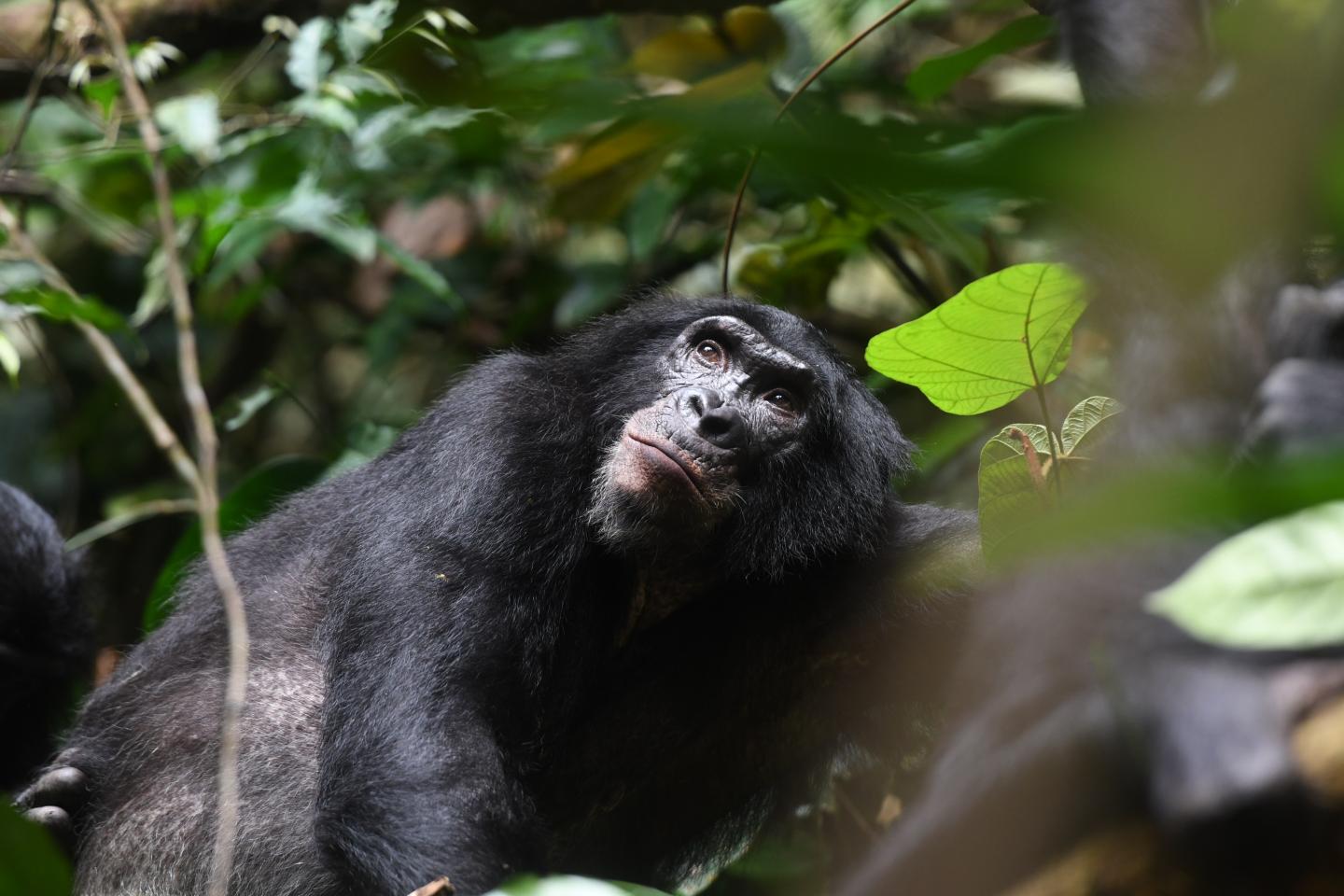
Mothers’ presence influences the reproductive success of their adult sons
IMAGE

Credit: © Martin Surbeck, Kokolopori Bonobo Research

“This is the first time that we can show the impact of the mother’s presence on a very important male fitness trait, which is their fertility,” says Martin Surbeck, a primatologist at the Max Planck Institute for Evolutionary Anthropology. “We were surprised to see that the mothers have such a strong, direct influence on the number of grandchildren they get.”

Surbeck and his colleagues observed wild populations of bonobos in the Democratic Republic of Congo, as well as wild populations of chimpanzees in Ivory Coast, Tanzania, and Uganda. They found that while both bonobo and chimpanzee mothers would advocate for their sons in male-on-male conflicts, bonobo moms went the extra mile to aid their sons’ copulation efforts. This involved protecting their sons’ mating attempts from other males and intervening in other male’s mating attempts.

The bonobo mothers were also able to use their rank in the bonobo’s matriarchal society to give their sons access to popular spots within social groups in the community and help them achieve higher male status – and therefore, better mating opportunities. The authors note that these interactions were rare in chimpanzee societies and did not have an effect on male fertility; in chimpanzees males hold dominant positions over females, making the actions of chimp mothers less influential than those of bonobo mothers.

Interestingly, bonobo moms did not extend similar help to their daughters, nor were there any observations of daughters receiving assistance in rearing their offspring. “In bonobo social systems, the daughters disperse from the native community and the sons stay,” Surbeck says. “And for the few daughters that stay in the community, which we don’t have many examples of, we don’t see them receiving much help from their mothers.”

Moving forward, Surbeck and his team would like to better understand the benefits these behaviors confer on bonobo mothers. Currently, they think that it allows for an indirect continuation of their genes. “These females have found a way to increase their reproductive success without having more offspring themselves,” he says, noting that the prolongation of the post-reproductive human female lifespan, as well as the early-age at which human women can no longer bare children, may have evolved from this indirect method of continuing their genetic line.

Surbeck acknowledges that gathering data on post-reproductive lifespans of females in chimp and bonobo communities will require a long-term, collaborative study, similar to this one. “Without the help and participation from all of the field sites where data was collected, these important interactions could have been overlooked,” he says. “Now as the director of a bonobo field site, I’m looking forward to further exploring this topic.”

###

Media Contact
Martin Surbeck
[email protected]

Tags: BiologyDevelopmental/Reproductive BiologyEvolutionGeneticsSocial/Behavioral ScienceZoology/Veterinary Science
Share12Tweet8Share2ShareShareShare2

Related Posts

IL-10 Targeting LDL Lowers Vascular Inflammation in Atherosclerosis

January 2, 2026

Insights on Eco-Friendly Cataract Surgery Practices

January 2, 2026

Nanocoated Bacteria Boost Crop Nitrogen Supply Efficiently

January 2, 2026

Imaging Immune and Fibrosis Targets for Heart Repair

January 2, 2026
Please login to join discussion

POPULAR NEWS

  • blank

    PTSD, Depression, Anxiety in Childhood Cancer Survivors, Parents

    115 shares
    Share 46 Tweet 29
  • NSF funds machine-learning research at UNO and UNL to study energy requirements of walking in older adults

    71 shares
    Share 28 Tweet 18
  • Exploring Audiology Accessibility in Johannesburg, South Africa

    52 shares
    Share 21 Tweet 13
  • SARS-CoV-2 Subvariants Affect Outcomes in Elderly Hip Fractures

    44 shares
    Share 18 Tweet 11

About

We bring you the latest biotechnology news from best research centers and universities around the world. Check our website.

Follow us

Recent News

IL-10 Targeting LDL Lowers Vascular Inflammation in Atherosclerosis

Insights on Eco-Friendly Cataract Surgery Practices

Reinforcing Neural Connectivity: A New Spike Prediction Model

Subscribe to Blog via Email

Enter your email address to subscribe to this blog and receive notifications of new posts by email.

Join 71 other subscribers
  • Contact Us

Bioengineer.org © Copyright 2023 All Rights Reserved.

Welcome Back!

Login to your account below

Forgotten Password?

Retrieve your password

Please enter your username or email address to reset your password.

Log In
No Result
View All Result
  • Homepages
    • Home Page 1
    • Home Page 2
  • News
  • National
  • Business
  • Health
  • Lifestyle
  • Science

Bioengineer.org © Copyright 2023 All Rights Reserved.