• HOME
  • NEWS
  • EXPLORE
    • CAREER
      • Companies
      • Jobs
    • EVENTS
    • iGEM
      • News
      • Team
    • PHOTOS
    • VIDEO
    • WIKI
  • BLOG
  • COMMUNITY
    • FACEBOOK
    • INSTAGRAM
    • TWITTER
Tuesday, October 6, 2026
BIOENGINEER.ORG
No Result
View All Result
  • Login
  • HOME
  • NEWS
  • EXPLORE
    • CAREER
      • Companies
      • Jobs
        • Lecturer
        • PhD Studentship
        • Postdoc
        • Research Assistant
    • EVENTS
    • iGEM
      • News
      • Team
    • PHOTOS
    • VIDEO
    • WIKI
  • BLOG
  • COMMUNITY
    • FACEBOOK
    • INSTAGRAM
    • TWITTER
No Result
View All Result
Bioengineer.org
No Result
View All Result
Home NEWS Science News

Before a cure, a crusade to stop lung cancer from spreading

Bioengineer by Bioengineer
November 11, 2016
in Science News
Reading Time: 2 mins read
0
Share on FacebookShare on TwitterShare on LinkedinShare on RedditShare on Telegram
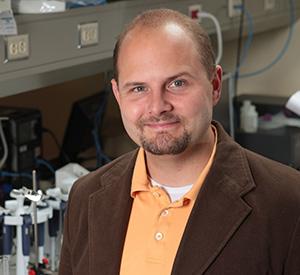
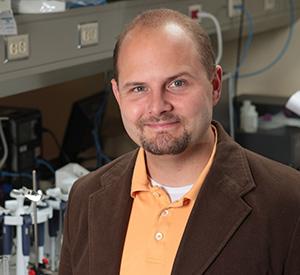
IMAGE

Credit: University of Notre Dame/Matt Cashore

The American Cancer Society has reported that lung cancer, which kills more Americans than any other type of cancer, is expected result in an estimated 158,080 deaths in 2016.

Although drugs are currently available to fight lung cancer, drug discovery challenges persist because treatment options are limited. Not only is lung cancer often drug resistant, but radiation treatment and surgery can be quite difficult depending on the location of the tumor(s) within the lungs.

Robert Stahelin, adjunct associate professor of chemistry and biochemistry at the University of Notre Dame, is working to better understand lung cancer at a cellular level and is investigating drugs that could inhibit lung cancer growth and prevent it from spreading.

"I'm looking at signals within the lung cancer cells that cause them to grow quickly, move and divide," he said. "With cancers, a primary tumor may metastasize and attack another organ in the body. Lung cancer often metastasizes — or spreads — to other organs such as the liver. Once the liver is infected, the cancer causes increased health problems and patients are more likely to succumb to the disease."

Stahelin's laboratory aims to advance understanding of how the mechanisms of lipid signaling are controlled in lung and other types of cancers. Membranes, composed mainly of lipids, hold the keys to cell division, growth and metabolism necessary for cancer cell growth and metastasis.

That understanding could ultimately help to determine the causes of lung cancer and identify viable targets, lipids or proteins for drug development and treatment.

###

Media Contact

Robert Stahelin
[email protected]
574-631-5054
@ND_news

http://www.nd.edu

Share12Tweet8Share2ShareShareShare2

Related Posts

Hidden Mental Health Crisis: Women With PCOS Face Sharply Elevated Suicide Risk, Major Analysis Finds

Hidden Mental Health Crisis: Women With PCOS Face Sharply Elevated Suicide Risk, Major Analysis Finds

October 6, 2026
Hidden Heart Pathway Behind Failed Pulsed Field Ablation Revealed in Rare Case

Hidden Heart Pathway Behind Failed Pulsed Field Ablation Revealed in Rare Case

October 6, 2026

How Often People Use Substances May Reveal a Wider Web of Mental Health Risk

October 6, 2026

Gentle Breathing First? Evidence Review Tests Intubation Rule for Mild Diaphragmatic Hernia

October 6, 2026
Please login to join discussion

POPULAR NEWS

  • Alloys That Shrink Their Own Grains: New PIX Mechanism Refines Metals With Heat Alone

    Alloys That Shrink Their Own Grains: New PIX Mechanism Refines Metals With Heat Alone

    29 shares
    Share 12 Tweet 7
  • Endurance Exercise Reshapes the Liver in Males and Females Through Distinct Molecular Routes

    29 shares
    Share 12 Tweet 7
  • Single Transcription Factor PU.1 Rapidly Converts Fibroblasts into Macrophage-Lineage Cells

    29 shares
    Share 12 Tweet 7
  • New Scale Measures How Ready Nurse Educators Really Are for the AI Era

    29 shares
    Share 12 Tweet 7

About

We bring you the latest biotechnology news from best research centers and universities around the world. Check our website.

Follow us

Recent News

Alloys That Shrink Their Own Grains: New PIX Mechanism Refines Metals With Heat Alone

Endurance Exercise Reshapes the Liver in Males and Females Through Distinct Molecular Routes

Single Transcription Factor PU.1 Rapidly Converts Fibroblasts into Macrophage-Lineage Cells

Subscribe to Blog via Email

Success! An email was just sent to confirm your subscription. Please find the email now and click 'Confirm' to start subscribing.

Join 85 other subscribers
  • Contact Us

Bioengineer.org © Copyright 2023 All Rights Reserved.

Welcome Back!

Login to your account below

Forgotten Password?

Retrieve your password

Please enter your username or email address to reset your password.

Log In
No Result
View All Result
  • Homepages
    • Home Page 1
    • Home Page 2
  • News
  • National
  • Business
  • Health
  • Lifestyle
  • Science

Bioengineer.org © Copyright 2023 All Rights Reserved.