• HOME
  • NEWS
  • EXPLORE
    • CAREER
      • Companies
      • Jobs
    • EVENTS
    • iGEM
      • News
      • Team
    • PHOTOS
    • VIDEO
    • WIKI
  • BLOG
  • COMMUNITY
    • FACEBOOK
    • INSTAGRAM
    • TWITTER
Monday, August 31, 2026
BIOENGINEER.ORG
No Result
View All Result
  • Login
  • HOME
  • NEWS
  • EXPLORE
    • CAREER
      • Companies
      • Jobs
        • Lecturer
        • PhD Studentship
        • Postdoc
        • Research Assistant
    • EVENTS
    • iGEM
      • News
      • Team
    • PHOTOS
    • VIDEO
    • WIKI
  • BLOG
  • COMMUNITY
    • FACEBOOK
    • INSTAGRAM
    • TWITTER
  • HOME
  • NEWS
  • EXPLORE
    • CAREER
      • Companies
      • Jobs
        • Lecturer
        • PhD Studentship
        • Postdoc
        • Research Assistant
    • EVENTS
    • iGEM
      • News
      • Team
    • PHOTOS
    • VIDEO
    • WIKI
  • BLOG
  • COMMUNITY
    • FACEBOOK
    • INSTAGRAM
    • TWITTER
No Result
View All Result
Bioengineer.org
No Result
View All Result
Home NEWS Science News

Catching a tumor in a spider’s web

Bioengineer by Bioengineer
November 10, 2016
in Science News
Reading Time: 2 mins read
0
Share on FacebookShare on TwitterShare on LinkedinShare on RedditShare on Telegram
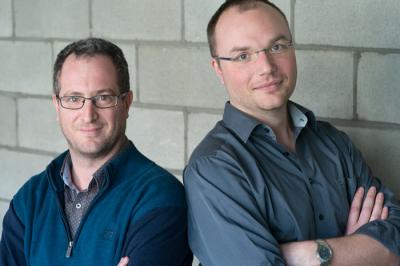
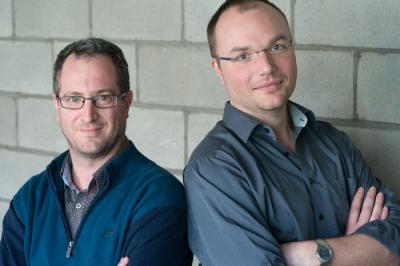
IMAGE

Credit: VIB-Ine Dehandschutter

After a decade of research, the Belgian Switch Laboratory (VIB/KU Leuven) has revealed a new designer molecule that inhibits a well-validated cancer driver through the mechanism of amyloid formation. This work demonstrates that amyloid structures can be used to rationally develop a novel class of biotechnological molecules that are able to fight a wide array of diseases. After the publication of this research in the leading journal Science, next steps to translate this groundbreaking technology, branded Pept-inTM into direct benefits for patients are already being explored by VIB.

Proteins in boiled eggs, beer foam and spider silk all share a similar structural element: amyloid. These structures are active in humans as well, playing a role in processes such as melanin production and cellular hormone storage. However, amyloids are also associated with diseases like cataracts, Alzheimer's and blood clotting disorders. The Switch Laboratory, led by professors Frederic Rousseau and Joost Schymkowitz, has now invented a design principle that could be used to destroy the function of virtually any protein based on the properties of amyloids.

Catching tumors

The first validated result of this new technology is called vascin, a designer amyloid that targets a well-known cancer target. In short, vascin penetrates a cell, and induces the formation of protein aggregates of its target protein, VEGFR2. These 'clumps' are the result of VEGFR2 protein that started sticking together, making it nonfunctional. Because VEGFR2 is crucial to the survival of certain cancer types, its inactivation kills the cancer cells and stops the tumor's growth.

Prof. Frederic Rousseau (VIB-KU Leuven): "One could compare it to 'catching tumors in a spider's web'. By artificially imitating the formation of protein clumps, we can inhibit molecules that play a central role in several diseases. Because these principles apply to virtually any protein, our approach may not only be useful in developing future cancer therapies, but also in treating drug-resistant infections."

Validated technology

The invention of the Pept-in™ technology dates back several years and is subject to broad patent protection. Meanwhile, the Switch Lab, in collaboration with several other research groups, has shown that this technology could have many applications, from treating superbug and fungal infections to engineering improved crops.

Prof. Joost Schymkowitz (VIB-KU Leuven): "Although we don't yet know if functional amyloids could be used in humans for therapeutic applications, the potential for novel drugs is huge. Our team will now spend the coming years trying to turn this into direct benefits for patients."

New business strategies

In close collaboration with the Switch Lab, VIB's tech transfer team is actively pursuing the translation of this fine piece of top science into societal value.

Dr. Els Beirnaert (Senior Manager New Ventures VIB): "This technology differentiates itself in many aspects from competing platforms. Its novel mode of action, its designability and potential to knock down challenging intracellular disease targets make this designer technology an attractive basis for the development of novel groundbreaking medicines for a variety of diseases."

###

Media Contact

Sooike Stoops
[email protected]
32-924-46611
@VIBLifeSciences

http://www.vib.be

Share12Tweet8Share2ShareShareShare2

Related Posts

β-Sitosterol from Ipomoea carnea Jacq. As a promising anti-inflammatory agent: Evidence from in silico modeling and in vitro validation

β-Sitosterol from Ipomoea carnea Jacq. As a promising anti-inflammatory agent: Evidence from in silico modeling and in vitro validation

August 31, 2026
Design, fabrication and characterization of a wearable Fiber Bragg grating sensor for cardiorespiratory monitoring using finger plethysmography

Design, fabrication and characterization of a wearable Fiber Bragg grating sensor for cardiorespiratory monitoring using finger plethysmography

August 31, 2026

KAIST opens the era of industrial-scale microbial foods, proposing growth strategies for the next-generation protein market

August 31, 2026

Virologist awarded $2 million NIH grant to investigate how virus-infected cells live and die

August 31, 2026
Please login to join discussion

POPULAR NEWS

  • β-Sitosterol from Ipomoea carnea Jacq. As a promising anti-inflammatory agent: Evidence from in silico modeling and in vitro validation

    29 shares
    Share 12 Tweet 7
  • Design, fabrication and characterization of a wearable Fiber Bragg grating sensor for cardiorespiratory monitoring using finger plethysmography

    29 shares
    Share 12 Tweet 7
  • KAIST opens the era of industrial-scale microbial foods, proposing growth strategies for the next-generation protein market

    29 shares
    Share 12 Tweet 7
  • Virologist awarded $2 million NIH grant to investigate how virus-infected cells live and die

    29 shares
    Share 12 Tweet 7

About

We bring you the latest biotechnology news from best research centers and universities around the world. Check our website.

Follow us

Recent News

β-Sitosterol from Ipomoea carnea Jacq. As a promising anti-inflammatory agent: Evidence from in silico modeling and in vitro validation

Design, fabrication and characterization of a wearable Fiber Bragg grating sensor for cardiorespiratory monitoring using finger plethysmography

KAIST opens the era of industrial-scale microbial foods, proposing growth strategies for the next-generation protein market

Subscribe to Blog via Email

Enter your email address to subscribe to this blog and receive notifications of new posts by email.

Join 85 other subscribers
  • Contact Us

Bioengineer.org © Copyright 2023 All Rights Reserved.

Welcome Back!

Login to your account below

Forgotten Password?

Retrieve your password

Please enter your username or email address to reset your password.

Log In
No Result
View All Result
  • Homepages
    • Home Page 1
    • Home Page 2
  • News
  • National
  • Business
  • Health
  • Lifestyle
  • Science

Bioengineer.org © Copyright 2023 All Rights Reserved.