• HOME
  • NEWS
  • EXPLORE
    • CAREER
      • Companies
      • Jobs
    • EVENTS
    • iGEM
      • News
      • Team
    • PHOTOS
    • VIDEO
    • WIKI
  • BLOG
  • COMMUNITY
    • FACEBOOK
    • INSTAGRAM
    • TWITTER
Thursday, May 14, 2026
BIOENGINEER.ORG
No Result
View All Result
  • Login
  • HOME
  • NEWS
  • EXPLORE
    • CAREER
      • Companies
      • Jobs
        • Lecturer
        • PhD Studentship
        • Postdoc
        • Research Assistant
    • EVENTS
    • iGEM
      • News
      • Team
    • PHOTOS
    • VIDEO
    • WIKI
  • BLOG
  • COMMUNITY
    • FACEBOOK
    • INSTAGRAM
    • TWITTER
  • HOME
  • NEWS
  • EXPLORE
    • CAREER
      • Companies
      • Jobs
        • Lecturer
        • PhD Studentship
        • Postdoc
        • Research Assistant
    • EVENTS
    • iGEM
      • News
      • Team
    • PHOTOS
    • VIDEO
    • WIKI
  • BLOG
  • COMMUNITY
    • FACEBOOK
    • INSTAGRAM
    • TWITTER
No Result
View All Result
Bioengineer.org
No Result
View All Result
Home NEWS Science News Health

A simple solution to a complex problem

Bioengineer by Bioengineer
April 29, 2019
in Health
Reading Time: 2 mins read
0
IMAGE
Share on FacebookShare on TwitterShare on LinkedinShare on RedditShare on Telegram

IMAGE

Credit: Graphic: Claudia Jessen-Trefzer

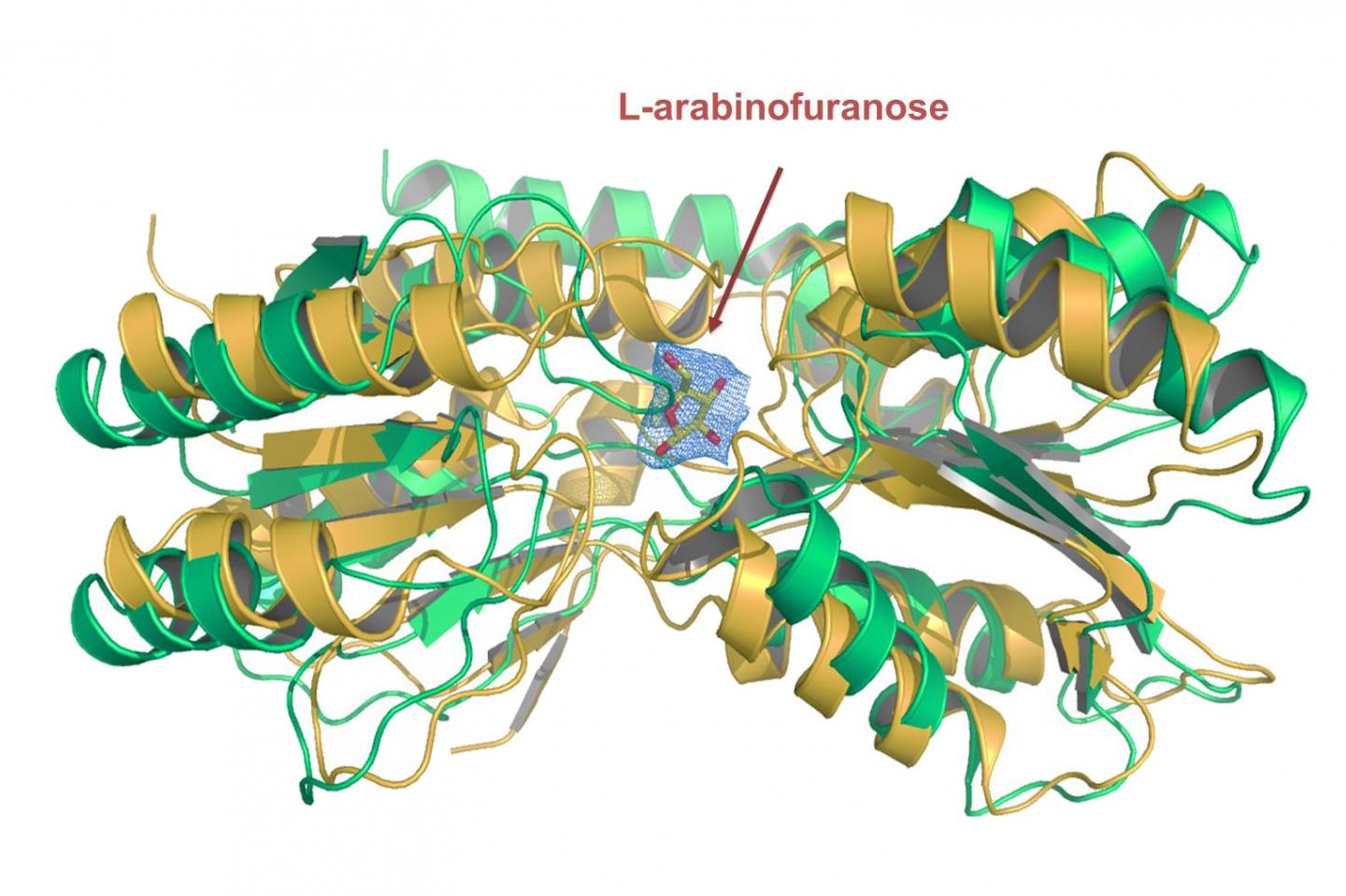
A team headed by Dr. Claudia Jessen-Trefzer of the University of Freiburg’s Institute for Pharmaceuticals Sciences has for the first time identified a transport protein in mycobacteria which is responsible for the uptake of the nutrient L-arabinofuranose. The lead authors of the study, Miaomiao Li of the Institute for Pharmaceuticals Sciences, Christoph Müller of the Institute for Biochemistry and Klemens Fröhlich of the Institute of Molecular Medicine and Cell Research at the University of Freiburg, used a novel approach which could simplify the identification of transport proteins in mycobacteria in the future. This class of proteins could play a key role in the development of new types of medications to tackle mycobacteria and treat diseases like tuberculosis in humans. The researchers’ study is published in the journal Cell Chemical Biology.

Transport proteins are located in the membrane of the cell and are responsible for absorbing nutrients into the cell and expelling toxic substances out of it. They therefore drive processes which are vital to the cell’s survival. Until now, little was known about the proteins because their chemical properties make them difficult to examine. The Freiburg researchers characterized the protein on the basis of its substrate, the nutrient L-arabinose, with which the protein bonds. A subgroup of the bacterium, Mycobacterium smegmatis, served as the model organism.

The team developed a method in which they carried out gene expression – the targeted expression of genes and the translation into proteins – via the substrate. Then they investigated the proteins isolated from the membrane using mass spectrometry. This provided the Freiburg researchers with a relatively simple way of identifying the transport proteins which are responsible for absorbing a certain nutrient. In addition, they were able to identify the L-arabinofuranose transporter whose characteristics could be determined with protein crystallography. The team managed to vastly simplify the identification of transport proteins in mycobacteria, thereby contributing to the search for potential target proteins for antibiotics development.

The researchers Christoph Müller and Claudia Jessen-Trefzer, as well as Professor Dr. Oliver Einsle, who also had a role in the work, are members of the University of Freiburg research training group RTG 2202 – Transport Across and Into Membranes.

###

Media Contact
Claudia Jessen-Trefzer
[email protected]

Original Source

http://www.pr.uni-freiburg.de/pm-en/press-releases-2019/a-simple-solution-to-a-complex-problem

Related Journal Article

http://dx.doi.org/10.1016/j.chembiol.2019.03.002

Tags: Chemistry/Physics/Materials SciencesMedicine/HealthPharmaceutical SciencePharmaceutical Sciences
Share12Tweet8Share2ShareShareShare2

Related Posts

CU Anschutz School of Medicine Launches Innovative 3-Year MD Program to Combat Physician Shortages and Reduce Training Costs

May 14, 2026

Chemical Mixtures During Pregnancy Could Impact Fetal Growth via the Placenta

May 14, 2026

Serum Extracellular Vesicle N-Glycome Emerges as a Promising Non-Invasive Biomarker for Childhood Epilepsy

May 14, 2026

First Study to Detect and Track Multiple Cancer-Causing Viruses in Wastewater

May 14, 2026
Please login to join discussion

POPULAR NEWS

  • Research Indicates Potential Connection Between Prenatal Medication Exposure and Elevated Autism Risk

    842 shares
    Share 337 Tweet 211
  • New Study Reveals Plants Can Detect the Sound of Rain

    729 shares
    Share 291 Tweet 182
  • Salmonella Haem Blocks Macrophages, Boosts Infection

    62 shares
    Share 25 Tweet 16
  • Breastmilk Balances E. coli and Beneficial Bacteria in Infant Gut Microbiomes

    58 shares
    Share 23 Tweet 15

About

We bring you the latest biotechnology news from best research centers and universities around the world. Check our website.

Follow us

Recent News

CU Anschutz School of Medicine Launches Innovative 3-Year MD Program to Combat Physician Shortages and Reduce Training Costs

Call for Submissions: JMIR Biomedical Engineering Explores “Sex and Gender in Biomedical Engineering: Advancing Equity in Workforce and Modeling”

Expanding Proton Therapy Access: Five New Centres Planned Across Romania, Greece, Italy, Northern Ireland, and Poland to Serve Patients Europe-Wide

Subscribe to Blog via Email

Enter your email address to subscribe to this blog and receive notifications of new posts by email.

Join 82 other subscribers
  • Contact Us

Bioengineer.org © Copyright 2023 All Rights Reserved.

Welcome Back!

Login to your account below

Forgotten Password?

Retrieve your password

Please enter your username or email address to reset your password.

Log In
No Result
View All Result
  • Homepages
    • Home Page 1
    • Home Page 2
  • News
  • National
  • Business
  • Health
  • Lifestyle
  • Science

Bioengineer.org © Copyright 2023 All Rights Reserved.